
What Is Suction Excavation? A Complete Guide to Vacuum & Non-Destructive Digging
vacuum excavation and suction excavation in modern infrastructure
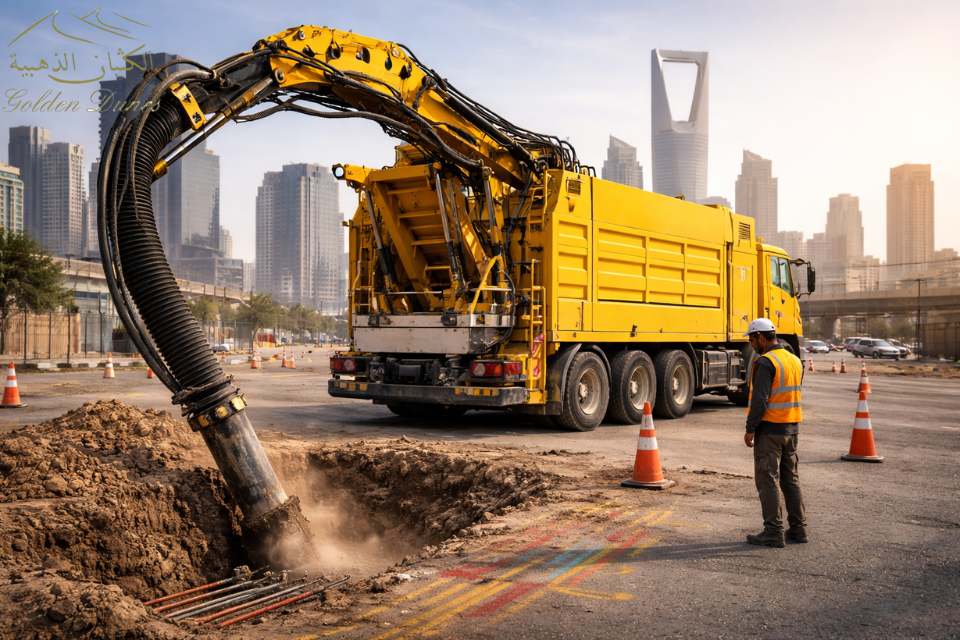
Across Saudi Arabia and the GCC, infrastructure growth is accelerating, and the need for a safer excavation method is no longer optional. With dense underground utilities, buried utility networks, and utility lines running through complex urban and industrial zones, traditional digging can increase damage risk and costly repairs. This is why many project teams ask: What Is Suction Excavation, and why is it becoming a preferred approach for high-risk excavation work?
At its core, suction excavation is a non-destructive digging technique powered by a vacuum system. It uses suction and controlled airflow to excavate soil and remove excavated material through a hose into a sealed holding tank. This controlled extraction helps reduce the likelihood of a service strike while enabling the operator to expose existing utilities—such as pipe and cable—more precisely than many digging methods.
Compared to traditional digging that relies on machinery and hydraulic force to dig and excavate through varying soil conditions, vacuum excavation systems allow teams to work at a safe distance and better protect buried services. This is especially valuable when the goal is to locate utility assets with minimal disruption, rather than creating a large trench or generating excessive debris and spoil.
In Saudi projects where infrastructure safety and health and safety performance are critical, suction excavation works as a practical risk-control measure. It helps reduce strike incidents, limit downtime, and avoid avoidable disruptions—particularly in congested corridors where utility exposure must be accurate and manual excavation alone may be too slow or inconsistent.
For a broader view of how technology is reshaping excavation technology and site execution in the Kingdom, see technology in the Saudi construction sector. And because national infrastructure transformation is a key driver behind modern, safer digging methods, aligning planning with Saudi Vision 2030 helps contextualize why vacuum excavation is increasingly adopted as a controlled, environmentally friendly option with strong cost-effectiveness for sensitive excavation work.
What Is Suction Excavation
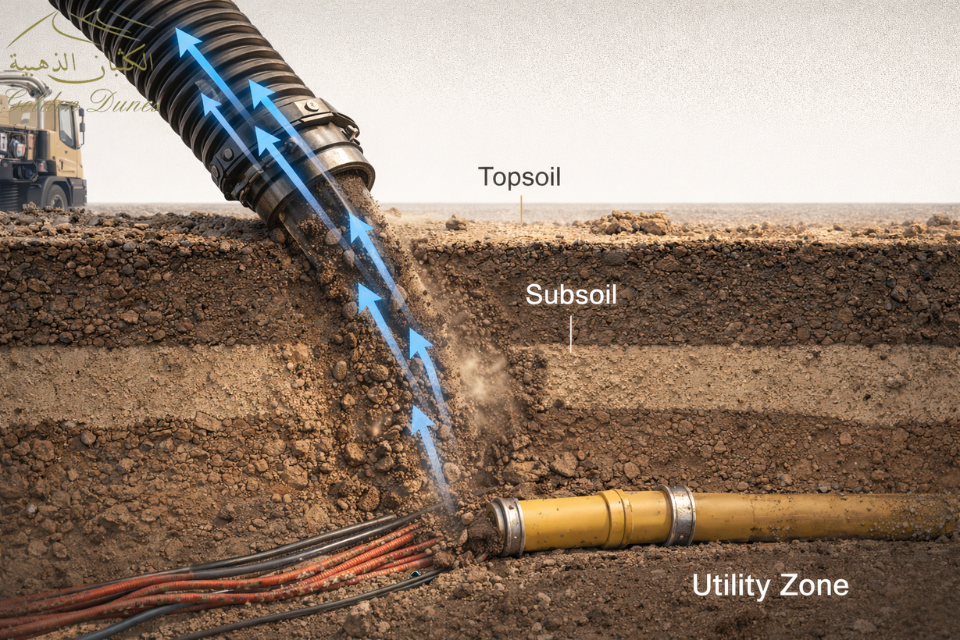
To clearly understand What Is Suction Excavation, it should be viewed as a controlled excavation method that relies on advanced vacuum excavation systems instead of traditional digging. Rather than using heavy machinery or hydraulic force to excavate soil, this method uses suction to remove excavated material through a reinforced suction hose connected to a high-capacity vacuum system.
Suction excavation works through a structured extraction process. Soil is first loosened using compressed air or a precision nozzle, after which spoil is transferred through the suction hose into a sealed holding tank within the vacuum excavator. This controlled process allows the operator to manage excavation work while maintaining a safe distance from buried utility assets and utility lines.
Definition of Vacuum Excavation
Vacuum excavation is a non-destructive excavation method that uses regulated airflow to lift soil, wet material, and even large materials without direct mechanical contact with underground utilities. Unlike manual excavation or mechanical digging methods, vacuum excavation technology is specifically designed to reduce damage risk when exposing pipe, cable, or buried services.
How Suction Excavation Differs from Traditional Digging
Compared to traditional excavation work, which relies heavily on machinery and hydraulic penetration through varying soil conditions, traditional digging can increase the likelihood of service strike or unintended damage—particularly when existing utilities are not accurately mapped.
In contrast, suction excavation is considered safer because it reduces the risk associated with mechanical force. Instead of aggressive penetration, it depends on a controlled vacuum system and suction fans to perform gradual extraction. This makes it particularly effective in areas with dense underground utilities where precision is critical.
Core Principles of Suction Excavator Operations
A suction excavator operates through coordinated components including the vacuum system, suction hose, holding tank, and airflow regulation controls. These elements work together to ensure precise extraction without creating an oversized trench or unnecessary soil disturbance.
This operational principle makes each type of suction excavator suitable for environments requiring non-destructive digging—especially when teams must locate buried utility networks or carefully expose pipe infrastructure in complex soil conditions. In such environments, controlled excavation significantly reduces the risk of costly repairs caused by accidental strike.
For a deeper look into how excavation technology supports safer infrastructure delivery in the Kingdom, explore modern excavation technology in the Saudi construction sector. Additionally, international safety frameworks such as those outlined by OSHA emphasize controlled excavation practices to improve health and safety performance in high-risk worksites.
How Does Suction Excavation Work
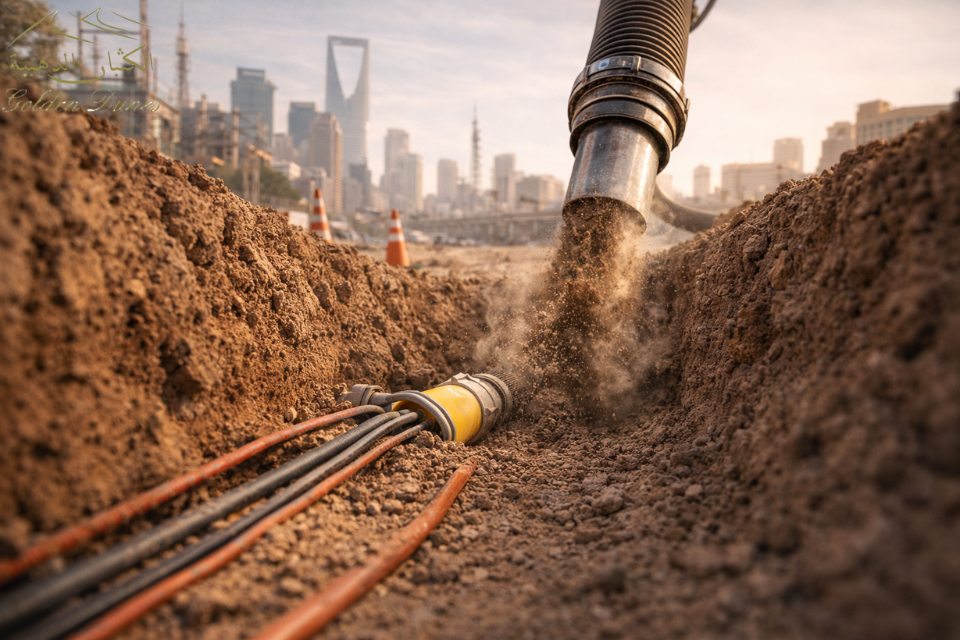
To understand What Is Suction Excavation in practical terms, it is essential to examine the process step by step. Suction excavation relies on advanced vacuum excavation systems designed to control extraction without disturbing underground utilities or nearby buried services. Unlike traditional digging methods that depend on heavy machinery or hydraulic force, this approach uses a precision-engineered vacuum system to perform non-destructive digging while maintaining high infrastructure safety standards.
Step-by-Step Vacuum Extraction Process
The process begins by loosening soil using compressed air or a specialized nozzle. This controlled method allows the operator to adapt to varying soil conditions. In areas containing wet material or abrasive elements, airflow is carefully regulated to ensure safe extraction without spreading debris or creating an unnecessary trench.
Once the soil is loosened, a reinforced suction hose connected to the vacuum excavator transfers the excavated material through the vacuum system into a sealed holding tank. This configuration enables the operator to maintain a safe distance during excavation work while reducing the likelihood of service strike or damage to pipe, cable, or utility lines.
All spoil is transported into a dedicated chamber within the holding tank, preventing debris from contaminating the surrounding work area. This containment approach improves health and safety conditions on site and helps reduce downtime caused by cleanup operations or costly repairs resulting from accidental strike.
Key Components of a Suction Excavator
A suction excavator consists of several integrated components, including a high-capacity vacuum system, suction fans, suction hose, precision nozzle, and a sealed holding tank for excavated material storage. These elements operate as a coordinated vacuum excavation technology platform to deliver accurate and controlled excavation work.
Performance depends on maintaining the correct balance between airflow and extraction force. This ensures soil removal without disturbing existing utilities or adjacent buried utility infrastructure. As a result, each type of suction excavator is suitable for projects requiring controlled, non-destructive intervention in sensitive environments.
The Role of Controlled Digging in Excavation Work
Controlled extraction is one of the most significant distinctions compared to traditional digging. In conventional hydraulic excavation, direct mechanical penetration of soil can result in unexpected strike incidents or unintentional damage—particularly when underground utilities are not clearly visible.
In suction excavation works, however, the process progresses gradually. The operator can carefully locate utility networks and expose pipe or cable assets with precision. This approach reduces the risk associated with sensitive excavation work and provides a safer, more cost-effectiveness-driven alternative to traditional digging methods.
For projects that require enhanced operational control and reduced utility risk exposure, explore professional suction excavator services. Additionally, international safety guidance from organizations such as the World Bank infrastructure program highlights the importance of controlled excavation practices in protecting critical underground infrastructure.
Why Use Suction Excavation
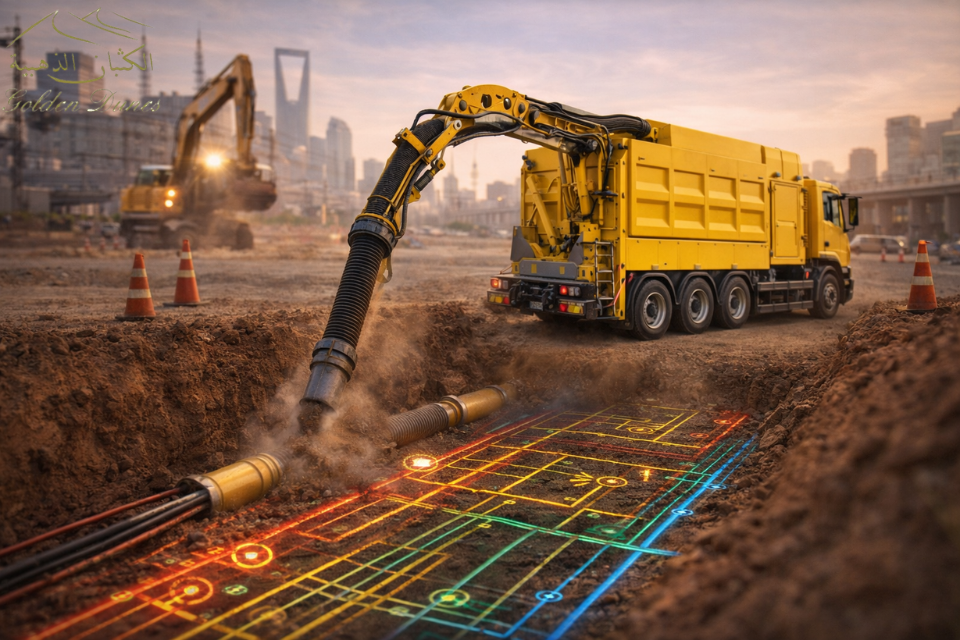
In environments where underground utilities are densely distributed, selecting the right excavation method becomes directly linked to health and safety performance and operational risk reduction. When analyzing What Is Suction Excavation from a risk management perspective, it becomes clear that this non-destructive digging approach significantly lowers the probability of service strike or unintended damage during excavation work.
Unlike traditional digging methods that rely on heavy machinery and hydraulic force to penetrate soil, suction excavation uses suction and a regulated vacuum system to perform controlled extraction. This precision-based method helps reduce the likelihood of strike incidents involving pipe, cable, or buried utility assets—particularly in unstable soil conditions or high-risk urban infrastructure zones.
Safety Considerations in Non-Destructive Digging
Infrastructure safety is a critical factor when working near buried services or existing utilities. Suction excavation technology allows the operator to maintain a safe distance during excavation while carefully exposing underground utility lines. This reduces the risk associated with direct mechanical contact and minimizes disruption to surrounding infrastructure.
Additionally, modern vacuum excavation systems contain debris and spoil within a sealed holding tank, preventing contamination of the work environment. This containment strategy supports stronger health and safety standards while reducing downtime caused by cleanup operations or post-incident damage repairs.
Reducing Utility Damage and Site Risks
One of the most significant challenges in excavation work is avoiding costly repairs resulting from service strike incidents. By using a suction excavator, teams can expose pipe or cable networks with high precision without disturbing surrounding soil or nearby tree roots.
This level of control makes suction excavation works safer compared to manual excavation or conventional digging methods—especially in locations with overlapping underground utilities or sensitive buried utility infrastructure.
When to Use Suction Excavation Before You Dig
Suction excavation is recommended before initiating excavation work in areas where utility locations are uncertain. When contractors need to locate pipe or cable assets within a narrow trench, a vacuum excavator provides a more controlled excavation method compared to traditional approaches.
It is particularly effective in environments containing wet material, abrasive soil conditions, or when minimizing environmental impact is a priority. In the context of Saudi Arabia’s large-scale infrastructure transformation under Saudi Vision 2030, adopting safer excavation technology aligns with national objectives focused on infrastructure reliability, sustainability, and operational efficiency.
To better understand how advanced excavation practices contribute to safer project execution, you can explore our overview about our infrastructure expertise.
Applications in GCC Infrastructure
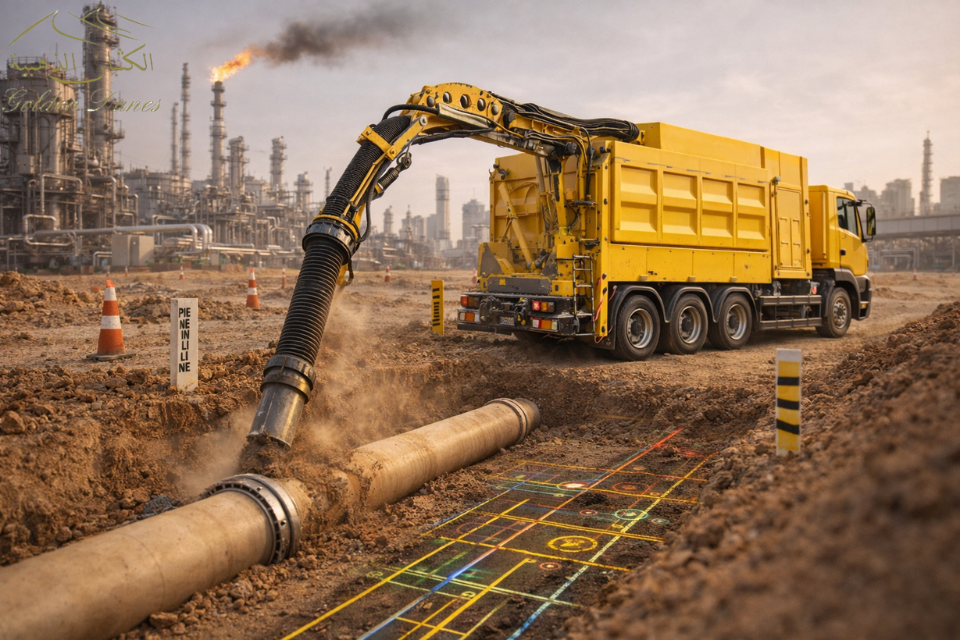
Across Saudi Arabia and the wider GCC region, infrastructure development requires increasingly precise excavation method selection. With rapid urban expansion and dense underground utilities, traditional digging alone is no longer sufficient to ensure infrastructure safety without increasing the risk of service strike or unintended damage.
When examining What Is Suction Excavation within the context of GCC infrastructure projects, vacuum excavation emerges as a practical solution in areas containing overlapping buried utility networks and buried services. A suction excavator allows operators to expose pipe or cable systems without disturbing surrounding soil, maintaining structural integrity in complex project environments.
Uses of Suction Excavation Works on Site
Suction excavation works are widely used for utility exposure, particularly when teams must locate existing utilities before conducting broader excavation work. In these cases, a vacuum system and suction hose remove soil and spoil with precision, reducing uncertainty prior to full-scale operations.
This approach is especially valuable in narrow trench environments or challenging soil conditions, where controlled extraction reduces the risk associated with digging near sensitive utility lines or pressurized pipe infrastructure.
Industrial and Infrastructure Applications
Within oil and gas facilities, where buried utility systems and extensive pipe networks operate beneath the surface, vacuum excavation technology provides a safer excavation method compared to traditional machinery. By minimizing mechanical impact, it significantly lowers the probability of service strike and strengthens health and safety performance in high-risk industrial zones.
In railway corridors and dense urban developments containing concentrated existing utilities, operators can use suction excavation to remove excavated material from a defined chamber without disrupting adjacent soil or damaging nearby tree roots. This level of control supports infrastructure continuity and operational reliability.
For projects requiring advanced ground intervention strategies, learn more about our Suction Excavator Services, designed to meet complex GCC infrastructure demands.
The Future of Vacuum Excavation Technology
Although vacuum excavation systems are relatively new compared to manual excavation practices, they have demonstrated strong cost-effectiveness over time by reducing downtime and preventing costly repairs caused by accidental strike incidents.
As vacuum system efficiency, suction fans performance, and airflow regulation continue to improve, non-destructive digging is expected to become a standard practice in excavation work across Saudi Arabia. This evolution aligns with national development objectives under Saudi Vision 2030, where environmentally friendly infrastructure solutions and reduced environmental impact are strategic priorities for sustainable growth.
Environmental Impact and Cost-Effectiveness
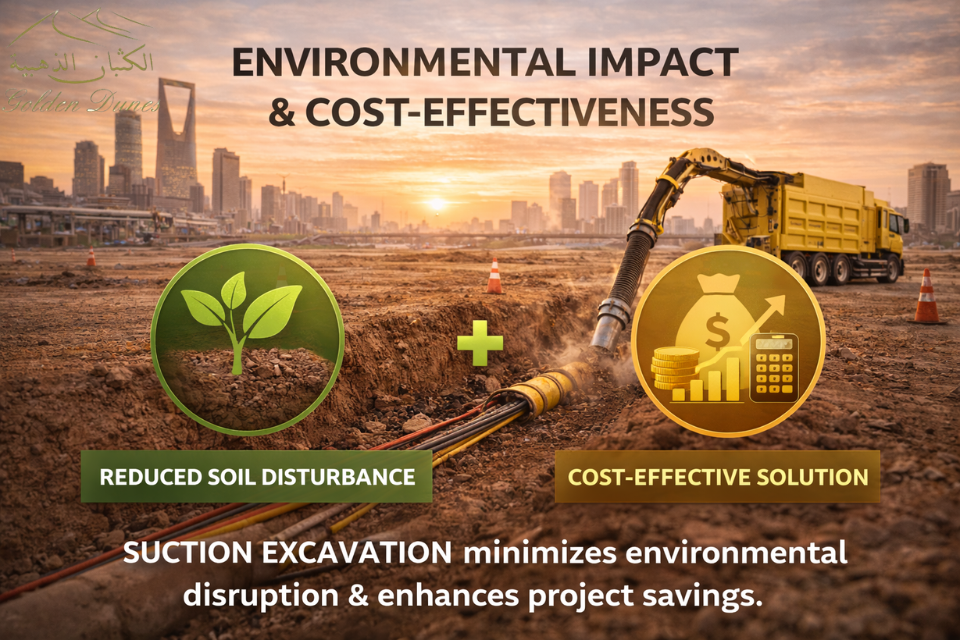
When evaluating What Is Suction Excavation from both an operational and strategic perspective, it becomes clear that vacuum excavation is not only about precision—it is also about reducing environmental impact while improving cost-effectiveness in excavation work. In areas containing sensitive underground utilities, minimizing soil disturbance plays a critical role in maintaining infrastructure safety.
Unlike traditional digging methods that rely on heavy machinery and often create wide trench openings with excessive spoil, suction excavation uses suction and a controlled vacuum system to remove excavated material in a regulated manner. This approach reduces the risk associated with debris dispersion or unintended damage to adjacent infrastructure.
Environmental Impact of Vacuum Excavation
Vacuum excavation technology operates through calibrated airflow and compressed air to loosen soil without aggressive hydraulic penetration. This significantly lowers environmental impact caused by deep soil disturbance or damage to tree roots and surrounding ground conditions.
The integrated holding tank system allows excavated material to be contained efficiently, and in certain cases, recycling of spoil is possible. Compared to manual excavation or conventional digging methods that generate uncontrolled material displacement, vacuum excavation provides a more environmentally friendly alternative.
Global infrastructure institutions, including the World Bank infrastructure program, emphasize sustainable excavation practices as part of long-term infrastructure resilience and environmental responsibility.
Cost-Effectiveness of Suction Excavation
From a financial standpoint, suction excavation works reduce downtime associated with repairing damage or managing service strike incidents. When a strike affects pipe or cable during traditional digging, the result often includes costly repairs, schedule delays, and contractual exposure.
By using a suction excavator, the operator can accurately locate buried utility networks and expose utility lines with controlled extraction. This reduces the probability of strike and enhances cost-effectiveness across medium- and long-term project cycles.
Long-Term Benefits of Non-Destructive Excavation
Experience across infrastructure projects demonstrates that non-destructive digging is safer than conventional digging methods, particularly in environments with dense existing utilities. Reducing the risk associated with sensitive excavation work directly strengthens health and safety performance while lowering operational expenditure.
Compared to traditional approaches, vacuum excavation represents an excavation method that balances precision, cost-effectiveness, and reduced environmental impact. This makes it one of the safest modern solutions for infrastructure projects across Saudi Arabia and the broader GCC region.
Comparison – Suction Excavation vs Traditional Digging
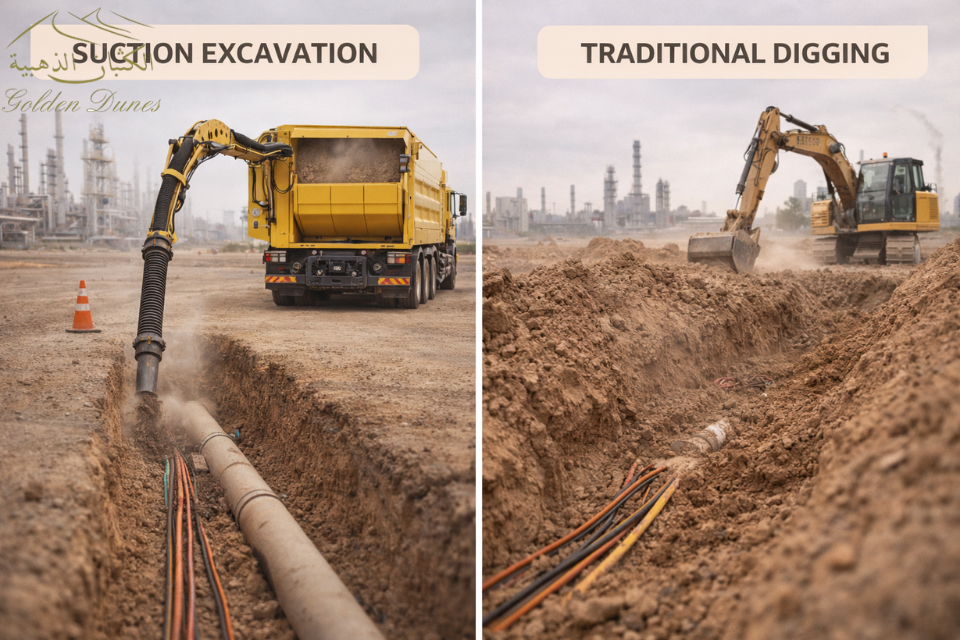
When evaluating What Is Suction Excavation in a practical context, it is essential to compare it with traditional digging to understand the real operational differences in excavation work.
Traditional Digging:
Traditional excavation relies on heavy machinery and hydraulic force to penetrate soil. While effective for bulk earth removal, this method increases the likelihood of sudden strike incidents involving pipe, cable, or buried utility assets—especially in locations with dense underground utilities. It typically generates large volumes of spoil and may require additional manual intervention for precision tasks.
Suction Excavation:
Suction excavation depends on a controlled vacuum system and suction fans to perform gradual extraction. Using a precision nozzle and suction hose, soil is loosened and transferred into a sealed holding tank without direct mechanical contact with utility lines. This significantly reduces the risk of service strike and is considered safer compared to manual excavation in sensitive environments.
Compared to traditional approaches, suction excavation technology offers a more controlled excavation method—particularly in complex soil conditions or when operators must expose existing utilities with high precision.
Key Takeaways
- What Is Suction Excavation represents an advanced excavation method based on vacuum excavation principles for non-destructive digging.
- A regulated vacuum system and suction hose enable precise extraction without damaging underground utilities.
- It reduces the risk associated with service strike incidents and costly repairs.
- It is safer than traditional digging in environments with sensitive buried services.
- It contributes to reduced environmental impact and improved cost-effectiveness over the long term.
Frequently Asked Questions About Suction Excavation
Conclusion on What Is Suction Excavation in Modern Infrastructure

Understanding What Is Suction Excavation reveals more than a technical excavation method—it highlights a strategic shift toward precision-based, non-destructive digging in complex infrastructure environments. As underground utilities become denser across Saudi Arabia and the GCC, relying solely on traditional digging methods introduces avoidable operational risk.
By integrating vacuum excavation systems, controlled airflow, and sealed holding tank containment, suction excavation enables operators to expose pipe, cable, and buried utility networks with reduced damage risk. This approach strengthens infrastructure safety while improving cost-effectiveness and minimizing environmental impact.
Across high-risk excavation work—from oil and gas corridors to dense urban projects—suction excavation represents a forward-looking excavation technology aligned with safer project execution and long-term infrastructure resilience under Saudi Vision 2030.
📩 Next Steps for Engineering & Infrastructure Teams
For project engineers, infrastructure managers, and government entities seeking safer excavation methods, adopting suction excavation within structured project planning offers measurable operational advantages.