
Vacuum Excavation vs Traditional Excavation: Safer Digging Methods
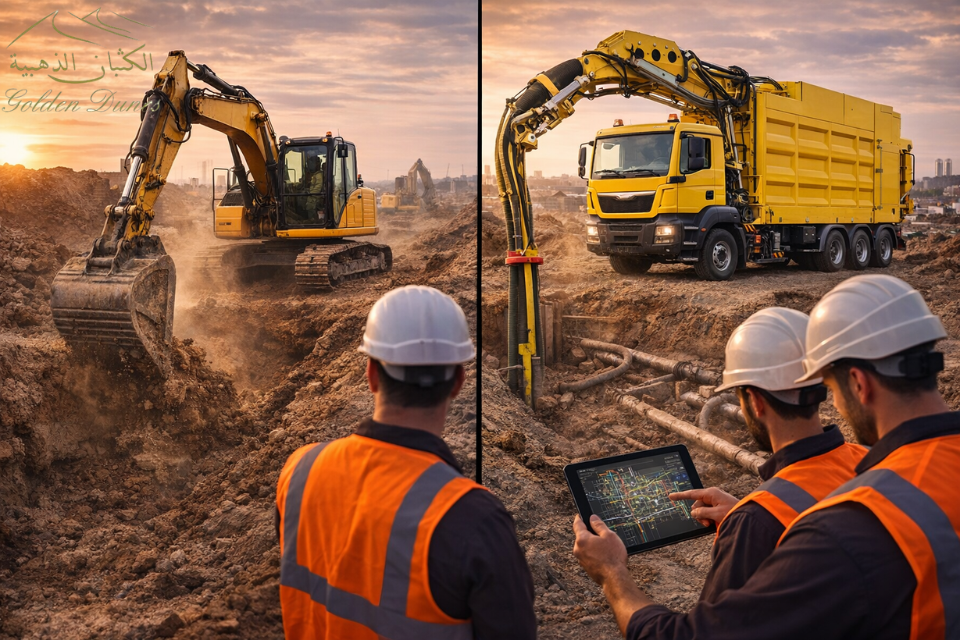
Vacuum Excavation vs Traditional Excavation in Modern Construction
In modern infrastructure development, excavation plays a critical role in preparing land, installing utilities, and supporting large construction projects. For decades, traditional excavation methods have been the standard approach, relying heavily on heavy machinery such as a backhoe or mechanical excavator to remove soil and prepare a site. While these traditional digging techniques are effective for large-scale earthmoving, they often carry a significant risk of damaging underground utilities such as pipelines, electrical cable networks, or communication lines.
As cities across Saudi Arabia and the GCC expand, the complexity of underground utilities continues to increase. Construction teams must frequently locate buried infrastructure before they can safely excavate. However, using heavy equipment around underground utility lines can create a high risk of damaging underground infrastructure, especially in areas with dense underground utilities or confined spaces where precision is required.
This is where modern solutions such as vacuum excavation have gained attention as an alternative to traditional excavation. When comparing vacuum excavation vs traditional excavation, the differences become clear in terms of precision, safety, and environmental impact. Vacuum excavation uses a powerful vacuum system with water or air to loosen and remove soil, allowing operators to work around underground assets without causing damage.
Because of its non-destructive nature of vacuum excavation, the method has become widely adopted for projects that require accurate digging around pipelines, cables, storage tanks, or tree roots. In contrast, traditional excavation tends to rely on mechanical force, which can increase the risk of accidental utility damage and site disruption.
For engineers and contractors evaluating excavation strategies, understanding the practical differences between vacuum excavation and traditional excavation is essential. Choosing the best excavation method can significantly reduce the risk of accidents, minimise environmental disturbance, and ensure safer excavation practices in modern construction projects.
Understanding Traditional Excavation Methods in Construction Projects
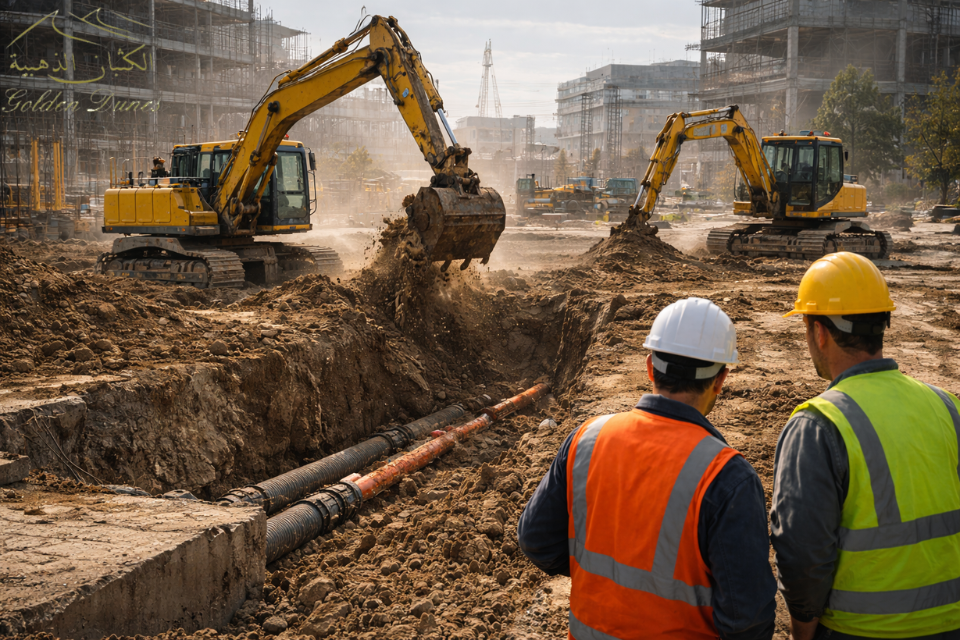
What Is Traditional Excavation?
In most construction projects, traditional excavation refers to the method used to remove soil and prepare land using mechanical equipment and heavy machinery. Contractors typically rely on machines such as a backhoe, hydraulic excavator, and other large equipment to dig trenches, expose foundations, or prepare the ground for infrastructure installation. These traditional excavation techniques have long been the standard approach for large-scale earthmoving operations across construction sites.
Traditional excavation is widely used in road construction, pipeline installation, and foundation work where large volumes of soil must be moved quickly. In these situations, mechanical digging can be efficient and cost-effective, particularly when the excavation area does not contain dense underground utility lines. However, when excavation occurs around underground utilities, the limitations of traditional digging methods become more apparent.
How Traditional Excavation Methods Work on Construction Sites
The process usually begins with surveying the site and identifying areas where excavation is required. Operators then use a mechanical excavator to loosen soil and remove it from the ground. This process allows contractors to rapidly excavate large sections of land for infrastructure development. In many construction projects, these machines can remove significant amounts of soil in a short period of time, reducing the need for extensive labour and manual digging.
However, the method used in traditional excavation relies heavily on mechanical force. When operating around underground utilities, heavy equipment may accidentally strike buried pipelines, communication cables, or storage systems such as a storage tank. In such cases, the risk of damaging underground utilities increases significantly, especially if the location of these assets has not been precisely identified beforehand.
For this reason, many contractors now combine traditional excavation with advanced technologies that help precisely locate underground infrastructure before digging begins. Techniques such as pipeline inspection technologies help identify underground systems so that excavation work can be planned more safely and efficiently.
Key Challenges of Traditional Excavation Near Underground Utilities
One of the most significant challenges of traditional excavation methods is the high risk of damaging underground assets. When mechanical equipment digs blindly into the ground, operators may accidentally cause damage to underground cables, water pipelines, gas lines, or communication networks. This type of utility damage can lead to costly repairs, operational delays, and serious safety concerns.
In areas with dense underground infrastructure, traditional excavation also creates a higher risk of accidents. Heavy machinery can disturb surrounding soil structures, increase environmental disturbance, and create additional disruption to nearby infrastructure systems. These challenges have encouraged engineers and contractors to explore safer and more environmentally friendly alternatives that can minimise damage while maintaining excavation efficiency.
As a result, many modern infrastructure projects now evaluate safer excavation solutions, particularly when comparing vacuum excavation vs traditional excavation in areas where underground utilities must be protected.
Underground Utilities and Hidden Infrastructure in Excavation Areas
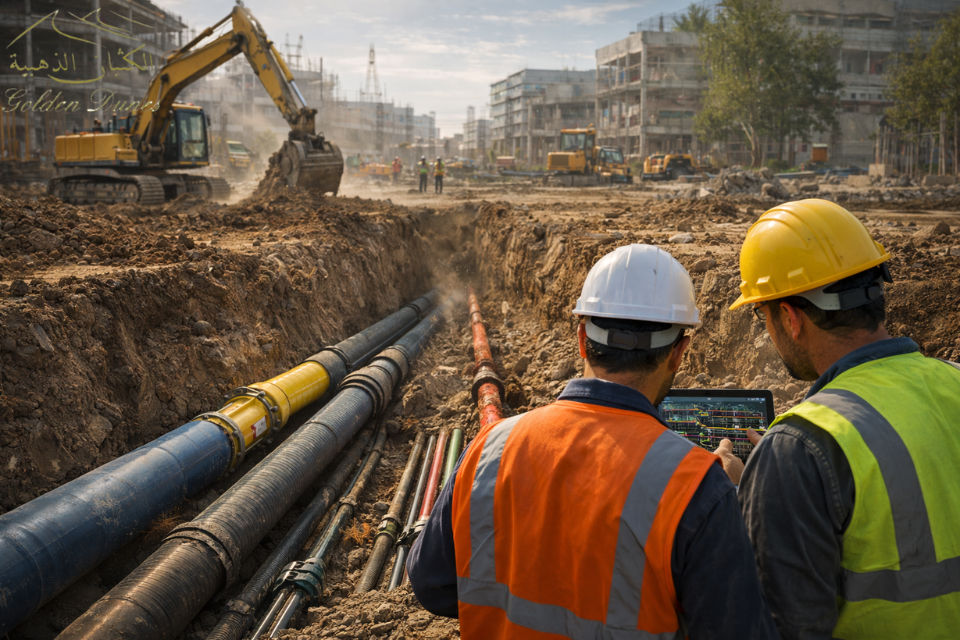
What Underground Utilities and Assets Exist Beneath Construction Sites?
Modern infrastructure development relies heavily on extensive networks of underground utilities. Beneath construction sites, there are often complex systems of pipelines, electrical cable networks, communication lines, water distribution pipes, and fuel storage systems such as a storage tank. These hidden assets are critical for the functioning of cities and industrial facilities, yet they are often invisible from the surface during the early stages of an excavation project.
In many urban areas, particularly in large infrastructure zones across Saudi Arabia, multiple systems are installed close to one another around underground utilities. These may include water networks, fiber-optic communication cables, electrical infrastructure, and gas pipelines. When excavation begins without accurate knowledge of these systems, the risk of damaging underground utilities increases significantly.
Because of this complexity, engineers must first identify and locate underground utility lines before excavation begins. Accurate mapping helps contractors avoid accidental contact with sensitive infrastructure and significantly reduces the possibility of damage to underground systems that support urban operations.
Why Locating Underground Utilities Is Critical Before Excavation
Before any soil is removed from the ground, project teams must carefully locate buried infrastructure to prevent unexpected incidents. The presence of unknown pipelines or electrical systems can create a serious risk of accidents if excavation equipment comes into direct contact with them. This is particularly important in construction projects involving dense infrastructure such as industrial facilities, oil and gas installations, or urban development zones.
Accurate identification of underground utility lines allows contractors to plan excavation work more safely. Technologies used in modern infrastructure inspection, including advanced scanning and pipeline monitoring systems, help engineers determine the precise location of buried assets. For example, modern inspection tools such as pipeline inspection technologies are often used to verify the condition and position of underground systems before excavation begins.
Industry studies also highlight the economic impact of poor utility detection. According to research published by the World Bank infrastructure program, accidental utility strikes during construction projects can result in major financial losses, service disruption, and safety hazards. Proper planning and accurate locating procedures significantly reduce the risk of damaging underground utilities.
Common Misconceptions About Underground Utility Locating
Despite the importance of locating buried infrastructure, several misconceptions still exist within the construction industry. One common assumption is that older sites contain limited underground infrastructure. In reality, many locations contain multiple layers of infrastructure installed over decades, making it difficult to identify every buried system without modern detection technologies.
Another misconception is that mechanical excavation equipment can safely operate near underground lines if operators are careful. However, the mechanical force generated by heavy excavation equipment can easily lead to damaging underground utilities, especially when operators cannot visually confirm the location of pipelines or cables.
These risks have led engineers to adopt more precise excavation approaches that allow soil to be removed without causing unnecessary disturbance to surrounding infrastructure. As a result, modern project planners increasingly evaluate safer excavation techniques when comparing vacuum excavation vs traditional excavation, particularly in areas where underground utilities must be protected.
Non-Destructive Digging: A Safer Approach to Precision Excavation
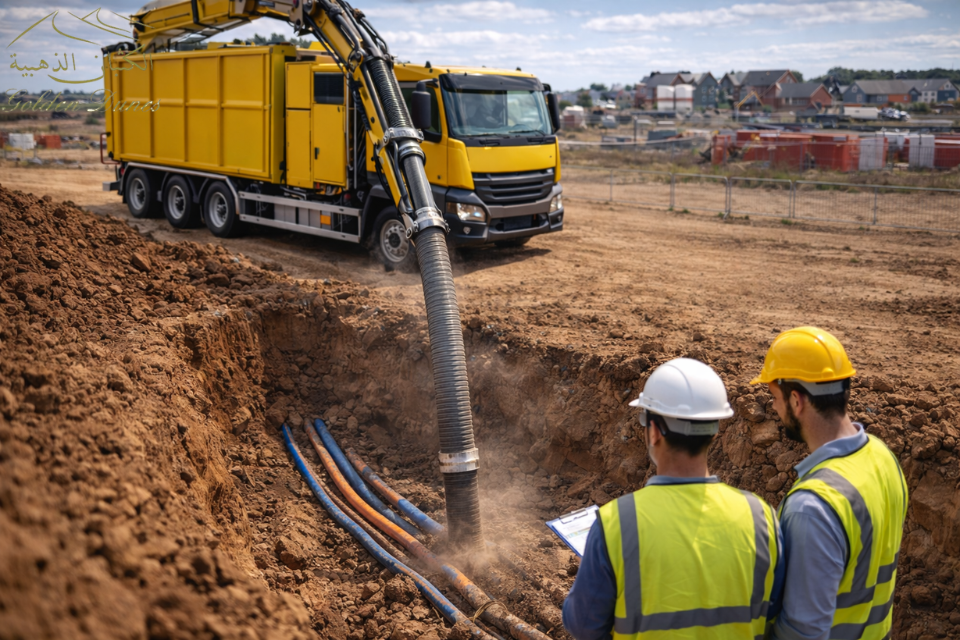
What Is Non-Destructive Digging and How Does It Work?
In modern infrastructure work, non-destructive digging has become an important method used when precision is required around underground assets. Unlike mechanical excavation that relies on heavy equipment to break and remove soil, this method uses controlled techniques designed to expose buried infrastructure without causing damage to surrounding systems.
This approach is also known as non-destructive digging because it allows operators to safely remove soil while protecting nearby pipelines, cables, and other underground utility lines. Instead of using a mechanical bucket, the system typically relies on water or air pressure to loosen and break up soil. The loosened material is then extracted using a powerful vacuum, making the excavation process significantly more controlled.
Because of the non-destructive nature of vacuum excavation, this method has become increasingly valuable in construction projects where infrastructure is located beneath the surface. Operators can precisely expose buried systems while minimising ground disturbance and reducing the likelihood of utility damage.
Differences Between Traditional Excavation and Non-Destructive Digging
The difference between mechanical excavation and non-destructive methods becomes clear when comparing operational precision. In traditional excavation, an excavator or backhoe uses mechanical force to dig through soil layers. While this process can be effective for large earthmoving tasks, it often creates a higher risk of damaging underground utilities, particularly when equipment operates near sensitive infrastructure.
By contrast, non-destructive digging uses controlled excavation techniques that significantly improve safety. When using vacuum excavation, soil can be removed gradually and accurately, allowing operators to work directly around underground utilities without striking them. This method is widely recognized as a safer alternative to traditional excavation because it allows engineers to expose buried assets while maintaining structural stability.
The comparison between these techniques is one of the reasons why many project planners evaluate vacuum excavation vs traditional excavation before selecting the most appropriate approach for an excavation site. In locations where underground systems are present, the precision offered by non-destructive excavation can be a major advantage.
When Construction Projects Require Non-Destructive Excavation Methods
Non-destructive excavation methods are particularly valuable in areas with dense underground utilities. These environments often include complex networks of pipelines, electrical systems, communication cables, and water infrastructure. Mechanical excavation in such environments can lead to serious infrastructure disruption and costly repairs.
For this reason, many contractors now rely on specialized technologies such as suction excavator services when working in sensitive infrastructure zones. These systems allow operators to carefully expose buried assets, making them highly effective for tasks such as pipeline inspection, cable identification, and maintenance work in confined spaces.
According to international construction safety research from the Common Ground Alliance, adopting non-destructive excavation techniques significantly reduces the risk of underground infrastructure damage during excavation activities. As infrastructure networks continue to expand, these safer methods are becoming increasingly important in modern engineering practices.
As a result, many infrastructure planners now consider non-destructive excavation technologies when evaluating vacuum excavation vs traditional excavation, particularly in projects where precision digging is essential to protect underground systems.
Vacuum Excavators and Modern Excavation Technology
How Vacuum Excavators Operate in Construction Projects
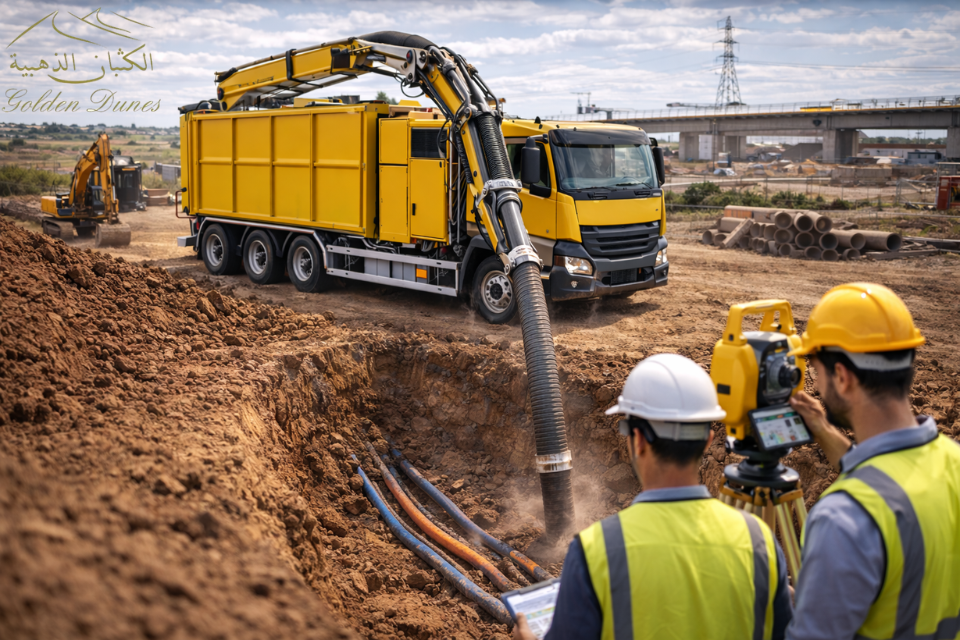
Modern infrastructure projects increasingly rely on vacuum excavators to perform precise and controlled excavation work. Unlike traditional mechanical equipment, these systems use a powerful vacuum combined with water or air to break and loosen soil before it is safely removed. This process allows operators to expose underground assets while maintaining a high level of precision and control.
In this method used in modern excavation, pressurized water to loosen soil or compressed air is applied to break up soil without aggressive mechanical force. Once the soil is loosened, the vacuum system extracts the material into a sealed storage tank. This controlled excavation process significantly reduces ground disturbance and allows engineers to work safely around sensitive infrastructure.
Because of its precision, vacuum excavation is widely used in environments where precision is required, such as urban infrastructure corridors, industrial zones, and pipeline maintenance sites. The ability to safely remove soil without causing damage to surrounding infrastructure makes this technology a reliable solution for excavation near underground systems.
Hydro Excavation and the Use of Water or Air to Loosen Soil
One of the most common forms of vacuum excavation is hydro excavation. This technique uses high-pressure water to loosen soil before it is removed by a vacuum system. Because the soil is broken down using water rather than mechanical force, the method allows excavation teams to safely expose buried assets while reducing the risk of damaging underground utilities.
Hydro excavation has become highly effective in areas with dense underground utilities, where traditional digging equipment may create unnecessary hazards. The process allows operators to precisely expose underground utility lines, cables, and pipelines while maintaining structural stability in the surrounding ground.
Many infrastructure specialists consider hydro excavation an environmentally friendly option because it minimises soil displacement and reduces the need for extensive manual digging. In addition, the controlled nature of the technology helps reduce the risk of accidents on construction sites and improves overall site safety.
Advantages of Using Vacuum Excavation Compared to Traditional Methods
When comparing excavation technologies, the advantages of vacuum systems become more evident. Traditional excavation relies on heavy equipment such as an excavator or backhoe, which can be efficient for large-scale digging but often increases the risk of damaging underground infrastructure. Mechanical force may accidentally strike pipelines, cables, or other buried systems.
By contrast, vacuum excavation allows operators to carefully expose infrastructure while maintaining control over soil removal. This approach significantly reduces the risk of damaging underground assets and provides a safer working environment for construction teams. Because the excavation process is more controlled, it also helps minimise environmental disturbance and improves project efficiency.
These operational differences are one of the main reasons engineers evaluate vacuum excavation vs traditional excavation before selecting excavation methods for complex infrastructure projects. In environments where underground infrastructure must be protected, vacuum excavation offers a safe and efficient alternative to traditional digging techniques.
For example, modern excavation technologies used in industrial infrastructure projects such as suction excavation allow engineers to expose buried systems safely while maintaining project efficiency. Research from the Occupational Safety and Health Administration (OSHA) also highlights that controlled excavation methods can significantly improve construction safety when working near underground utilities.
Environmental Impact and Preservation in Excavation Projects
Environmental Impact of Traditional Excavation Methods
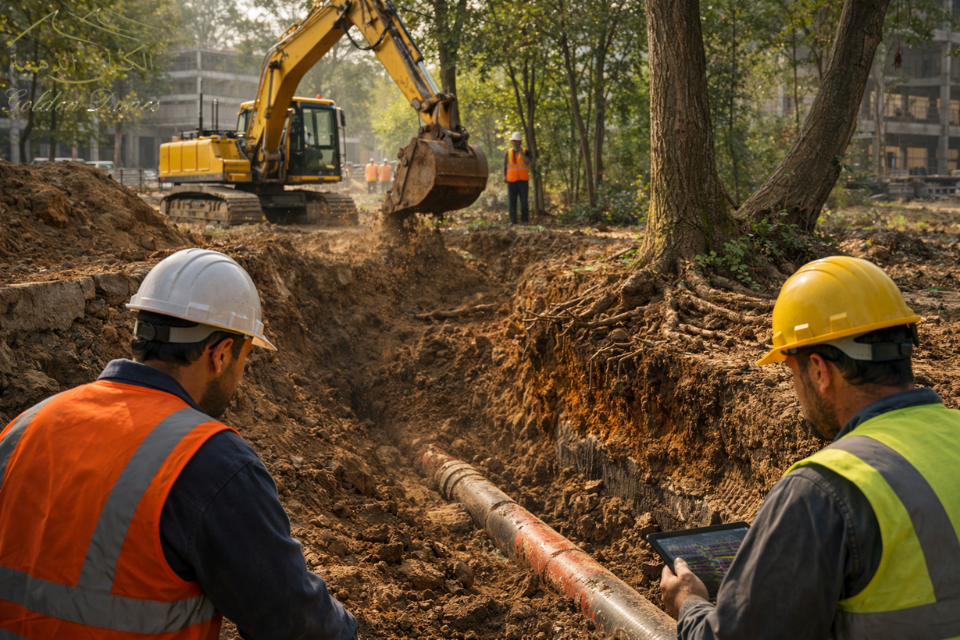
Excavation activities inevitably influence the surrounding environment, especially in large infrastructure and urban construction projects. Traditional excavation techniques rely heavily on heavy machinery such as a backhoe or mechanical excavator to break up soil and remove large volumes of material. While these traditional excavation methods are effective for major earthmoving operations, they often create significant ground disturbance and may increase the overall environmental impact of the excavation process.
When mechanical excavation equipment operates near sensitive areas, it can unintentionally damage natural features such as tree roots and underground ecosystems. The aggressive nature of traditional digging may also disturb surrounding soil layers and create unnecessary disruption in areas with dense underground utilities. In such environments, traditional excavation tends to generate larger excavation zones, increasing the possibility of damage to underground infrastructure systems.
How Vacuum Excavation Minimises Environmental Disturbance
Modern excavation technologies have been developed to reduce environmental disruption while maintaining operational efficiency. One of the most effective approaches is using vacuum excavation, which allows contractors to remove soil in a controlled manner without extensive mechanical disturbance. The method uses water or air to loosen soil before it is extracted through a vacuum system, allowing excavation teams to work with a high level of precision.
Because of the non-destructive nature of vacuum excavation, this technique helps protect surrounding soil structures and underground assets. Operators can carefully expose pipelines, cables, and other underground utility lines without the aggressive force generated by mechanical digging equipment. This significantly reduces the risk of infrastructure damage while also helping minimise environmental disturbance.
In addition to protecting infrastructure, vacuum excavation is often considered an environmentally friendly option for excavation work. The technology allows contractors to perform precise excavation in confined spaces and sensitive areas such as landscaped environments or locations where tree roots must be preserved.
Why Modern Infrastructure Projects Prefer Environmentally Friendly Excavation
As environmental awareness grows within the construction industry, project planners increasingly evaluate excavation technologies that reduce ecological impact. Controlled excavation methods allow engineers to maintain safe infrastructure operations while minimizing unnecessary soil disturbance. This balance between operational efficiency and environmental protection is becoming a key consideration in modern project planning.
The comparison between vacuum excavation vs traditional excavation often highlights these environmental benefits. Vacuum excavation allows contractors to work around underground infrastructure while preserving surrounding soil conditions, making it particularly valuable in environmentally sensitive locations.
Many infrastructure operators and utility companies now recommend controlled excavation practices to protect underground systems and natural environments. According to research from the U.S. Environmental Protection Agency, minimizing soil disturbance during construction activities can significantly reduce environmental damage and improve sustainable infrastructure development.
For contractors working in complex environments, solutions such as vacuum excavation services provide a safer and more environmentally responsible alternative to traditional excavation practices.
Vacuum Excavation vs Traditional Excavation: Key Differences
Comparing Vacuum and Traditional Excavation Methods
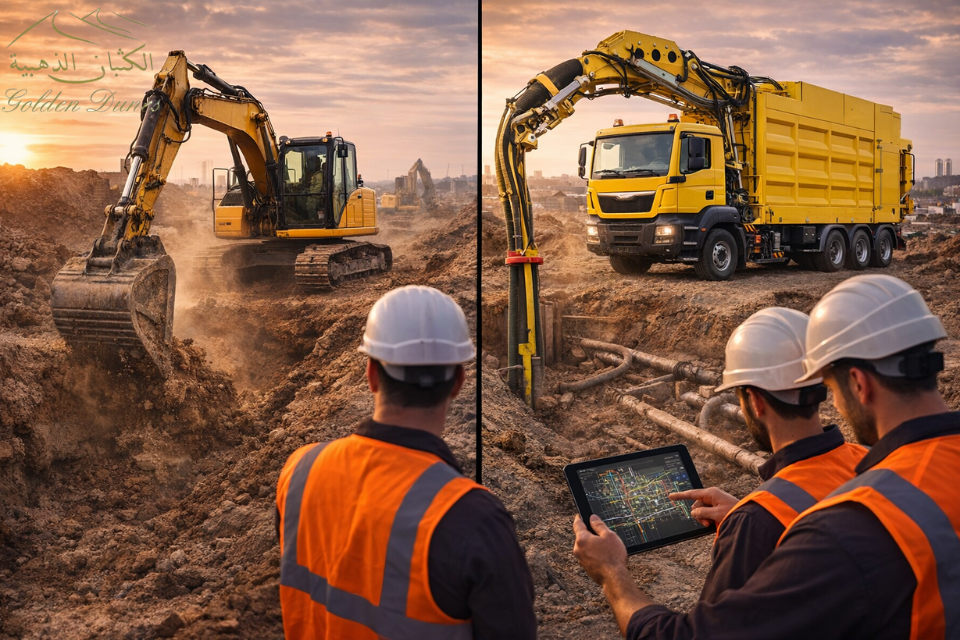
When evaluating excavation techniques used in modern infrastructure work, the comparison between vacuum excavation vs traditional excavation reveals significant differences in safety, efficiency, and environmental performance. Traditional excavation relies on mechanical force from equipment such as a backhoe or hydraulic excavator to break through soil layers and remove material from the ground.
While traditional digging methods are often effective for large-scale earthmoving operations, they can increase the risk of damaging underground utilities when excavation occurs near buried infrastructure. Mechanical digging may accidentally strike pipelines, electrical cables, or communication systems, especially in areas with dense underground utilities.
In contrast, vacuum excavation offers a controlled approach that allows contractors to remove soil precisely while working around underground systems. By using water or air to loosen soil and a powerful vacuum to extract it, vacuum excavation allows operators to expose buried infrastructure without causing damage. Because of this precision, the technology is widely used in projects where precision is required.
Operational Differences Between Excavation Techniques
| Factor | Vacuum Excavation | Traditional Excavation |
|---|---|---|
| Excavation Method | Uses water or air to break and loosen soil before removal with a powerful vacuum. | Uses heavy equipment such as a backhoe or mechanical excavator. |
| Precision | Highly precise excavation allowing operators to work around underground utilities. | Less precise due to reliance on mechanical digging force. |
| Utility Protection | Significantly reduces the risk of damaging underground infrastructure. | Higher risk of damaging underground utilities. |
| Environmental Impact | Considered an environmentally friendly option with minimal soil disturbance. | Often causes greater ground disturbance and environmental impact. |
| Site Safety | Improves site safety and reduces the risk of accidents. | Mechanical excavation increases operational hazards. |
| Efficiency in Sensitive Areas | Highly effective in confined spaces and near buried infrastructure. | Less suitable for precision excavation around utilities. |
Why Vacuum Excavation Has Become a Preferred Modern Solution
Due to its precision and safety benefits, vacuum excavation has become one of the most reliable excavation technologies used in modern infrastructure development. Engineers and contractors increasingly rely on this technique when working in environments where protecting underground infrastructure is essential.
Unlike traditional excavation techniques that depend on mechanical force, vacuum excavation allows operators to perform efficient excavation with minimal disruption to surrounding infrastructure. This capability is particularly valuable for utility companies, municipal infrastructure projects, and pipeline maintenance operations.
Because of these advantages, many infrastructure specialists consider vacuum excavation a safer alternative to traditional excavation. The ability to carefully expose underground systems while maintaining operational efficiency makes it a preferred solution for complex excavation environments.
Modern infrastructure providers also recommend controlled excavation practices to protect critical systems. According to infrastructure safety guidance from the Occupational Safety and Health Administration, reducing excavation risks near underground utilities significantly improves construction safety and operational reliability.
For organizations seeking advanced excavation technologies, solutions such as suction excavation systems demonstrate how modern engineering approaches can improve excavation accuracy, protect underground assets, and enhance overall project safety.
Frequently Asked Questions About Vacuum Excavation vs Traditional Excavation
Conclusion
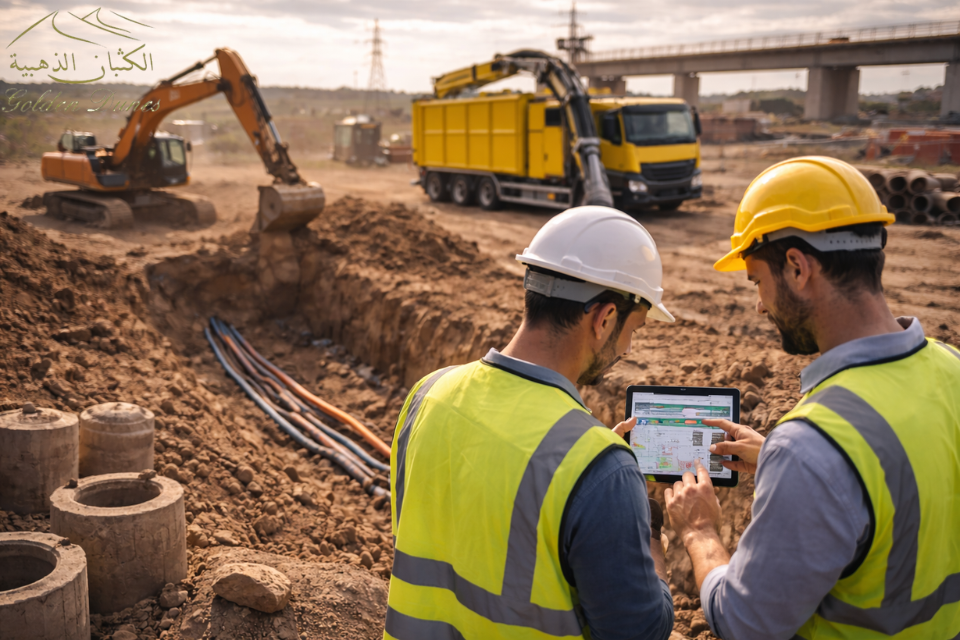
Choosing the right excavation method is a critical decision in modern infrastructure and construction projects. While traditional excavation methods have long been used for large-scale earthmoving operations, they can increase the risk of damaging underground utilities when digging near sensitive infrastructure. As underground networks become more complex in urban and industrial environments, the need for safer and more precise excavation solutions continues to grow.
When comparing vacuum excavation vs traditional excavation, it becomes clear that each method serves a different purpose. Traditional excavation remains effective for large excavation areas where speed and volume are the primary requirements. However, vacuum excavation offers significant advantages in projects that require precision, safety, and minimal environmental disturbance.
The non-destructive nature of vacuum excavation allows operators to carefully remove soil while protecting underground pipelines, cables, and utility systems. This approach significantly reduces the risk of accidents, improves site safety, and provides a safer working environment for construction teams. Because of these advantages, many engineers and contractors now consider vacuum excavation a reliable alternative to traditional excavation in areas where underground infrastructure must be protected.
As infrastructure networks continue to expand worldwide, selecting the most appropriate excavation method becomes increasingly important. Understanding the practical differences between vacuum excavation vs traditional excavation allows project planners, engineers, and contractors to choose the safest and most efficient approach for their excavation needs.