
Avoid Underground Utility Damage Before It Costs Millions
The Importance of Protecting Underground Utilities in Modern Projects

In today’s rapidly evolving construction industry, the risk of underground utility damage has become one of the most critical challenges facing large-scale infrastructure projects. Whether during an excavation project or routine maintenance, failing to properly locate and manage underground utilities can lead to severe consequences, including service disruption, safety hazards, and costly delays.
Accurate utility locating and effective damage prevention strategies are no longer optional—they are essential components of modern construction safety. With the increasing complexity of underground facilities such as utility lines, gas lines, and telecommunication networks, even a minor utility strike can escalate into a major operational and financial setback.
According to global safety standards highlighted by organizations such as Common Ground Alliance, proactive planning, proper notification, and advanced detection methods play a vital role in reducing underground utility strikes and protecting public safety. This is particularly relevant in regions like Saudi Arabia, where large-scale development initiatives demand precision and efficiency.
For example, adopting advanced approaches such as safe excavation techniques can significantly help prevent damage to sensitive utility locations while maintaining project timelines. These methods are designed to avoid damage and ensure that critical essential services remain uninterrupted.
Why Preventing Underground Utility Damage Is a Strategic Priority
Preventing underground utility damage is not only about avoiding repair costs—it is about protecting human lives, maintaining operational continuity, and ensuring compliance with industry regulations. A single incident involving an excavator hitting a buried cable or pipeline can result in serious safety hazards, environmental risks, and even potential fatality.
From a strategic perspective, implementing proper planning and design processes, combined with accurate utility records and advanced utility detection technologies such as ground penetrating radar (GPR), allows project teams to better understand utility depth and minimize risks associated with excavation activities.
Moreover, integrating systems like one-call and one-call notification center services ensures effective communication between contractors, utility owners, and utility company stakeholders before any ground disturbance begins. This level of coordination is essential to safeguard public utilities and maintain uninterrupted service delivery.
Key Causes of Underground Utility Damage in Excavation Projects
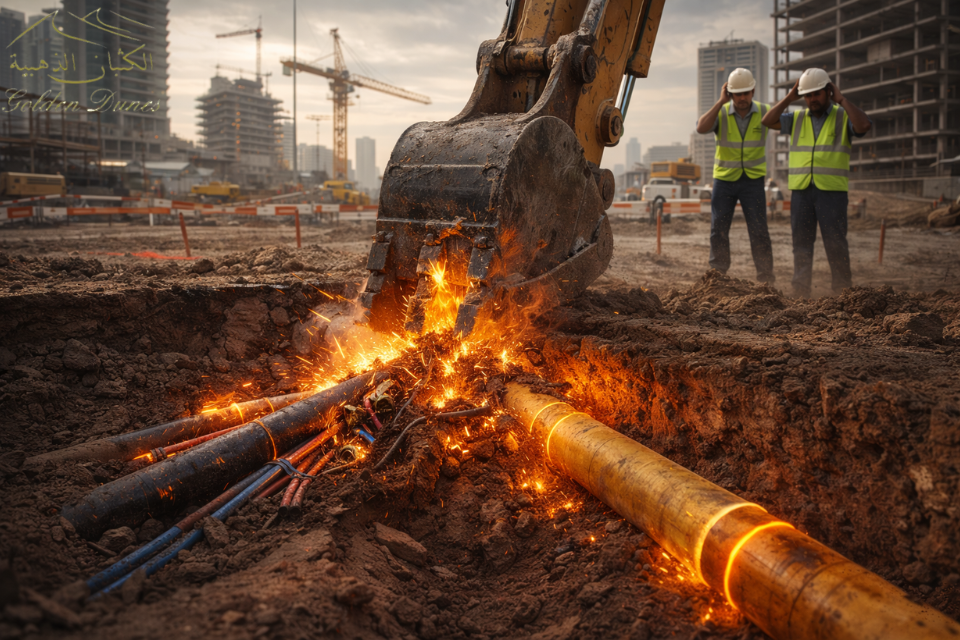
Understanding the root causes of underground utility damage is essential for improving excavation safety and reducing costly damage incidents. In most cases, these incidents are not random—they result from gaps in planning, inaccurate utility locating, or improper execution during excavation work.
Despite advancements in utility detection and excavation technologies, many projects still rely on incomplete utility records or outdated utility maps. This creates a high-risk environment where underground utilities remain vulnerable to unexpected contact during excavation.
Inaccurate Utility Locating and Missing Depth Information
One of the most common causes of utility damage is inaccurate utility locating. When utility locations are not properly identified, or when depth information is unclear, excavation teams are forced to operate with uncertainty. This significantly increases the likelihood of a utility strike, especially when working around complex underground facilities.
Technologies such as using ground penetrating radar and electromagnetic detection can improve accuracy, but their effectiveness depends on proper application and skilled locator personnel. Without precise data, even experienced operators may unintentionally excavate into critical infrastructure.
Human Error and Improper Excavation Practices
Human error remains a leading factor in underground utility damage. Misjudging the position of an excavator bucket, failing to follow excavation safety protocols, or ignoring white lining and marking guidelines can quickly result in severe damage to underground utilities.
In many cases, insufficient training or lack of awareness contributes to unsafe behavior on-site. This highlights the importance of continuous inspection, adherence to best practices, and proper supervision to prevent accidents during high-risk operations.
Failure in Notification and Coordination Systems
A critical yet often overlooked cause of underground utility damage is the failure to follow proper notification procedures before excavation begins. Systems like 811 and one-call notification center services are designed to connect contractors with utility owners and utility company representatives to verify utility locations.
When these systems are ignored or improperly used, the risk of hitting utility lines increases significantly. Effective communication between all stakeholders is essential to ensure that excavation activities do not lead to service disruption or unnecessary repair costs.
Limitations of Traditional Excavation Methods
Traditional excavation techniques, especially those relying solely on mechanical digging, often lack the precision required to safely navigate dense underground utilities. This increases the probability of underground utility strikes, particularly in urban or heavily developed areas.
Modern alternatives, such as non-destructive excavation solutions, offer a safer approach by allowing operators to expose utility lines without direct contact. These methods significantly reduce risks associated with excavation while improving overall project efficiency.
Real Consequences of Underground Utility Damage in Infrastructure Projects

The true impact of underground utility damage goes far beyond a simple technical error. In reality, it can trigger a chain reaction of operational, financial, and safety-related consequences that affect the entire excavation project lifecycle. From unexpected delays to severe damage incidents, the cost of failure can escalate rapidly.
In large-scale infrastructure projects, even a minor utility strike can disrupt critical essential services such as telecommunication, electricity, or water supply. This disruption not only impacts project timelines but also affects communities and businesses relying on these systems.
Financial Losses and Increasing Repair Costs
One of the most immediate consequences of utility damage is the significant increase in repair costs. Damaging utility lines or gas lines often requires emergency intervention, specialized equipment, and coordination with multiple utility company stakeholders.
Additionally, projects may face penalties, insurance claims, and compensation costs, especially when public services are interrupted. These financial burdens can severely impact project profitability and long-term business sustainability.
Safety Hazards and Risk of Fatality
Beyond financial impact, underground utility damage introduces serious safety hazards that can endanger workers and the surrounding environment. Accidental contact with high-pressure pipelines or electrical cable systems can lead to explosions, fires, or electrical shock incidents.
In extreme cases, such incidents may result in fatality, particularly when proper excavation safety procedures are not followed. This highlights the critical need for strict compliance with safety standards and continuous inspection throughout the excavation process.
Project Delays and Operational Disruption
When damage to underground utilities occurs, work must often stop immediately to assess the situation, repair the damage, and ensure safety compliance. This leads to significant project delays, affecting deadlines and resource allocation.
In many cases, the disruption extends beyond the construction site, impacting supply chains, logistics, and stakeholder coordination. The inability to avoid damage at early stages often results in long-term operational inefficiencies.
Reputation Damage and Loss of Client Trust
Repeated damage incidents can harm a contractor’s reputation within the construction industry. Clients and project owners expect high levels of precision and reliability, especially in complex environments involving underground utilities.
Failure to implement effective damage prevention strategies may lead to loss of future opportunities, reduced trust, and negative brand perception. In competitive markets like Saudi Arabia, maintaining a strong reputation is essential for long-term success.
Legal and Regulatory Consequences
In many regions, including the GCC, strict regulations govern excavation near underground facilities. Non-compliance with notification requirements, improper utility locating, or failure to follow safety guidelines can result in legal penalties.
Authorities and regulatory bodies often require detailed documentation through tools like damage information reporting tool systems to track and analyze incidents. These records play a key role in determining liability and enforcing accountability across all involved parties.
How Advanced Technologies Improve Damage Prevention in Excavation

As the complexity of underground utilities continues to grow, relying on traditional methods alone is no longer sufficient to prevent damage. Modern excavation technologies are now essential for improving accuracy, reducing risks associated with digging, and ensuring higher levels of construction safety.
The integration of smart detection systems, non-invasive excavation techniques, and data-driven planning has significantly reduced the frequency of underground utility damage. These innovations allow project teams to better locate, analyze, and safely interact with underground facilities before any physical work begins.
Utility Detection Technologies and Accurate Locating Systems
Accurate utility detection is the foundation of effective damage prevention. Technologies such as ground penetrating radar (GPR) and electromagnetic detection enable teams to identify utility locations, detect metallic pipes, and estimate utility depth with higher precision.
By combining these tools with professional utility locating services and experienced utility locator specialists, contractors can significantly reduce the risk of unexpected utility strike incidents. These systems provide critical insights that support safer and more efficient excavation work.
Non-Destructive Excavation and Trenchless Technologies
One of the most effective ways to avoid damage is through the use of trenchless and non-destructive excavation methods. These approaches allow contractors to expose utility lines without direct mechanical contact, minimizing the chances of damage to underground utilities.
For example, advanced solutions like non-invasive excavation methods use controlled vacuum systems to safely remove soil while preserving surrounding underground utilities. This technique is particularly effective in congested urban environments where precision is critical.
Real-Time Monitoring and Smart Safety Systems
Modern infrastructure projects increasingly rely on real-time monitoring systems to enhance excavation safety. These systems use sensors, data analytics, and integrated platforms to track equipment movement and detect potential hazard conditions before they escalate into damage incidents.
By integrating solutions such as smart site safety systems, project teams can maintain full visibility over operations and respond quickly to emerging risks. This proactive approach is essential for reducing underground utility strikes and improving overall project performance.
The Role of Planning, Design, and Utility Engineering
Effective planning and design processes play a crucial role in minimizing underground utility damage. By incorporating subsurface utility engineering practices, project teams can analyze utility records, validate utility maps, and identify potential conflicts before excavation begins.
This structured approach allows engineers to design safer excavation strategies, optimize workflows, and ensure compliance with regulatory standards. It also supports better coordination between contractors, utility owners, and project stakeholders.
Combining Technology with Best Practices for Maximum Protection
While advanced tools are essential, their effectiveness depends on proper implementation of best practices. This includes clear marking, accurate white lining, proper notification, and continuous inspection throughout the project lifecycle.
By combining technology with disciplined operational processes, companies can create a comprehensive system for damage prevention. This integrated approach not only helps avoid damage but also ensures that underground utilities remain protected, supporting long-term infrastructure reliability.
Why Choosing the Right Contractor Reduces Underground Utility Damage

In high-risk excavation project environments, the difference between success and failure often depends on one critical factor: choosing the right contractor. The ability to prevent damage to underground utilities is not just about equipment—it is about expertise, systems, and disciplined execution.
Contractors who invest in advanced utility locating, proper planning and design, and modern excavation technologies are significantly better positioned to reduce underground utility damage and maintain operational efficiency.
Experience in Managing Underground Utilities and Complex Infrastructure
Handling underground facilities requires deep industry knowledge and practical experience. Contractors with a proven track record in managing complex utility lines and infrastructure projects understand how to identify potential risks before they escalate into damage incidents.
Their expertise in utility engineering and locating underground utilities ensures accurate decision-making, reducing uncertainty during excavation work and minimizing the likelihood of a utility strike.
Use of Advanced Detection and Excavation Technologies
A reliable contractor integrates cutting-edge tools such as ground penetrating radar (GPR), electromagnetic detection, and precision excavation equipment to detect and protect utility locations. These technologies enable safer interaction with sensitive infrastructure, especially when dealing with gas lines or high-value cable networks.
Additionally, adopting solutions like precision excavation services allows contractors to perform controlled digging with minimal disturbance, significantly reducing risks associated with traditional excavation methods.
Strong Safety Culture and Commitment to Best Practices
Contractors committed to construction safety prioritize strict adherence to best practices, including proper marking, white lining, and continuous inspection. These measures ensure that all on-site activities align with safety regulations and minimize exposure to safety hazards.
Moreover, implementing structured notification processes and coordinating with utility owners and utility company stakeholders ensures that excavation activities are carried out with full awareness of existing underground risks.
Effective Communication and Coordination Systems
Successful contractors understand that preventing underground utility damage requires seamless communication between all project stakeholders. Systems such as one-call and one-call notification center services play a crucial role in sharing accurate utility records and verifying utility locations before excavation begins.
This coordinated approach reduces misunderstandings, improves planning accuracy, and helps teams avoid damage during critical phases of the project.
Long-Term Value Through Risk Reduction and Efficiency
Choosing the right contractor is not just about completing a project—it is about protecting long-term value. By minimizing underground utility damage, companies can reduce repair costs, prevent delays, and maintain strong relationships with clients and stakeholders.
In competitive markets, contractors who consistently deliver safe and efficient results gain a strategic advantage, positioning themselves as trusted partners in delivering complex land development and infrastructure projects.