How Non-Destructive Testing Protects Critical Infrastructure
What Is Non-Destructive Testing (NDT) and Why Is It Important?
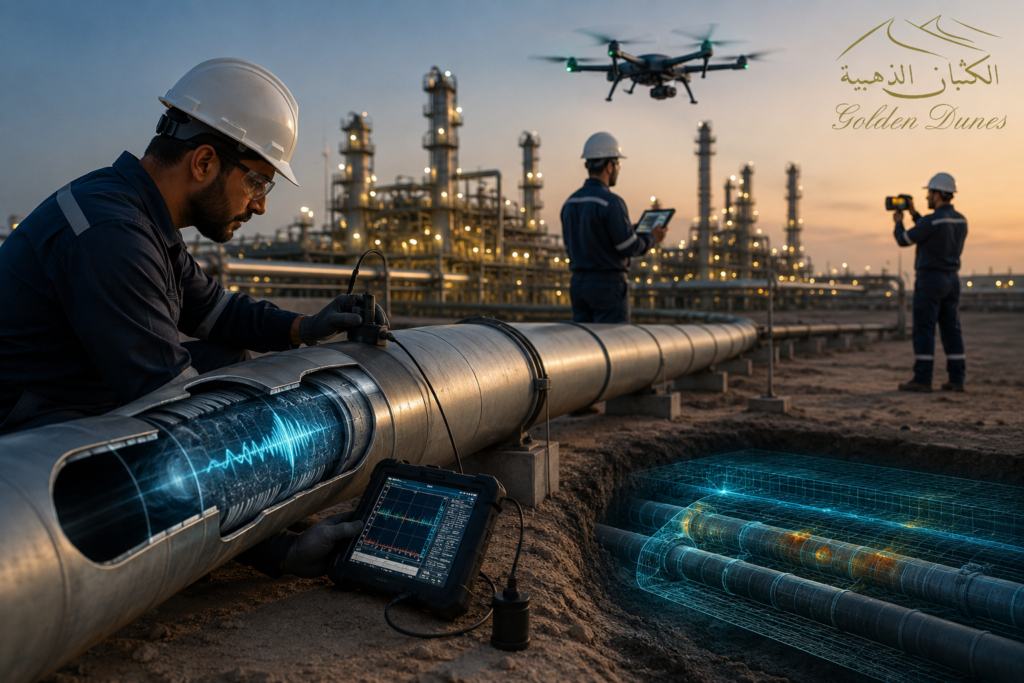
As infrastructure systems become more complex across Saudi Arabia and the GCC, companies are under growing pressure to protect critical assets without disrupting operations. This is where non destructive inspection technologies have become essential for modern industrial projects, pipeline networks, and smart infrastructure systems.
Unlike destructive testing, modern non-destructive testing allows engineers and inspectors to evaluate the internal structure of industrial assets without damaging operational components or interrupting production activities. This approach helps organizations identify hidden defects, monitor structural integrity, and improve long-term operational reliability while maintaining strict safety and quality standards.
Today, industries such as oil and gas, utilities, petrochemicals, and infrastructure development increasingly depend on advanced inspection methods to detect corrosion, cracks, weld defects, and hidden weaknesses before they evolve into costly failures. Many companies now integrate predictive ndt inspection strategies as part of broader infrastructure protection and maintenance programs.
Modern projects also require faster and more efficient inspection solutions that reduce downtime and improve asset performance. Technologies such as ultrasonic testing, radiographic testing, eddy current testing, and magnetic particle inspection are now widely used across industrial sectors because they can detect critical problems early while supporting operational continuity.
As discussed in advanced construction technology strategies in Saudi Arabia, infrastructure owners are increasingly investing in intelligent monitoring and predictive maintenance systems to support Vision 2030 goals and improve long-term infrastructure resilience.
How Non-Destructive Testing Works in Modern Infrastructure
Modern ndt methods use advanced sensors, imaging systems, electromagnetic technologies, and high-frequency sound waves to inspect materials and structures without causing physical damage. Depending on the asset type and inspection objective, engineers may apply several types of testing techniques to evaluate pipelines, pressure vessels, weld joints, storage tanks, or underground infrastructure systems.
For example, ultrasonic testing uses high-frequency sound waves to identify internal defects that may not be visible to the naked eye. Similarly, x-rays or gamma rays are commonly used during radiographic inspection procedures to examine weld quality and detect hidden discontinuities inside industrial components.
Other inspection techniques, such as magnetic particle testing and liquid penetrant testing, are often applied to surface inspection activities where crack detection and corrosion monitoring are critical for operational safety.
According to the American Society for Nondestructive Testing, regular NDT inspections play a major role in improving industrial safety, quality control, and infrastructure reliability across high-risk operational environments.
The Difference Between Destructive and Non-Destructive Testing
One of the most important distinctions in industrial quality control is the difference between destructive and non-destructive testing approaches. Traditional destructive testing methods require physical samples to be damaged or destroyed in order to evaluate material performance or structural strength.
In contrast, non-destructive inspection methods allow inspectors to examine operational assets while preserving functionality and structural integrity. This makes NDT solutions particularly valuable for critical infrastructure where operational shutdowns can result in major financial losses or safety risks.
For industries managing pipelines, industrial facilities, or large infrastructure systems, the ability to inspect assets without causing operational disruption provides a major strategic advantage. This is one reason why predictive ndt services have become increasingly important in modern infrastructure management programs.
Advanced technologies such as MTM pipeline inspection systems now support infrastructure operators by identifying stress concentration zones and hidden risks before failures occur, helping improve long-term operational continuity.
The Most Effective Non-Destructive Testing Methods Used Today
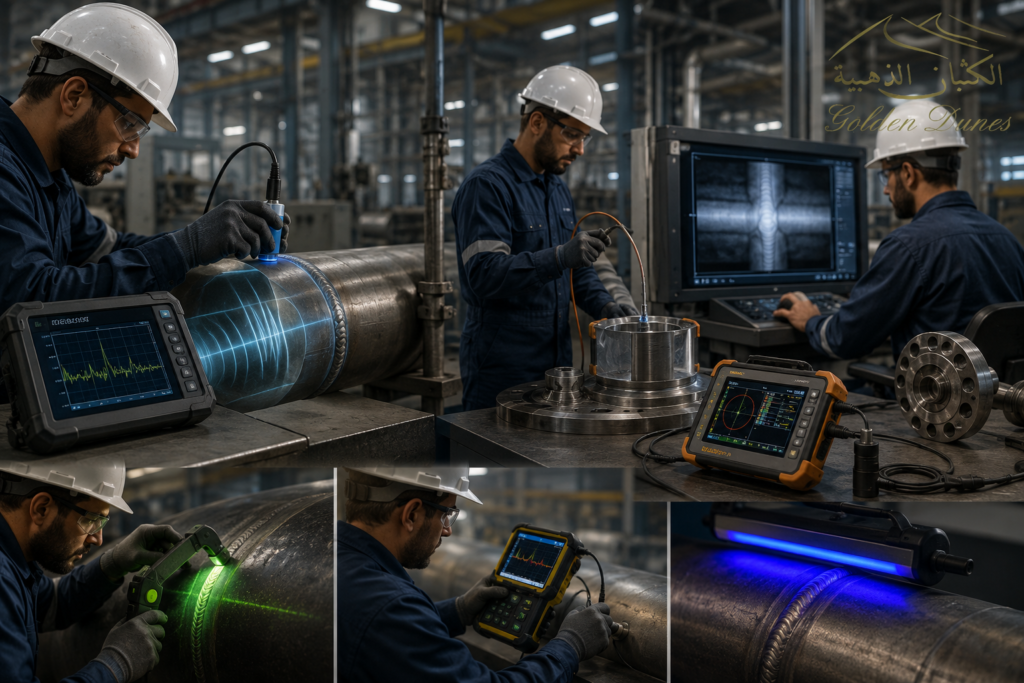
As industrial systems become more advanced, organizations now depend on several types of non-destructive testing methods to improve infrastructure reliability, reduce operational risks, and strengthen long-term asset performance. Each ndt method is designed to detect specific types of defects, material weaknesses, or structural abnormalities depending on operational requirements and inspection conditions.
Modern industrial facilities often combine different methods within integrated inspection programs to improve inspection accuracy and support predictive maintenance strategies. Selecting the right testing approach depends on material type, accessibility, operating conditions, and the nature of the potential defect.
Ultrasonic Testing for Internal Defect Detection
Among the most widely used ndt techniques, ultrasonic testing plays a critical role in evaluating the internal condition of industrial materials and welded structures. This testing method uses high-frequency sound waves to detect hidden discontinuities, corrosion zones, thickness variations, and structural weaknesses inside pipelines, pressure vessels, and storage tanks.
Because ultrasonic testing uses high-frequency sound reflections to identify anomalies, inspectors can accurately evaluate the condition of components without damaging operational assets. This makes the technology highly valuable in industries where continuous operation is essential.
In large infrastructure projects, ultrasonic systems are commonly used during routine inspection procedures to support quality control programs and improve long-term infrastructure reliability.
Radiographic Testing and X-Ray Inspection Methods
Radiographic testing is another advanced inspection solution widely used across industrial environments. This method relies on x-rays or gamma rays to create detailed images of the internal structure of components, helping inspectors identify weld defects, material inconsistencies, corrosion damage, and hidden cracks.
Because radiographic testing can also provide permanent visual records of inspected assets, it is commonly used for pipeline systems, pressure vessels, and critical weld inspection activities where documentation and compliance are essential.
Many infrastructure operators integrate digital radiographic inspection systems into broader infrastructure management programs because they support faster analysis, better inspection data management, and improved operational decision-making.
Eddy Current Testing for Surface and Material Analysis
Eddy current testing is commonly applied to conductive materials where rapid surface inspection and crack detection are required. This method uses electromagnetic testing principles to identify surface flaws, corrosion zones, and material degradation without requiring direct physical damage to inspected components.
The technology is especially useful for detecting fatigue cracks near fastener holes, weld zones, and high-stress operational areas. Because eddy current systems can deliver highly accurate inspection results quickly, they are often used in industries where operational efficiency and inspection speed are critical.
Modern infrastructure operators increasingly use automated eddy current systems as part of larger predictive maintenance and smart monitoring programs.
Magnetic Particle Inspection for Crack Detection
Magnetic particle inspection is one of the most effective techniques used to detect surface and near-surface cracks in ferromagnetic materials. During the process, a magnetic field is applied to the inspected component while fine magnetic particles are used to reveal defects that may otherwise remain invisible during standard visual inspection activities.
This testing method is commonly used for weld inspection, structural steel evaluation, and industrial equipment monitoring because it provides reliable crack detection results with minimal operational interruption.
In sectors such as oil and gas, infrastructure development, and heavy industrial manufacturing, regular magnetic particle testing programs help operators identify defects before they develop into critical structural failures.
Liquid Penetrant Testing for Surface Defects
Liquid penetrant testing is widely used to identify surface-breaking defects that may not be visible to the naked eye. This method involves applying a penetrant liquid to the inspected surface, allowing it to enter cracks or discontinuities before excess material is removed and inspection indicators are applied.
Because this process is relatively simple and highly effective, it remains one of the most common NDT methods used for weld inspection, surface inspection, and quality verification across industrial facilities.
Visual Inspection Techniques in Industrial Facilities
Although advanced digital technologies continue to evolve, visual inspection remains a critical component of industrial inspection services. Skilled inspectors use direct observation, optical systems, remote cameras, and inspection drones to identify visible signs of corrosion, leakage, structural damage, and operational wear.
Modern remote visual inspection systems now allow operators to inspect difficult-to-access infrastructure areas more safely and efficiently while reducing the need for shutdowns or confined-space entry.
As explained in smart site safety systems and monitoring technologies, intelligent infrastructure monitoring solutions are becoming increasingly important for improving operational visibility and industrial safety performance across large-scale projects.
How NDT Prevents Costly Infrastructure Failures
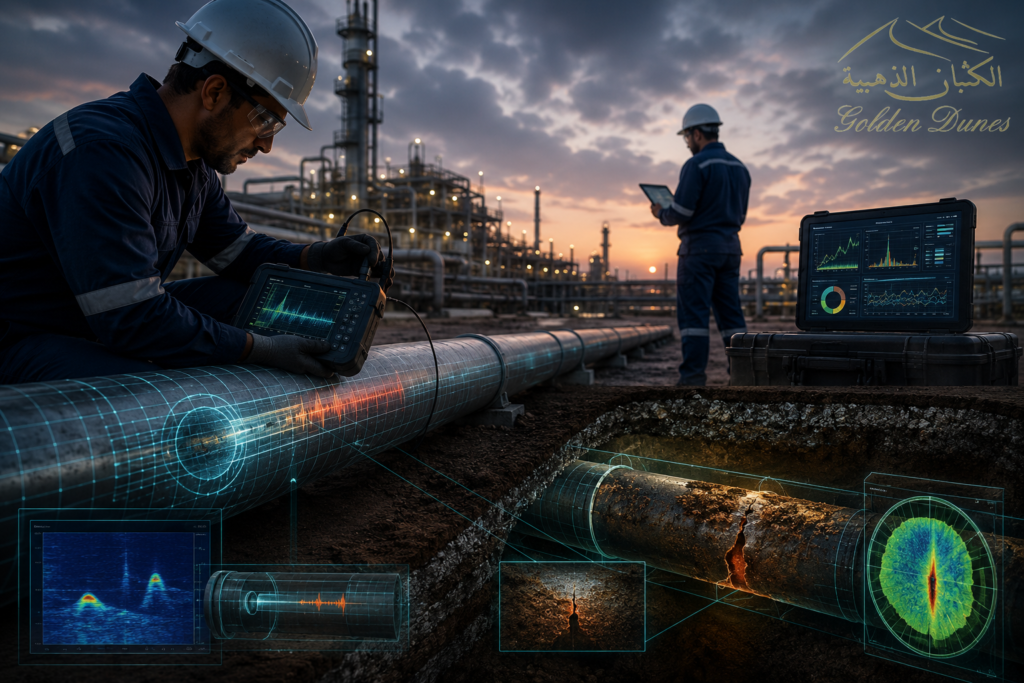
Modern infrastructure failures rarely occur without warning signs. In many cases, corrosion, internal cracking, material fatigue, or weld defects begin developing long before visible damage appears. Without regular non destructive inspection programs, these hidden issues can escalate into operational shutdowns, environmental risks, and expensive emergency repairs.
This is why many industrial operators now rely on advanced ndt inspection strategies to detect problems early and improve infrastructure reliability before failures disrupt operations. Predictive inspection technologies help organizations shift from reactive maintenance toward proactive infrastructure protection.
Detecting Hidden Defects Before They Escalate
One of the biggest advantages of modern non-destructive testing is the ability to detect hidden defects during the early stages of deterioration. Using advanced inspection methods, operators can identify corrosion, crack propagation, internal material degradation, and structural weaknesses before they become critical operational threats.
For example, pipeline systems operating under high pressure may develop internal corrosion or weld stress zones that remain invisible during routine surface inspection activities. Through technologies such as ultrasonic testing, radiographic inspection, and magnetic flux leakage testing, inspectors can identify these risks early while assets remain operational.
Early detection allows maintenance teams to plan corrective actions strategically instead of responding to unexpected failures that may impact production continuity or infrastructure safety.
Reducing Emergency Maintenance and Downtime Costs
Unexpected infrastructure failures often create significant financial pressure for industrial operators. Emergency shutdowns can interrupt production schedules, increase maintenance costs, and expose organizations to operational and environmental liabilities.
By implementing regular NDT inspections, companies can reduce unplanned downtime and improve maintenance scheduling efficiency. Predictive inspection data allows operators to prioritize repairs based on actual asset conditions instead of relying solely on fixed maintenance intervals.
This approach improves operational continuity while helping organizations optimize resource allocation and long-term infrastructure management strategies.
Industries that manage pipelines, storage tanks, power systems, and large industrial facilities increasingly depend on advanced inspection services because infrastructure interruptions can generate substantial operational losses within short periods of time.
Protecting Pipelines and Underground Infrastructure
Underground infrastructure systems present unique operational challenges because many critical defects remain hidden below the surface for long periods. Corrosion, pressure stress, material fatigue, and leakage can gradually weaken pipelines and utility systems without obvious external indicators.
This is where advanced non-destructive inspection methods become essential for long-term infrastructure protection. Technologies such as electromagnetic testing, acoustic emission testing, and pipeline integrity monitoring systems help operators identify high-risk areas before failures occur.
Modern infrastructure projects across Saudi Arabia increasingly use predictive monitoring systems to improve asset reliability and reduce infrastructure risks associated with aging utility networks and expanding urban developments.
Organizations that combine intelligent inspection programs with advanced excavation planning strategies are often better positioned to prevent operational disruptions and underground utility damage. This is particularly important in large-scale infrastructure environments where hidden failures may affect multiple operational systems simultaneously.
As highlighted in underground infrastructure protection and utility damage prevention strategies, proactive inspection and monitoring programs now play a major role in reducing long-term infrastructure risks across modern projects.
Extending Industrial Asset Lifecycles
Industrial assets such as pipelines, pressure vessels, storage tanks, and structural systems require continuous monitoring to maintain safe operating conditions over extended service lifecycles. Without effective inspection programs, small defects may gradually compromise structural performance and reduce asset reliability.
Advanced ndt solutions support long-term asset management by helping operators evaluate material conditions without damaging operational components. This allows organizations to maintain infrastructure performance while extending asset lifespan through targeted maintenance strategies.
Many industries now integrate regular ndt inspections into long-term maintenance programs because predictive diagnostics improve operational planning and reduce unnecessary replacement costs.
Improving Operational Reliability Through Smart Inspection
The future of industrial infrastructure increasingly depends on intelligent inspection technologies capable of delivering real-time operational insights. Modern inspection techniques now combine advanced sensors, automated inspection equipment, remote visual inspection systems, and digital analytics to improve infrastructure monitoring capabilities.
By analyzing inspection data more effectively, operators can improve maintenance forecasting, reduce infrastructure risks, and support more informed operational decisions. This is particularly valuable in high-risk sectors where infrastructure reliability directly impacts operational continuity and public safety.
As Saudi Arabia continues investing in smart infrastructure and industrial modernization initiatives under Vision 2030, demand for advanced non-destructive testing services is expected to increase significantly across energy, utilities, transportation, and industrial development sectors.
Industrial Applications of Non-Destructive Testing
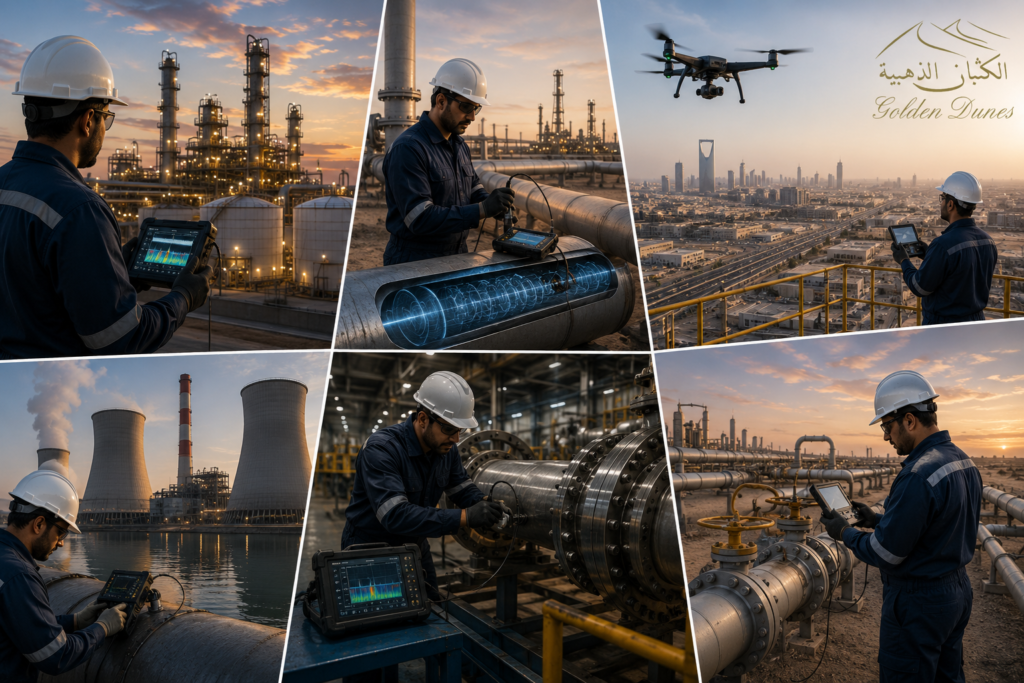
The growing complexity of industrial infrastructure has significantly increased the demand for advanced non destructive inspection solutions across multiple sectors. Modern industries require accurate inspection capabilities that support operational continuity, improve safety performance, and reduce infrastructure risks without interrupting production activities.
Today, several types of non-destructive testing services are used throughout Saudi Arabia and the GCC to support infrastructure expansion, industrial modernization, and long-term asset protection initiatives.
NDT Applications in Oil and Gas Projects
Oil and gas facilities depend heavily on advanced ndt inspection programs because pipelines, pressure vessels, weld systems, and storage tanks operate under extreme environmental and operational conditions. Even minor defects can create major safety, environmental, and financial risks if left undetected.
For this reason, operators frequently use ultrasonic testing, radiographic testing, leak testing systems, and corrosion monitoring technologies to evaluate infrastructure integrity during both construction and operational phases.
Many oil and gas operators also implement regular ndt inspections to improve maintenance planning and reduce the likelihood of unplanned shutdowns or emergency repairs.
Infrastructure Inspection in Smart City Developments
Large-scale smart city projects require highly reliable infrastructure systems capable of supporting long-term urban expansion. As Saudi Arabia accelerates development initiatives linked to Vision 2030, infrastructure operators increasingly depend on predictive inspection services to monitor underground utilities, transportation systems, and structural assets.
Advanced inspection drones, remote visual inspection systems, and digital inspection technologies are now commonly used to improve inspection efficiency in complex urban environments where accessibility and operational continuity are critical.
Modern infrastructure developers also rely on intelligent monitoring systems to reduce infrastructure risks associated with buried utility networks and aging operational assets.
NDT Solutions for Power Plants and Utilities
Power generation facilities and utility networks require continuous monitoring because operational failures can disrupt essential public services and industrial operations. Many utility operators use non-destructive evaluation technologies to inspect turbines, pipelines, heat exchangers, weld systems, and pressure vessels without interrupting energy production.
Technologies such as eddy current testing, acoustic emission testing, and magnetic particle inspection help operators identify material fatigue, corrosion, and surface cracks before infrastructure reliability is compromised.
Because many utility systems operate continuously under demanding environmental conditions, predictive inspection programs have become essential for maintaining long-term operational stability.
How Saudi Infrastructure Projects Use Advanced NDT
Saudi Arabia’s infrastructure transformation initiatives continue driving demand for advanced ndt solutions across transportation, industrial, and energy sectors. Large infrastructure developments now require more accurate and efficient inspection systems capable of supporting operational resilience and long-term sustainability goals.
Many organizations are integrating digital inspection technologies into broader infrastructure management frameworks to improve inspection accuracy and support predictive maintenance strategies. This includes the use of automated testing equipment, advanced inspection data analysis, and intelligent monitoring systems.
Infrastructure developers also increasingly combine predictive inspection with advanced excavation technologies to minimize operational disruption during maintenance and underground utility work.
As discussed in modern suction excavation and non-invasive infrastructure practices, reducing physical disruption during inspection and maintenance activities is becoming increasingly important for protecting sensitive underground infrastructure systems.
Internal Component Inspection Without Operational Shutdowns
One of the most valuable advantages of modern non-destructive inspection methods is the ability to inspect internal infrastructure components while systems remain operational. This capability significantly reduces downtime costs while improving operational flexibility for industrial operators.
Advanced technologies such as radiographic inspection, electromagnetic testing, and ultrasonic systems allow inspectors to examine the internal structure of critical assets without damaging equipment or interrupting production processes.
This approach is especially important for industries operating large-scale infrastructure systems where operational shutdowns may result in major financial losses or service disruptions. As industrial infrastructure continues evolving, demand for intelligent and non-invasive inspection technologies is expected to increase across global markets.
International Standards and Regulations for NDT Inspection
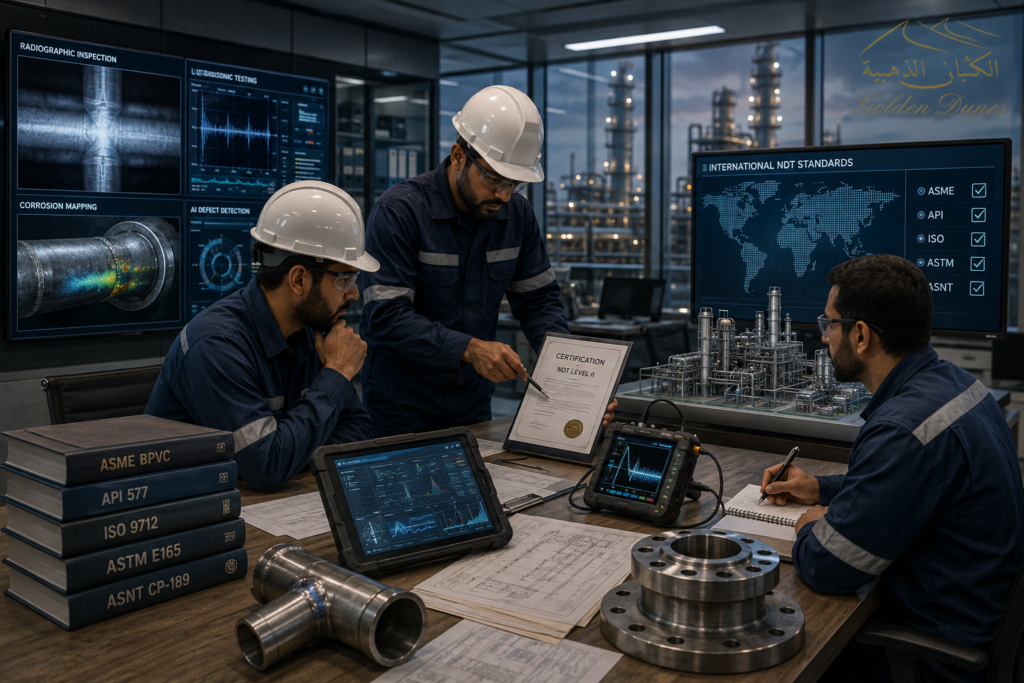
As industrial infrastructure systems become more advanced, international regulations and quality standards now play a critical role in ensuring inspection accuracy, operational safety, and infrastructure reliability. Modern non destructive inspection programs must comply with strict technical requirements to ensure that inspection procedures deliver consistent and reliable results across different operational environments.
Organizations operating in sectors such as oil and gas, utilities, transportation, and industrial manufacturing increasingly depend on globally recognized standards to strengthen quality control processes and reduce infrastructure risks.
Global Standards Governing Non-Destructive Testing
International inspection standards establish technical guidelines for the use of various non-destructive testing methods, inspection equipment, personnel qualifications, and reporting procedures. These standards help ensure that inspection activities are performed consistently while maintaining high levels of operational safety and technical accuracy.
Many infrastructure operators follow standards developed by organizations such as the International Organization for Standardization (ISO) and the American Society for Nondestructive Testing to improve inspection reliability and strengthen compliance across industrial operations.
These regulations often define how inspection methods should be applied for weld evaluation, pressure vessel inspection, corrosion monitoring, leak testing, and structural integrity assessments in high-risk operational environments.
Ensuring Inspection Accuracy Through Compliance
Accurate inspection results depend heavily on proper testing procedures, qualified inspectors, calibrated testing equipment, and reliable inspection data analysis. Without standardized operational frameworks, infrastructure operators may face inconsistent inspection quality that increases the risk of undetected defects or inaccurate maintenance decisions.
For this reason, many companies implement internal quality management systems that support regular verification of ndt techniques, inspection capabilities, and operational procedures.
Industries managing critical infrastructure systems also prioritize compliance because regulatory violations may lead to operational shutdowns, safety liabilities, and significant financial consequences.
Who Is Qualified to Perform NDT Inspections?
Because advanced ndt inspection activities often involve highly sensitive industrial systems, inspection personnel must possess specialized technical training and certification. Qualified inspectors are responsible for selecting the correct test method, operating testing equipment properly, interpreting inspection results accurately, and identifying potential infrastructure risks.
Depending on the inspection scope, certified professionals may specialize in specific technologies such as ultrasonic testing, magnetic particle inspection, radiography testing, or electromagnetic testing systems.
Many industrial operators now require third-party certification and ongoing competency evaluations to ensure inspection teams maintain high technical standards and operational reliability.
Digital Radiography vs Traditional Inspection Systems
Technological advancements continue transforming modern inspection techniques, particularly in the field of radiographic inspection. Traditional film-based systems are increasingly being replaced by digital radiography technologies capable of delivering faster results, higher image quality, and more efficient inspection workflows.
Digital systems improve inspection accuracy while allowing operators to store, analyze, and manage inspection data more effectively across large infrastructure projects. These capabilities support better operational decision-making and long-term infrastructure monitoring strategies.
Many industrial organizations also integrate advanced digital inspection systems with predictive maintenance platforms to improve infrastructure visibility and reduce operational uncertainty.
The Future of Non-Destructive Testing Technologies
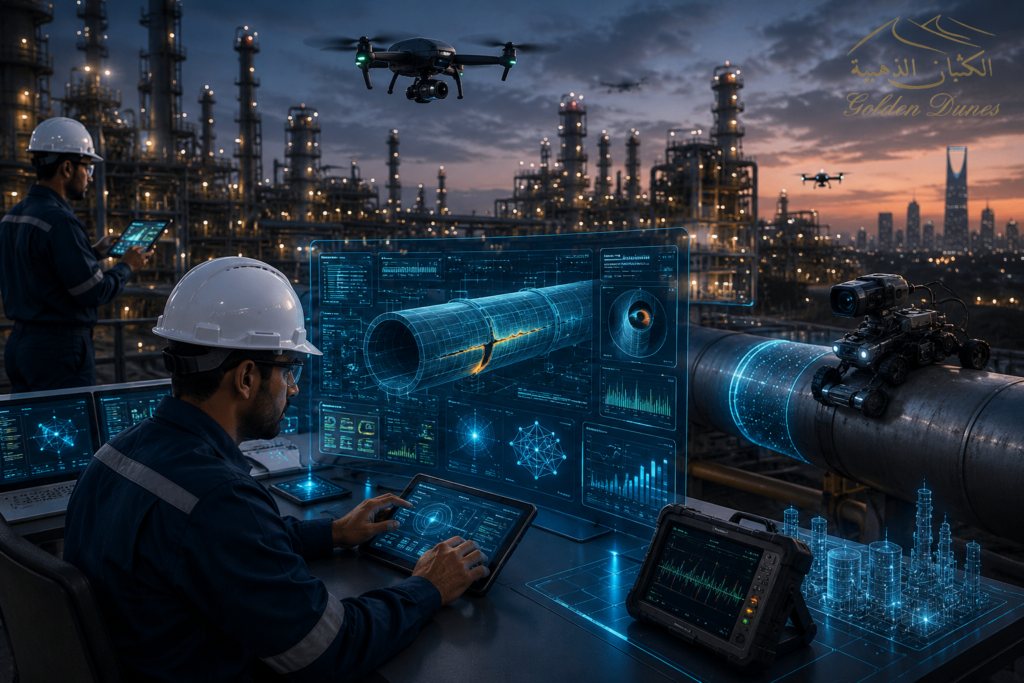
The future of industrial infrastructure management is becoming increasingly dependent on intelligent inspection systems capable of delivering real-time operational insights. As infrastructure networks grow more complex, organizations now require faster, safer, and more accurate non-destructive inspection methods to support operational continuity and long-term asset protection.
Emerging technologies are reshaping the way inspections are performed by improving automation, expanding remote monitoring capabilities, and enhancing predictive diagnostics across critical infrastructure systems.
How Drones Are Transforming NDT Inspection
Inspection drones are rapidly becoming valuable tools for industrial infrastructure monitoring because they improve accessibility, reduce operational risks, and increase inspection efficiency in difficult-to-reach environments.
Modern drone systems equipped with thermal imaging cameras, high-resolution sensors, and remote visual inspection technologies allow inspectors to evaluate pipelines, storage tanks, elevated structures, and industrial facilities without exposing personnel to hazardous operational conditions.
These technologies also reduce inspection time while improving data collection capabilities across large infrastructure projects.
The Role of AI in Smart Infrastructure Inspection
Artificial intelligence is beginning to play a major role in modern ndt solutions by improving defect detection accuracy and accelerating inspection data analysis. AI-powered systems can identify abnormal patterns, detect structural anomalies, and support predictive maintenance strategies more efficiently than traditional manual inspection processes.
As infrastructure systems continue generating larger volumes of operational data, intelligent analytics platforms are becoming increasingly important for improving inspection reliability and maintenance forecasting.
Many organizations are now integrating AI-driven monitoring systems into broader digital infrastructure management programs to strengthen operational resilience and reduce long-term maintenance costs.
The Rise of NDT 4.0 and Predictive Monitoring
The transition toward NDT 4.0 is transforming industrial inspection by combining automation, digital connectivity, intelligent sensors, and real-time monitoring technologies. This new generation of inspection systems allows operators to monitor infrastructure conditions continuously instead of relying solely on periodic manual inspections.
Continuous predictive monitoring improves operational visibility while helping infrastructure operators respond to emerging risks before failures occur. This approach supports more efficient maintenance planning and stronger long-term asset management strategies.
High-Precision X-Ray Systems in Modern Inspection
Advanced x-ray technologies are improving the precision of radiographic inspection procedures across industrial environments. High-resolution imaging systems now provide clearer visibility into internal material conditions, helping inspectors identify small defects that may previously have gone undetected.
These systems are especially valuable in industries where infrastructure reliability and weld quality directly impact operational safety and regulatory compliance.
How Advanced NDT Supports Industrial Sustainability
Sustainability has become an important priority across industrial sectors, particularly as organizations seek to improve operational efficiency and reduce infrastructure waste. Modern non-destructive testing services support sustainability goals by extending asset lifecycles, reducing unnecessary component replacement, and minimizing operational disruptions.
Predictive inspection programs also help organizations optimize maintenance resources while reducing the environmental impact associated with emergency repairs and infrastructure failures.
Key Benefits of Non-Destructive Testing Services
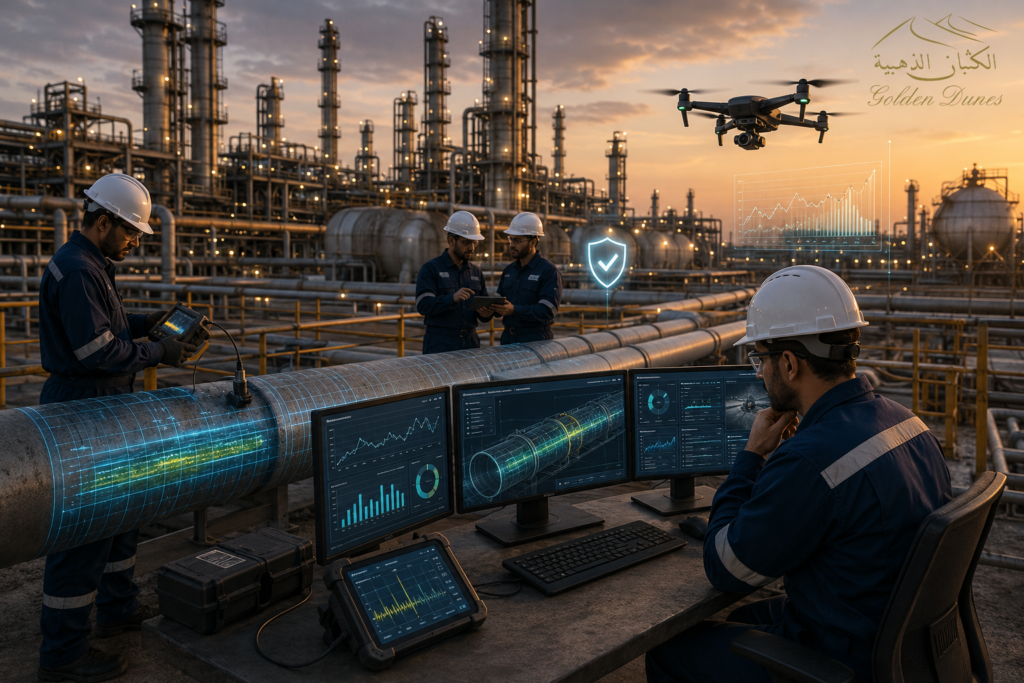
As infrastructure systems become more operationally demanding, companies increasingly rely on advanced non destructive inspection programs to improve asset reliability, strengthen safety performance, and reduce long-term maintenance risks. Modern industries require inspection solutions that not only detect defects accurately but also support continuous operations without unnecessary disruption.
This is why advanced ndt services are now considered essential components of industrial infrastructure management across energy, utilities, transportation, and manufacturing sectors.
Improving Industrial Safety and Risk Prevention
One of the most important benefits of modern non-destructive testing is its ability to improve industrial safety by identifying hidden defects before they escalate into critical operational failures. Infrastructure systems exposed to pressure, corrosion, vibration, or environmental stress may gradually develop cracks or material weaknesses that remain undetected during routine maintenance activities.
By using advanced inspection methods, operators can detect structural risks early and implement corrective actions before operational integrity is compromised. This significantly reduces the likelihood of infrastructure-related incidents and helps maintain safer working environments across industrial facilities.
Enhancing Infrastructure Reliability and Performance
Reliable infrastructure is essential for maintaining operational continuity and protecting long-term industrial investments. Modern ndt inspection technologies help organizations evaluate the condition of pipelines, pressure vessels, weld systems, and structural assets without damaging operational components.
This allows operators to improve maintenance planning, optimize asset performance, and reduce unexpected failures that may affect production efficiency or service reliability.
Industries that implement predictive inspection strategies often achieve better operational stability because infrastructure risks are identified and managed proactively instead of reactively.
Increasing Inspection Speed and Operational Efficiency
Technological advancements have significantly improved the speed and efficiency of modern inspection services. Automated testing equipment, digital radiography systems, remote monitoring technologies, and intelligent inspection data analysis platforms now allow operators to complete inspections more accurately and with less operational disruption.
Faster inspection processes are particularly important in sectors where operational downtime creates major financial or logistical challenges. By improving inspection efficiency, organizations can reduce maintenance interruptions while maintaining high levels of quality control and infrastructure reliability.
Supporting Continuous Operations Without Shutdowns
One of the defining advantages of advanced non-destructive inspection methods is the ability to inspect infrastructure assets while operations continue normally. Unlike traditional destructive testing methods, modern NDT technologies allow inspectors to evaluate the condition of materials and structures without causing physical damage or interrupting operational activities.
This capability is especially valuable for critical infrastructure systems such as pipelines, industrial facilities, energy networks, and utility operations where shutdowns may create significant operational and financial consequences.
Many infrastructure operators now integrate predictive inspection programs with smart infrastructure management systems to improve operational continuity and strengthen long-term infrastructure resilience.
Why NDT Services Are Critical for Modern Infrastructure
The increasing scale and complexity of modern infrastructure projects continue driving demand for intelligent inspection technologies capable of supporting long-term operational sustainability. As Saudi Arabia and the GCC expand investments in industrial modernization, transportation systems, and smart infrastructure initiatives, advanced ndt solutions are becoming essential for protecting critical assets and reducing infrastructure risks.
Modern infrastructure operators now understand that reactive maintenance alone is no longer sufficient for protecting large-scale operational systems. Instead, predictive inspection strategies supported by advanced testing technologies provide organizations with greater visibility into infrastructure conditions and potential future risks.
As highlighted in Golden Dunes infrastructure and engineering expertise, integrating advanced inspection technologies with proactive operational planning has become increasingly important for maintaining infrastructure reliability across complex industrial environments.
Frequently Asked Questions About NDT
What Is the Difference Between NDT and NDI?
NDT stands for non-destructive testing, while NDI refers to non-destructive inspection. Both terms are closely related and are often used interchangeably across industrial sectors. Their primary purpose is to evaluate materials, welds, pipelines, and infrastructure systems without damaging operational components.
What Are the Most Common NDT Methods?
Some of the most common NDT methods include ultrasonic testing, radiographic testing, eddy current testing, magnetic particle inspection, liquid penetrant testing, and visual inspection. Each method is used for specific inspection objectives depending on material type and operational conditions.
Can NDT Be Performed Without Stopping Operations?
Yes. One of the biggest advantages of modern non destructive inspection technologies is the ability to perform inspections while systems remain operational. This helps organizations reduce downtime and maintain operational continuity during inspection activities.
Which Industries Use Non-Destructive Testing?
Non-destructive testing is widely used across oil and gas, utilities, transportation, manufacturing, infrastructure development, aviation, power generation, and industrial processing sectors where infrastructure reliability and safety are critical.
How Does NDT Help Prevent Infrastructure Damage?
Advanced NDT technologies help detect hidden corrosion, internal defects, cracks, and structural weaknesses before they evolve into serious operational failures. Early detection allows maintenance teams to respond proactively and reduce long-term infrastructure risks.
Conclusion
As infrastructure systems continue evolving across Saudi Arabia and the GCC, organizations increasingly require smarter and more reliable ways to protect critical assets, reduce operational risks, and maintain long-term infrastructure performance. Modern non destructive inspection technologies now play a central role in helping industries detect hidden defects early, improve maintenance planning, and strengthen operational continuity without disrupting production activities.
From ultrasonic testing and radiographic inspection to predictive monitoring and intelligent infrastructure analytics, advanced NDT solutions are transforming how industrial operators manage infrastructure reliability in complex operational environments.
Companies that invest in proactive inspection strategies are often better positioned to reduce costly failures, extend asset lifecycles, and support long-term operational sustainability while meeting growing infrastructure demands linked to industrial expansion and Vision 2030 initiatives.
For organizations seeking advanced infrastructure inspection capabilities, predictive monitoring solutions, and industrial reliability support, Golden Dunes continues to deliver modern engineering technologies designed to improve operational safety, infrastructure integrity, and long-term asset protection across critical industrial sectors.