Construction Accidents in Excavation: Hidden Causes Behind Site Failures
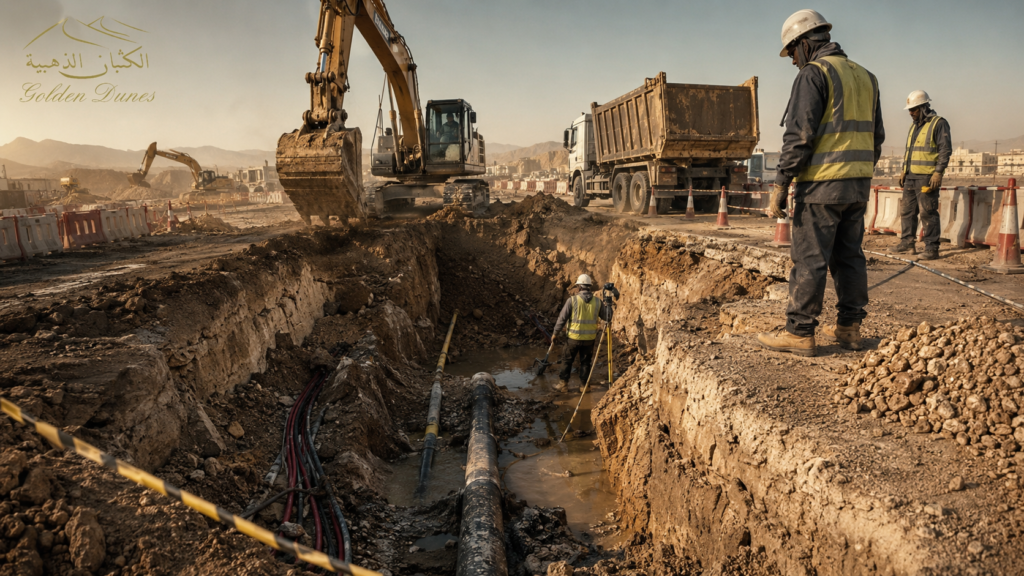
Construction Accidents are rarely isolated events. In many high-risk projects, a single construction accident begins with a hidden hazard that was not identified early enough, controlled properly, or communicated clearly between teams on the construction site.
Excavation work is one of the most sensitive stages in any infrastructure or industrial project because the ground, access routes, work zones, machinery movement, and underground conditions can change quickly. When these changes are not managed with strict safety protocols, the risk of serious injuries, equipment damage, project delays, and operational shutdowns increases.
For project owners, contractors, HSE managers, and operations teams in Saudi Arabia and the GCC, Construction Accidents are not only a worker safety concern. They are also a business risk. A trench collapse, struck-by incident, utility strike, vehicle accident, or equipment malfunction can affect productivity, insurance exposure, project continuity, and client confidence.
This is why strong excavation risk management must go beyond basic compliance. It requires planning, supervision, proper training, controlled work areas, appropriate personal protective equipment, and a culture of safety across every team involved in construction work. Guidance from OSHA construction safety standards also highlights the importance of identifying hazards before work begins, especially in environments where workers may be exposed to moving machinery, falling objects, excavation collapse, or other serious site risks.
At the same time, many site failures are connected to wider operational issues. Poor coordination, unclear excavation routes, unmarked utilities, weak briefings, and rushed schedules can turn a normal work activity into a construction site accident. This is where a stronger approach to site safety failures during excavation becomes essential for reducing risk before it reaches the accident stage.
Key Takeaways
Construction Accidents often start before the visible incident happens. The real cause may be hidden in weak planning, poor supervision, unstable ground, unclear communication, or uncontrolled equipment movement.
Excavation increases accident exposure because it creates changing ground conditions, open trenches, congested work zones, heavy machinery routes, and potential hazards around underground utilities.
Common construction site accidents linked to excavation include trench collapse, struck-by accidents, caught-between accidents, vehicle accidents, electrocution risks, falling objects, and machinery-related incidents.
Construction worker safety depends on more than hard hats and personal protective equipment. It also requires proper training, adherence to safety protocols, controlled access, clear work zones, and continuous site supervision.
Reducing Construction Accidents requires a practical mix of excavation planning, hazard identification, equipment control, worker briefings, and safer excavation methods where the site conditions demand a lower-risk approach.
Golden Dunes supports safer excavation and site risk reduction by helping projects manage high-risk excavation activities with more controlled methods, trained teams, and a stronger focus on protecting workers, utilities, equipment, and project continuity.
What Are Construction Accidents on a Construction Site?
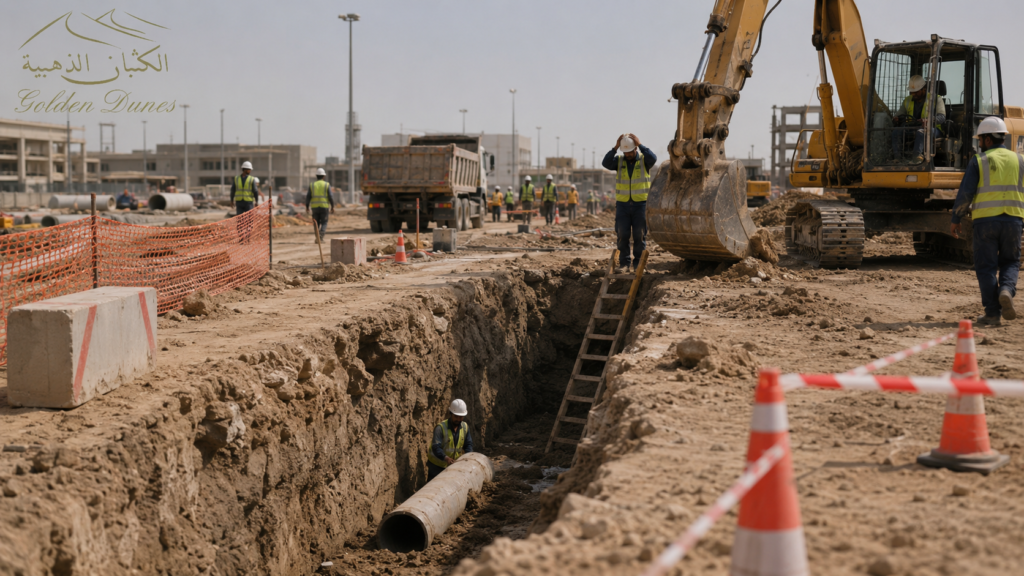
Construction Accidents are unplanned events that happen during construction activities and lead to injuries, equipment damage, site disruption, or unsafe operating conditions. In excavation projects, these accidents often become more serious because the construction site is already exposed to changing ground levels, open trenches, moving machinery, and restricted access routes.
A construction site accident may involve a construction worker falling into an excavation area, being struck by moving equipment, getting caught between machinery and trench edges, or being injured by falling objects. In more severe cases, a trench collapse or utility strike can create emergency conditions that affect multiple teams at once.
Unlike minor injuries caused by routine site activity, excavation-related accidents can quickly escalate because they often involve unstable ground, heavy construction equipment, underground utilities, and limited escape routes. This makes excavation one of the work areas where accident prevention must be planned before the first machine starts operating.
For decision-makers, the most important point is that Construction Accidents are not only safety incidents. They are operational events that can stop work, trigger investigations, increase project costs, damage client trust, and place pressure on delivery schedules. A single incident can affect the entire project chain, especially in complex Saudi construction projects and GCC infrastructure projects.
Why Excavation Can Trigger a Construction Site Accident
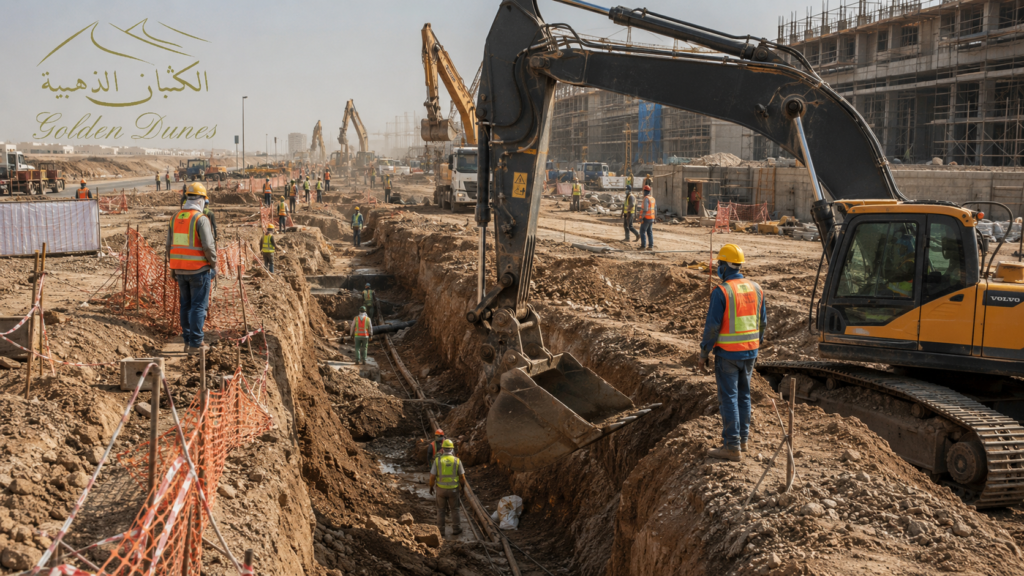
Excavation changes the physical structure of the construction site. As soil is removed, the ground may lose stability, trenches may become deeper, access points may become narrower, and workers may operate closer to machinery, edges, utilities, and falling materials. These changes increase site accident risks if they are not controlled properly.
One of the most common causes of construction accidents during excavation is the gap between what the plan assumes and what the site actually contains. Drawings may not reflect underground conditions accurately, work zones may become congested, or subcontractors may enter active excavation areas without full coordination.
Excavation also increases risk because different teams often work around the same area at the same time. Operators, banksmen, engineers, HSE staff, surveyors, utility teams, and truck drivers may all need access to the same zone. Without clear sequencing and communication, normal movement can create struck-by incidents, caught-between accidents, or vehicle accidents.
Another important factor is time pressure. When project teams rush excavation work to recover schedule delays, safety protocols may become weaker. Briefings may be shortened, access routes may be poorly controlled, and hazards may not be reviewed after site conditions change. This is where stronger excavation safety strategy becomes essential for preventing hidden risks from turning into Construction Accidents.
Common Causes of Construction Accidents in Excavation Work
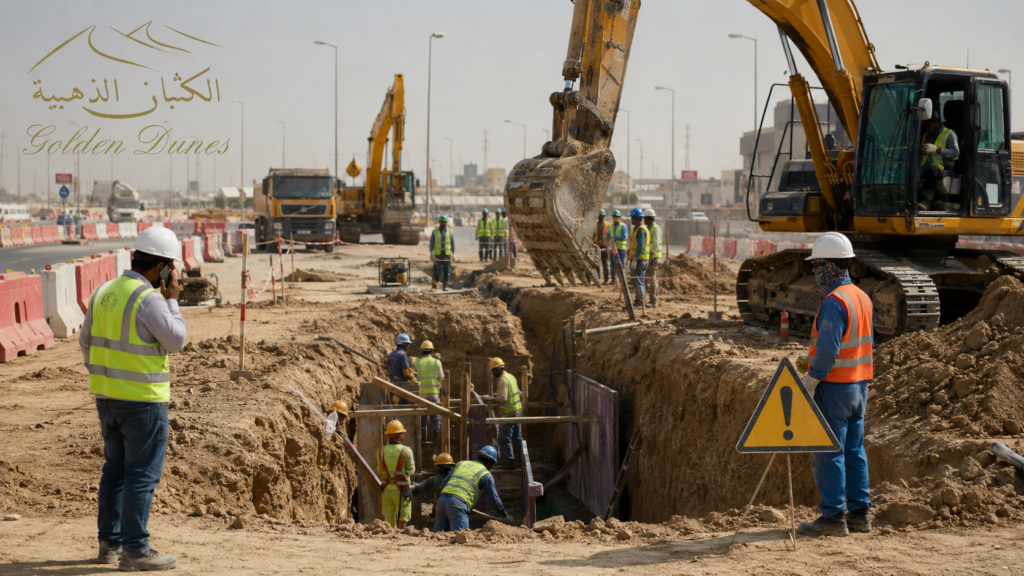
The causes of construction accidents in excavation projects are usually connected to a combination of technical, operational, and human factors. Rarely does one issue create the full incident alone. More often, several weak points align until the site reaches a failure point.
Poor Site Coordination and Weak Supervision
Poor coordination is one of the most dangerous hidden causes of construction site accidents. If supervisors, equipment operators, subcontractors, and HSE teams are not working from the same plan, the excavation area can quickly become unsafe.
For example, a truck may reverse into a zone where workers are checking trench depth. A subcontractor may enter a restricted work area without knowing that machinery is active. A crane or loader may operate near an open edge without a clear exclusion zone. These situations are not random; they are coordination failures.
Weak supervision also increases risk when site teams do not stop work after conditions change. If water enters a trench, soil begins to move, access becomes blocked, or machinery routes become congested, the site should be reassessed before work continues. Without active supervision, potential hazards can remain unnoticed until they injure workers or damage equipment.
Unstable Ground and Excavation Collapse
Ground instability is one of the most serious hazards in excavation work. A collapse can happen when soil loses support due to depth, vibration, water, nearby machinery, or poor trench protection. In many cases, the warning signs appear before the collapse, but they are missed because the site is under pressure to continue.
A trench collapse can injure or trap a construction worker within seconds. It can also damage nearby utilities, stop machinery movement, and force the project into emergency response mode. For this reason, ground assessment, protective systems, safe access, and continuous monitoring must be treated as core elements of excavation risk management.
In high-risk environments, excavation planning must consider soil behavior, trench depth, nearby loads, equipment routes, and safe access points. Poor sequencing or weak ground control can turn normal excavation into a serious construction accident with long operational consequences.
Equipment Malfunctions During High-Risk Operations
Equipment malfunctions can also contribute to Construction Accidents, especially when machinery is operating near trenches, workers, utility corridors, or restricted work areas. A brake issue, hydraulic failure, visibility problem, or unexpected equipment movement can expose workers to serious injuries.
Construction equipment used in excavation must be inspected, maintained, and operated by trained personnel. This includes excavators, loaders, cranes, forklifts, dump trucks, compactors, and power tools used around excavation zones. Even a small malfunction can become critical when the surrounding work area is unstable or congested.
Proper training, maintenance checks, clear machinery routes, and controlled work zones reduce the chance that equipment failure will turn into a construction site accident. The goal is not only to keep machines productive, but also to ensure they operate safely within the limits of the site.
Struck-By Accidents in Excavation Sites
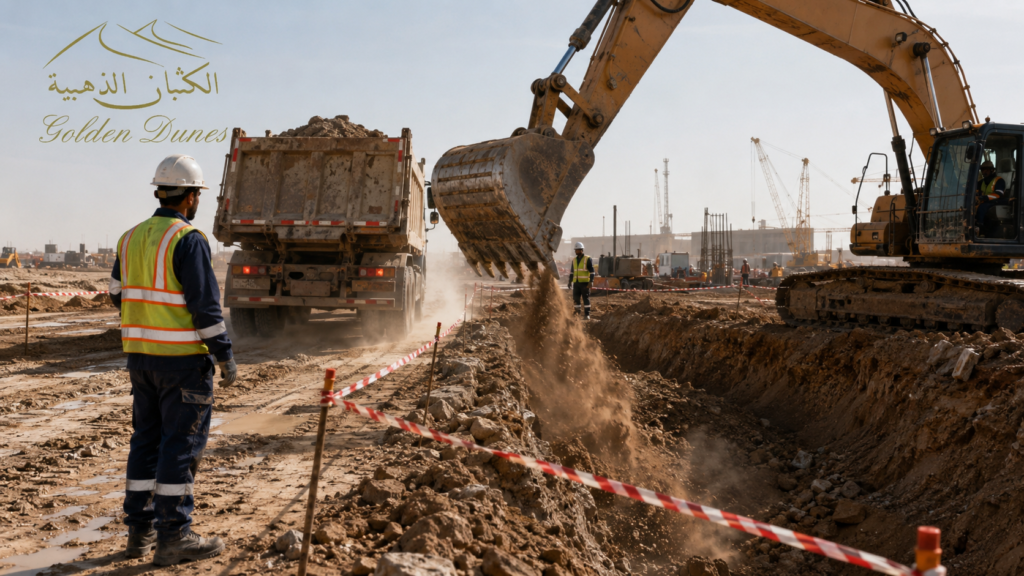
Struck-by accidents are among the most serious risks in excavation environments because workers often operate close to moving machinery, trucks, lifting equipment, tools, and materials. In an active excavation zone, one uncontrolled movement can create a severe construction accident within seconds.
A struck-by incident may happen when a worker is hit by a reversing vehicle, a swinging excavator arm, falling materials, moving pipes, loose trench protection components, or equipment operating inside a congested work area. These incidents are especially dangerous when visibility is limited or when workers and machinery share the same routes.
According to OSHA struck-by hazard guidance, struck-by risks are strongly connected to moving vehicles, falling objects, flying objects, and swinging equipment. In excavation projects, these risks can increase because work zones are often narrow, uneven, and constantly changing.
How Struck-By Incidents Happen Around Heavy Machinery
Heavy machinery is essential for excavation work, but it also creates one of the highest site accident risks when movement is not controlled. Excavators, loaders, dump trucks, cranes, and forklifts all have blind spots, turning areas, swing zones, and reversing paths that can injure workers if they are not clearly separated from pedestrian movement.
Struck-by incidents often occur when a construction worker assumes that an operator has seen them, while the operator is focused on trench depth, load movement, bucket positioning, or vehicle alignment. This mismatch between worker movement and operator visibility is a common cause of construction accidents in busy excavation areas.
Reducing the risk of struck-by incidents requires more than warning signs. It requires exclusion zones, dedicated walkways, trained spotters, high-visibility clothing, traffic control, radio communication, and clear separation between people and moving machinery.
Falling Materials and Moving Equipment Risks
Falling objects can also create serious injuries in excavation zones. Soil, tools, trench protection parts, pipes, concrete pieces, and loose materials may fall into or around trenches if they are stored too close to the edge or handled without proper control.
Moving equipment increases this risk when vibration, loading, or poor positioning affects nearby materials. A trench edge that appears stable in the morning may become weaker after repeated machinery movement, especially if heavy loads are placed too close to the excavation area.
Hard hats and personal protective equipment are important, but they are not enough by themselves. Stronger accident prevention comes from keeping materials away from excavation edges, controlling lifting operations, maintaining clean work areas, and preventing workers from standing under suspended or unstable loads.
Vehicle Accidents and Machinery Movement Risks
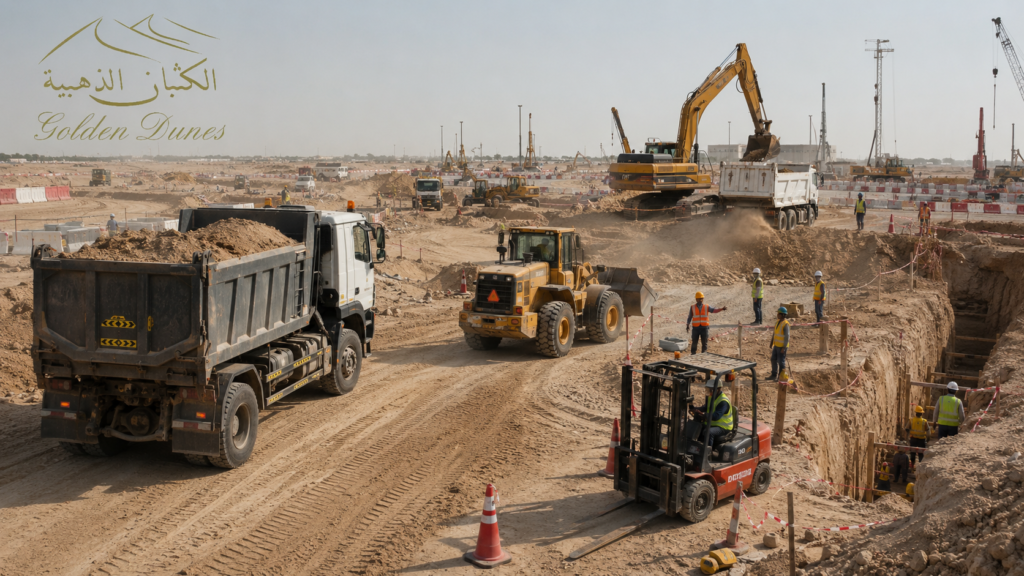
Vehicle accidents in excavation projects can happen when trucks, loaders, excavators, forklifts, and other construction equipment move through tight or poorly organized site routes. These risks increase when work zones are congested, visibility is reduced, or multiple teams are working near the same access points.
On a common construction site, machinery movement may look routine. But in excavation work, every vehicle route must be treated as a controlled risk area. Uneven ground, trench edges, temporary roads, reversing movements, and poor lighting can all increase the likelihood of Construction Accidents.
Excavators, Loaders, and Site Vehicle Blind Spots
Excavators and loaders have large blind spots, especially when operating near trenches or moving between stockpiles, trucks, and utility corridors. If workers enter the operating radius without permission, the risk of contact with moving machinery increases significantly.
Blind spot risks become more dangerous when site teams rely only on verbal warnings or informal coordination. In a high-risk excavation environment, equipment routes should be planned, marked, briefed, and monitored. Workers should understand where machinery will move, where they can stand safely, and when they must stay outside the work area.
For Saudi construction projects and GCC infrastructure projects, where large-scale sites often involve many subcontractors, machinery movement control must be part of daily coordination. Without it, simple vehicle movement can become a construction site accident that delays the entire work sequence.
Forklift Accidents in Congested Construction Zones
Forklift accidents can happen when materials are moved through narrow routes, temporary storage areas, or active construction zones without proper traffic separation. Forklifts may carry pipes, tools, safety materials, or equipment components near excavation areas, creating additional risk for workers on foot.
The danger increases when loads block the operator’s view, when ground conditions are uneven, or when forklifts operate close to open edges and temporary structures. These conditions can lead to struck-by accidents, falling objects, or caught-between accidents.
To reduce forklift-related construction accidents, site teams should control speed, define routes, train operators, keep pedestrians away from forklift paths, and ensure that materials are stored in stable and accessible locations.
Crane Movement and Lifting Operation Hazards
Cranes can create major hazards during excavation support, material handling, pipe movement, and lifting operations. A crane operating near an excavation area must be managed carefully because load swing, ground pressure, unstable setup conditions, and poor communication can create serious accident exposure.
When lifting operations take place near trenches, workers may be exposed to falling objects, struck-by hazards, or caught-between risks. If the crane setup area is not assessed properly, ground movement or weak bearing capacity may also affect stability.
Safe crane operations require lift planning, competent supervision, exclusion zones, communication signals, and strict control over where workers can stand during lifting activities. These controls help prevent machinery-related Construction Accidents before they happen.
Caught-Between Accidents in Excavation Projects
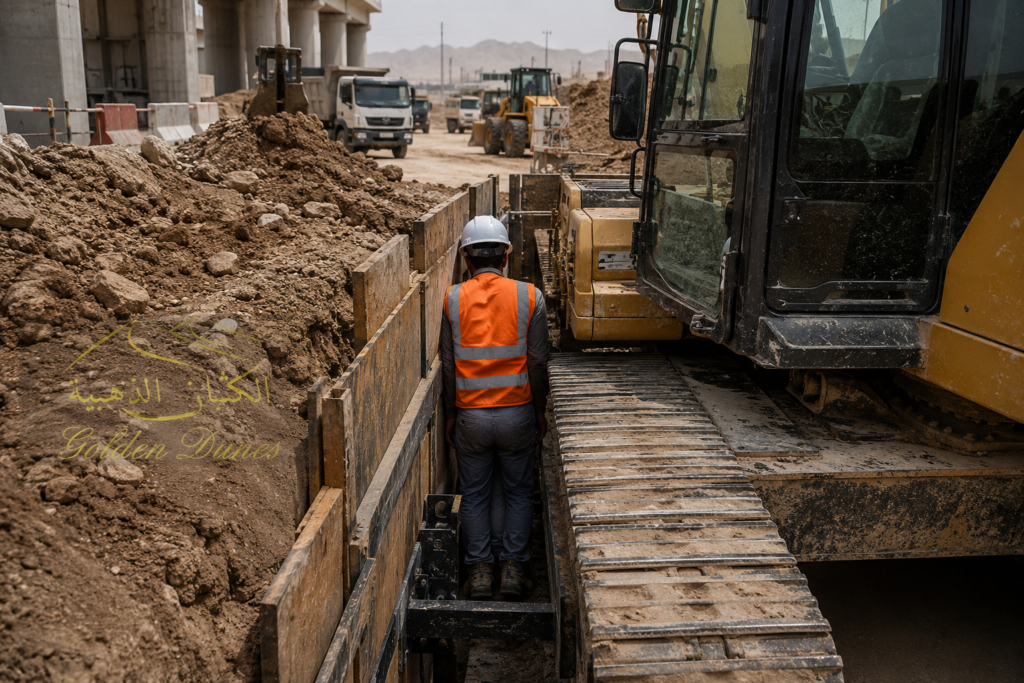
Caught-between accidents occur when a worker becomes trapped, compressed, or pinned between machinery, materials, trench walls, equipment, vehicles, or structural elements. In excavation projects, these accidents can be severe because workers may have limited space to escape.
These incidents often happen when equipment moves too close to a trench, materials shift unexpectedly, or workers stand between a fixed object and moving machinery. They may also occur during pipe installation, trench box movement, backfilling, loading, or access route changes.
Worker Risks Between Machinery, Trenches, and Materials
A construction worker may be exposed to caught-between risks when standing between a truck and an excavator, between a trench wall and a pipe, or between stacked materials and moving equipment. These risks are not always obvious because the worker may only be in the danger zone for a few seconds.
In excavation work, those few seconds matter. If communication is unclear or the operator cannot see the worker, a normal movement can lead to serious injuries. This is why controlled work zones and clear equipment signals are essential parts of excavation accident prevention.
How Poor Access Routes Increase Caught-Between Incidents
Poor access routes can increase caught-between accidents when workers are forced to move close to machinery, trench edges, materials, or temporary barriers. If safe walkways are not defined, workers may create their own paths through active work areas.
Access and egress must be planned as part of excavation risk management. Workers need safe entry points, stable routes, guardrail protection where needed, and clear separation from moving machinery. When these basics are missing, the site becomes more vulnerable to Construction Accidents.
Electrocution and Utility-Related Accident Risks
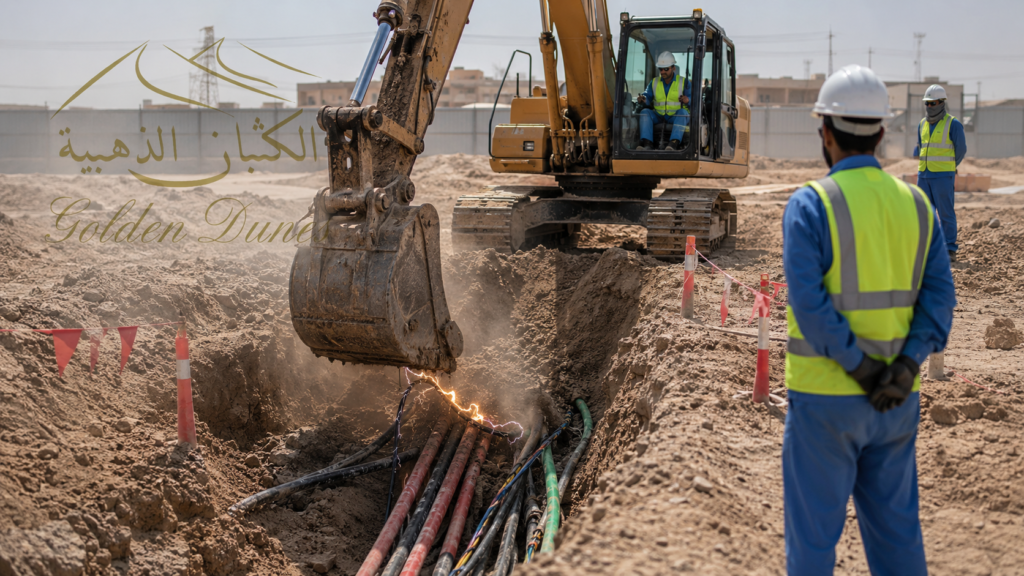
Electrocution is one of the most dangerous risks that can appear during excavation work, especially when underground electrical lines, buried cables, temporary power sources, or nearby utilities are not clearly identified before construction activities begin.
In many Construction Accidents, the visible incident is only the final result. The real failure may start earlier when utility drawings are outdated, work permits are incomplete, or site teams assume that the excavation area is clear without physical verification.
Utility-related accidents can injure workers directly, damage nearby infrastructure, stop equipment movement, and create emergency shutdowns across the construction site. In industrial and infrastructure projects, this type of accident may also affect surrounding operations, public services, or critical project systems.
How Buried Utilities Can Lead to Site Injuries
Buried utilities can create serious site accident risks when excavation equipment strikes electrical cables, gas lines, water networks, telecom ducts, or service corridors. A utility strike may cause electrocution, fire, flooding, explosion risk, service interruption, or sudden ground instability.
Not every underground utility incident is limited to asset damage. In some cases, the strike can expose workers to harmful substances, unstable ground, moving machinery, or emergency response conditions. This is why utility risk must be treated as part of Construction Accidents prevention, not only as a technical damage issue.
Golden Dunes has already explained this risk in more detail through its article on hidden utility damage risks, but within this article the key point is simple: when underground services are not managed properly, they can become a direct accident trigger.
Why Utility Identification Reduces Accident Exposure
Utility identification helps reduce accident exposure because it gives site teams a clearer understanding of what exists below the ground before excavation starts. This supports safer machinery movement, better trench positioning, improved permit control, and more accurate risk assessment.
In high-risk construction environments, utility identification should not depend on drawings alone. It may require site surveys, coordination with utility owners, detection methods, trial holes, non-destructive excavation, or controlled digging procedures before heavy machinery enters the area.
When utilities are identified early, the project team can define safer work zones, control access, protect workers, and prevent sudden incidents that may lead to serious injuries, equipment damage, project delays, or service disruption.
Ground Collapse and Trench Failure Risks
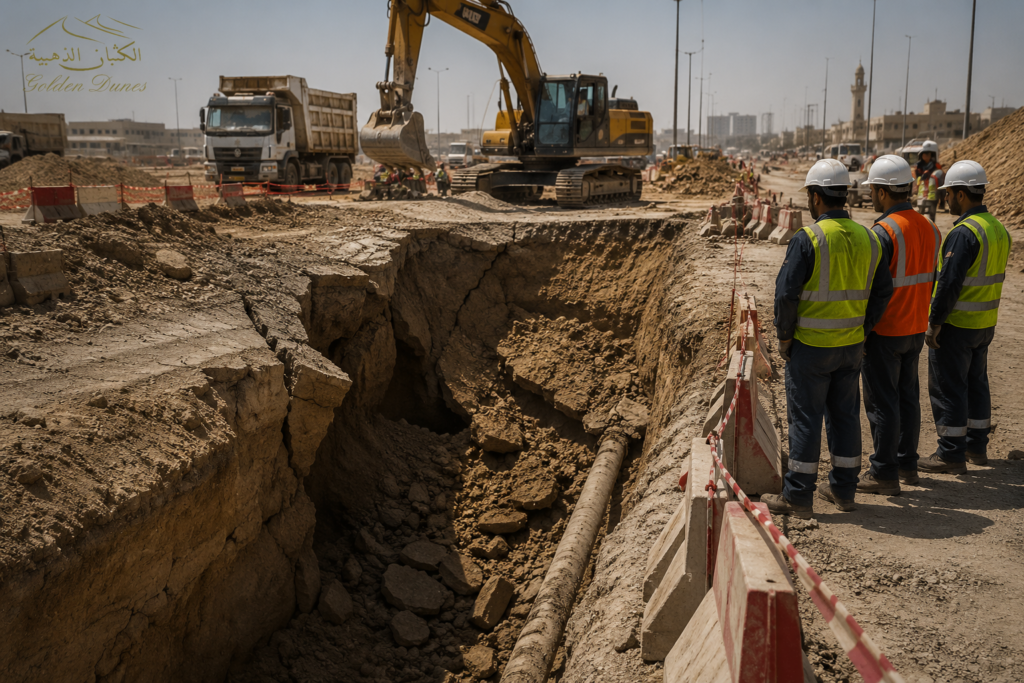
Ground collapse is one of the most critical excavation accident risks because it can happen quickly and leave workers with little time to react. A trench may appear stable from the surface, but soil pressure, vibration, water, nearby loads, or poor protection can weaken the excavation wall without obvious warning.
A collapse can injure a construction worker, trap workers inside the trench, damage construction equipment, and force the project into emergency response. In severe cases, trench failure can contribute to construction fatalities or workplace fatalities, especially when access and egress are not properly planned.
Trench-related Construction Accidents are often preventable when site teams apply proper ground assessment, protective systems, supervision, and safety protocols. The challenge is that pressure to maintain progress can sometimes lead teams to underestimate the speed at which ground conditions can change.
Warning Signs Before a Collapse Happens
Before a collapse occurs, the construction site may show warning signs that should not be ignored. These signs may include cracks near trench edges, water accumulation, soil movement, falling soil particles, vibration from nearby machinery, or materials stored too close to the excavation edge.
Other warning signs include unclear trench access, missing guardrail protection, weak supervision, workers entering unsupported excavation areas, and poor communication between machine operators and site supervisors. Each of these signals may indicate that the work area is moving toward a higher accident risk level.
When warning signs appear, work should be reassessed before construction activities continue. This does not only protect worker safety; it protects the project from downtime, investigation delays, emergency repairs, and loss of operational control.
How Ground Movement Can Injure Workers and Delay Projects
Ground movement can injure workers by causing sudden collapse, shifting materials, unstable access points, or unexpected equipment movement. Even minor soil movement can affect nearby machinery, trench boxes, temporary supports, and materials placed around the excavation zone.
For project managers, the business impact is also significant. Ground failure can delay inspections, stop backfilling, interrupt utility work, require redesign, and create additional safety reviews before the site can restart. This turns a safety issue into a wider project control issue.
Strong excavation planning mistakes analysis can help teams understand how poor sequencing, weak soil assessment, and missing contingency planning contribute to collapse-related Construction Accidents.
OSHA’s Fatal Four and Their Relevance to Excavation Work
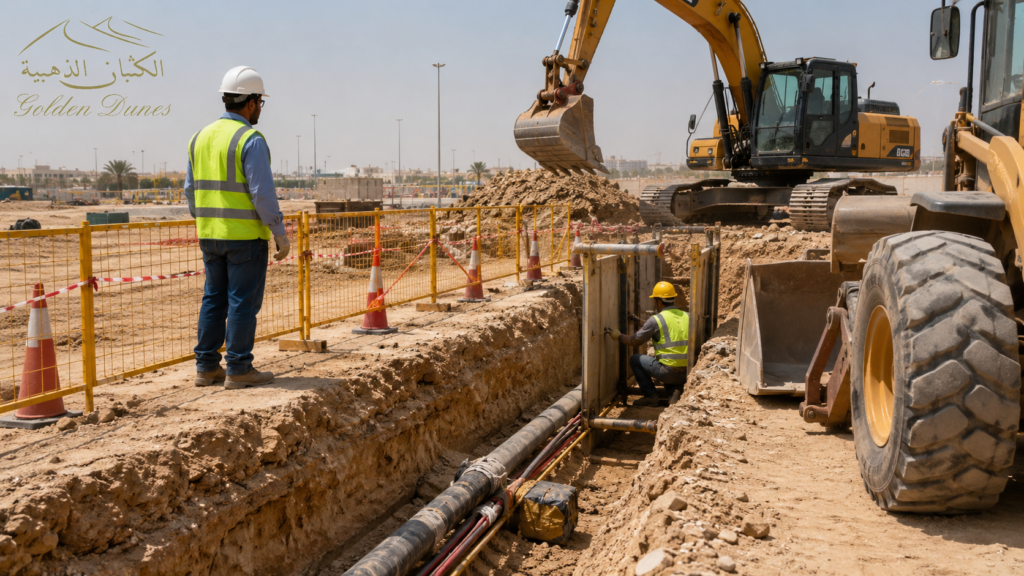
The Occupational Safety and Health Administration often highlights major categories of construction hazards that contribute to serious injuries and fatalities in the construction industry. While every country and project may follow its own regulatory framework, OSHA’s “Fatal Four” concept is useful because it helps project teams understand the most severe accident patterns.
For excavation projects, these categories are especially relevant because workers may be exposed to falls, struck-by hazards, electrocution, and caught-in or caught-between accidents within the same work area. This combination makes excavation one of the construction work stages where strict hazard control is essential.
The goal is not to treat OSHA as a replacement for local Saudi or GCC project requirements, but to use recognized safety concepts to strengthen accident prevention thinking. In large infrastructure environments aligned with Saudi Arabia’s infrastructure transformation, global safety awareness supports better project execution and stronger operational discipline.
Struck-By Hazards in Excavation Environments
Struck-by hazards are common in excavation because workers may be exposed to moving vehicles, cranes, falling objects, swinging loads, excavator arms, and moving machinery. These hazards become more dangerous when visibility is limited or when workers enter equipment operating zones without authorization.
Reducing the risk of struck-by incidents requires clear separation between workers and machinery, proper signaling, trained operators, marked exclusion zones, and high-visibility clothing. These controls help reduce the chance that routine equipment movement becomes a serious construction accident.
Caught-In and Caught-Between Accident Risks
Caught-in and caught-between accidents are highly relevant to excavation because workers may be trapped by collapsing soil, trench walls, equipment, materials, or moving vehicles. These incidents are often severe because pressure, weight, and limited escape space can quickly cause serious injuries.
To reduce these risks, project teams must control trench access, material storage, equipment routes, and worker positioning. Safe work areas should be defined before activity starts, and workers should not stand between fixed structures and moving equipment.
Electrocution Risks Near Underground Utilities
Electrocution risks increase when excavation takes place near buried electrical cables, temporary power systems, or utility corridors. A single contact between machinery and an energized line can injure workers, stop operations, and create wider emergency conditions on the construction site.
Utility detection, controlled excavation, proper permits, and clear communication with utility stakeholders are critical. These measures support accident prevention by reducing uncertainty before workers and machinery enter the excavation zone.
How Equipment Control Helps Reduce Construction Accidents
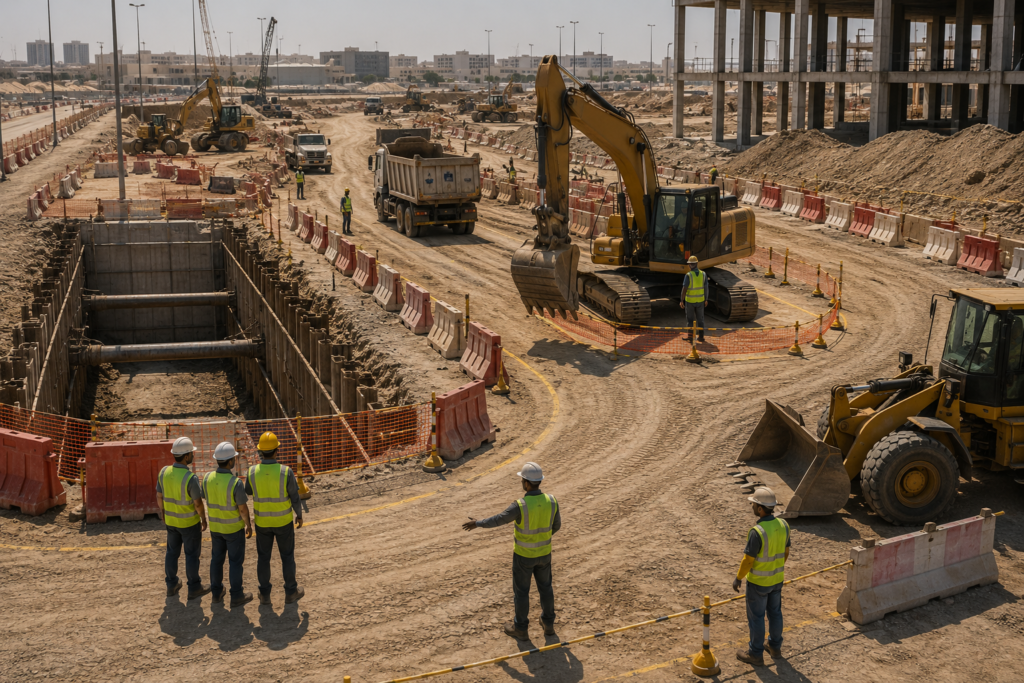
Equipment control is one of the strongest ways to reduce Construction Accidents in excavation projects. Heavy machinery is necessary for productivity, but without clear movement rules, it can create major hazards for workers, supervisors, drivers, and subcontractors inside the construction site.
Excavation areas often include several types of machinery working close together. Excavators may be digging, trucks may be reversing, forklifts may be moving materials, cranes may be lifting components, and workers may be inspecting trench conditions at the same time. Without controlled work zones, this overlap can quickly lead to struck-by accidents, vehicle accidents, or caught-between incidents.
Safer Machinery Routes and Exclusion Zones
Safer machinery routes begin with separating workers from moving machinery wherever possible. Equipment routes should be planned before construction work starts, then adjusted whenever site conditions change. These routes should consider trench edges, access points, stockpile areas, lifting zones, delivery routes, and emergency access.
Exclusion zones are also critical. Workers should not enter the operating radius of excavators, cranes, loaders, or trucks unless the activity is stopped and permission is given. When exclusion zones are unclear, workers may unknowingly stand in blind spots or near moving machinery that can injure them within seconds.
Good equipment control also depends on visual communication. High-visibility clothing, signs, barriers, trained spotters, radios, and clear instructions help reduce confusion in active work areas. These measures support worker safety and reduce the risk of struck-by incidents around construction equipment.
Managing Forklifts, Cranes, and Heavy Vehicles on Site
Forklifts, cranes, and heavy vehicles require strict supervision because each machine creates different accident risks. Forklifts can cause struck-by incidents or falling objects when materials are unstable. Cranes can create lifting hazards when loads swing or when ground support is weak. Trucks and loaders can create vehicle accidents when reversing routes are not controlled.
Each machine should have a defined operating area, a trained operator, and a clear communication method with workers nearby. When several types of machinery operate in the same construction site, the project team must coordinate timing, routes, and responsibilities to prevent unsafe overlap.
Equipment inspections are also important. Equipment malfunctions can expose workers to unexpected movement, hydraulic failure, braking issues, or unstable lifting conditions. Preventive maintenance, operator checks, and immediate reporting of defects help reduce the chance that a technical issue becomes a construction site accident.
How Safer Excavation Methods Help Reduce Construction Accidents
Safer excavation methods help reduce Construction Accidents by lowering the level of uncontrolled ground disturbance, improving visibility around buried services, and giving site teams more control over work conditions. In high-risk environments, the method used to excavate can directly affect worker safety, utility protection, and project continuity.
Traditional mechanical digging may be suitable for some areas, but it can increase risk when the site contains unknown utilities, congested underground services, narrow access, or sensitive infrastructure. In these conditions, project teams should evaluate whether lower-impact methods can reduce accident exposure.
This is why many project teams compare safer excavation methods before starting work near critical assets. The decision is not only about speed. It is about choosing the method that gives the project the best balance between safety, control, accuracy, and productivity.
Using Non-Destructive Excavation Around High-Risk Areas
Non-destructive excavation can help reduce accident risk when teams need to work near utilities, pipelines, cables, or sensitive buried infrastructure. Instead of relying only on aggressive mechanical digging, non-destructive methods can expose underground assets with more control.
This approach supports accident prevention because it reduces the chance of sudden utility strike accidents, unexpected ground movement, or damage to critical services. It also helps supervisors and operators make better decisions because they can see the real site conditions before heavier work continues.
In excavation risk management, this is especially valuable when drawings are incomplete, utility routes are uncertain, or the work area is close to live infrastructure. Reducing uncertainty is one of the most effective ways to reduce Construction Accidents.
Where Suction Excavation Supports Safer Work
Suction excavation can support safer work by removing soil and debris with less direct mechanical impact around sensitive areas. It can be useful when exposing buried utilities, clearing confined spaces, supporting inspection work, or reducing the chance of damaging underground assets.
For teams that need a simple explanation of the method, Golden Dunes has a dedicated guide on what suction excavation means and how it supports safer excavation in utility-sensitive environments.
However, suction excavation should not be treated as a single solution for every risk. It works best when combined with proper planning, trained operators, site supervision, access control, and clear communication between all teams. The method reduces certain hazards, but project discipline is still required to prevent Construction Accidents.
Warning Signs That a Site Is at Higher Risk of Construction Accidents
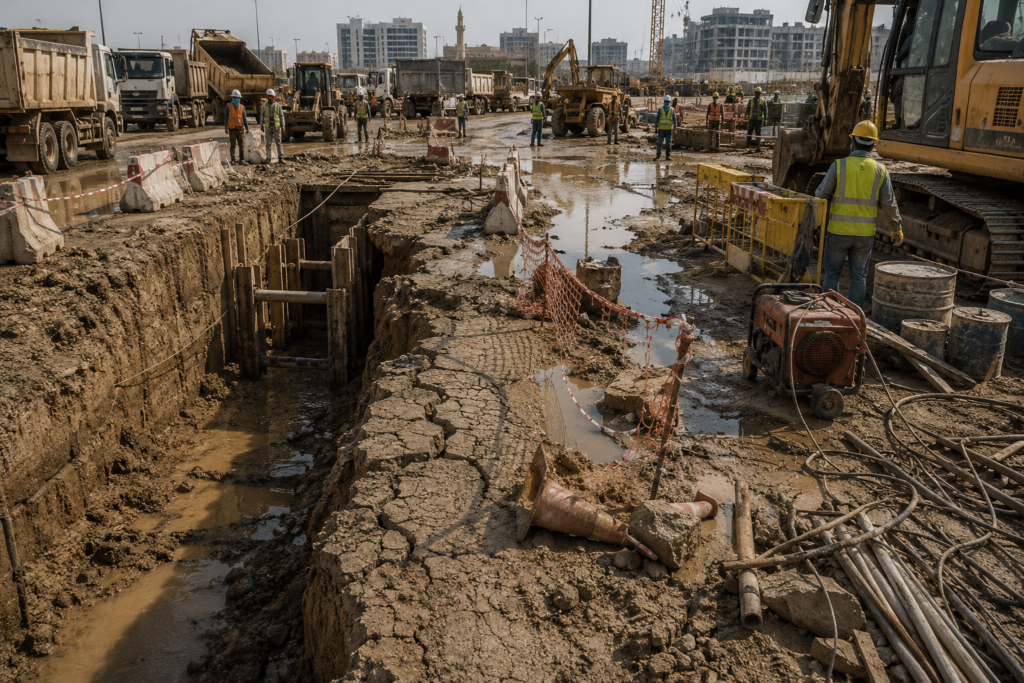
Many Construction Accidents can be prevented if project teams identify warning signs early. These signals may seem small during daily work, but they often show that the construction site is moving toward a higher-risk condition.
Warning signs may include:
- Unclear excavation plans or incomplete work permits.
- Unmarked utilities or poor verification of underground services.
- Workers entering excavation zones without proper briefing.
- Machinery operating close to pedestrians without exclusion zones.
- Congested work zones with poor access and egress.
- Trench edges showing cracks, movement, water, or loose soil.
- Materials stored too close to excavation edges.
- Weak adherence to safety protocols during rushed schedules.
- Missing guardrail protection around dangerous edges.
- Workers without appropriate personal protective equipment.
- Equipment malfunctions that are ignored or reported late.
- Poor communication between supervisors, operators, and HSE teams.
These warning signs should not be treated as normal site pressure. They are indicators that potential hazards are becoming active risks. When ignored, they can lead to serious injuries, construction fatalities, project delays, or major operational disruption.
Why Rushed Schedules Increase Accident Exposure
Rushed schedules are one of the common causes behind excavation-related Construction Accidents. When teams are under pressure to recover lost time, they may shorten briefings, skip rechecks, overlap activities, or allow machinery to operate in areas that are not fully controlled.
This creates a dangerous gap between productivity and safety. A project may appear to be moving faster in the short term, but a single accident can stop work for days or weeks. For decision-makers, the better strategy is not to slow the project unnecessarily, but to sequence work intelligently and prevent unsafe overlap.
Why Weak Safety Briefings Create Repeated Site Risks
Safety briefings are only useful when they reflect the real conditions of the day. If the briefing is generic, rushed, or disconnected from actual excavation activities, workers may not understand the specific hazards they will face.
A strong briefing should explain machinery routes, trench conditions, access points, utility risks, exclusion zones, emergency response steps, and changes from the previous work shift. This helps create a culture of safety where workers understand not only what they must do, but why it matters.
Why Construction Accidents Cost More Than Immediate Injuries
The visible injury is only one part of the impact. Construction Accidents can create a chain of operational, financial, legal, and reputational consequences that affect the whole project, especially when the incident happens during excavation work.
When a construction site accident occurs, the project may need to stop work immediately. Supervisors may secure the area, HSE teams may begin an investigation, equipment may be removed from service, and workers may need to be reassigned until the cause is understood. This creates downtime that can affect the wider schedule.
In excavation projects, delays can become more complicated because one stopped activity may block other construction activities. Utility work, backfilling, inspection, roadwork, pipe installation, and access preparation may all depend on the same excavation zone being safe and available.
Project Delays and Downtime After an Accident
Project delays after Construction Accidents are often caused by more than the accident itself. The real delay may come from investigation time, damaged equipment, restricted access, permit reviews, emergency repairs, redesign, or the need to rebuild confidence before work resumes.
If the accident involves a trench collapse, utility strike, vehicle accident, or machinery failure, the site may require technical reassessment before the area can be reopened. In some cases, the project team may need to change the method of work, redesign traffic routes, reinforce excavation support, or update safety protocols.
This is why accident prevention has direct commercial value. Preventing one serious construction accident can protect worker safety, preserve productivity, and prevent a small site failure from becoming a major project delay.
Insurance Pressure, Legal Exposure, and Reputation Damage
Construction Accidents can also increase insurance pressure and legal exposure. Serious injuries, fatalities on construction sites, damaged utilities, or major equipment accidents may require formal reporting, documentation, third-party review, and corrective actions.
Even when a project team responds professionally, the incident may still affect client confidence. Owners and stakeholders want assurance that the contractor can manage high-risk construction environments without losing control of safety, productivity, and operational discipline.
Reputation damage is especially important in Saudi construction projects and GCC infrastructure projects, where large clients and industrial stakeholders often evaluate partners based on reliability, safety performance, and ability to manage risk under pressure.
Productivity Loss and Workforce Confidence
After a serious construction accident, productivity may decline because workers become more cautious, supervision becomes more restrictive, and teams need time to recover confidence. This is understandable, especially when the incident involved serious injuries, trench failure, electrocution, or moving machinery.
A strong safety response should not only focus on restarting work. It should rebuild confidence through clear communication, corrective actions, renewed training, and visible management commitment. Workers need to see that the company is not simply returning to production, but improving the conditions that caused the accident risk.
When teams trust that hazards are being controlled properly, productivity becomes more stable. This is one reason why a culture of safety is not separate from project performance. It is part of how high-risk construction work is delivered consistently.
How Construction Teams Can Reduce Excavation-Related Accidents
Reducing Construction Accidents requires more than basic compliance. It depends on how well the project team identifies hazards, plans work zones, controls machinery, communicates risk, verifies utilities, and adapts when site conditions change.
In excavation work, accident prevention must begin before the first trench is opened. The team should understand the ground conditions, underground utility risks, access routes, equipment movement, worker positioning, emergency response, and responsibilities of every contractor involved.
Start With Practical Excavation Risk Management
Excavation risk management should translate planning into real site control. This means the plan must be visible in how workers move, how machinery operates, how utilities are exposed, how access is managed, and how supervisors respond when conditions change.
A practical approach may include:
- Reviewing excavation drawings and confirming work boundaries.
- Identifying underground utilities before digging starts.
- Checking soil conditions and trench protection requirements.
- Defining safe access and egress points.
- Separating workers from moving machinery.
- Using exclusion zones around active equipment.
- Briefing workers on daily site-specific hazards.
- Inspecting construction equipment before use.
- Stopping work when ground, weather, or access conditions change.
These steps reduce uncertainty. And in excavation, reducing uncertainty is one of the strongest ways to reduce Construction Accidents.
Use Proper Training and Appropriate Personal Protective Equipment
Proper training helps workers recognize hazards before they become incidents. A construction worker should understand the risks of trench collapse, struck-by accidents, caught-between accidents, electrocution, falling objects, moving machinery, and unsafe access routes.
Training should also explain how to respond when conditions change. Workers must know when to stop, who to report to, and how to avoid entering unsafe work areas. This is especially important in projects where several teams operate around the same excavation zone.
Appropriate personal protective equipment also matters. Hard hats, high-visibility clothing, safety footwear, eye protection, and other PPE reduce exposure to certain hazards. However, PPE should be treated as the final layer of protection, not the main control. Strong planning, supervision, and engineering controls must come first.
Build a Culture of Safety Around Daily Decisions
A culture of safety is built through daily decisions, not slogans. It appears when supervisors stop unsafe work, when operators refuse to move without clear visibility, when workers report unstable ground, and when managers give teams enough time to follow safety protocols properly.
In excavation projects, this culture is especially important because conditions can change faster than office plans. A trench may become unstable, a utility may be discovered in an unexpected location, or machinery access may become unsafe after a delivery route changes.
When teams are encouraged to identify potential hazards early, Construction Accidents become less likely. The goal is not to create fear on site, but to create discipline, awareness, and practical control.
How Golden Dunes Helps Reduce Construction Accident Risks
Golden Dunes supports safer excavation and infrastructure work by helping projects reduce the conditions that often lead to Construction Accidents. The company’s role is not limited to excavation execution; it is also connected to better site control, utility protection, operational discipline, and risk-aware project support.
In high-risk construction environments, the quality of excavation execution can influence the safety of the entire project. A controlled approach helps reduce the chance of trench instability, utility strike accidents, equipment conflicts, uncontrolled ground disturbance, and unexpected work stoppages.
Through its professional suction excavator services, Golden Dunes can support projects that require more controlled excavation around utilities, confined spaces, sensitive infrastructure, or areas where traditional digging may create unnecessary risk.
Supporting Safer Work Around Utilities and Sensitive Areas
Underground utilities can turn excavation work into a high-risk activity when they are not located, exposed, or protected properly. Golden Dunes helps reduce this risk by supporting safer excavation practices that allow teams to work with more control around buried services and critical assets.
This is especially relevant for industrial facilities, infrastructure corridors, road projects, utility networks, and construction sites where drawings may not fully reflect actual underground conditions. A safer method of exposing and managing buried assets reduces the chance of utility strike accidents and the wider Construction Accidents that can follow.
Improving Control Through Smart Site Awareness
Golden Dunes also recognizes that accident prevention depends on visibility and control across the site. In complex projects, teams need better awareness of what is happening in work zones, equipment areas, temporary structures, and high-risk operational points.
Solutions such as smart site safety systems can support better monitoring, faster awareness, and stronger safety discipline in demanding construction environments. When site teams understand risk earlier, they can intervene before a hazard becomes a construction accident.
Helping Decision-Makers Protect Project Continuity
For owners and contractors, reducing Construction Accidents is not only about avoiding injuries. It is about protecting project continuity, delivery confidence, workforce stability, client trust, and operational reputation.
Golden Dunes’ wider construction and excavation support services are designed to help projects operate with stronger control in areas where safety, precision, and reliability matter. This makes the company a practical partner for Saudi construction projects and GCC infrastructure projects where accident risk must be managed before it becomes a failure.