How the Right Excavation Methods Protect High-Risk Projects

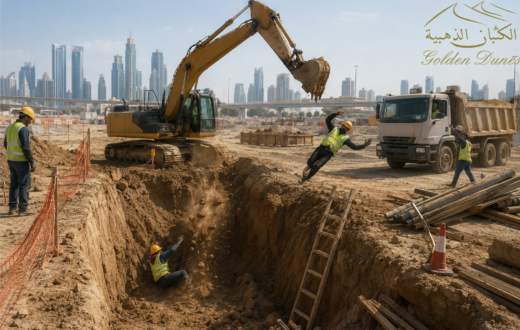
Choosing the wrong excavation strategy in high-risk environments can trigger far more than temporary construction delays. In modern infrastructure projects across Saudi Arabia and the GCC, improper excavation decisions may lead to underground utility strikes, operational shutdowns, environmental damage, safety incidents, and long-term financial losses that extend beyond the project itself.
As industrial zones become more complex and urban infrastructure continues to expand under Vision 2030 initiatives, selecting the right excavation methods has evolved into a critical engineering decision rather than a routine construction step. Contractors and infrastructure developers are no longer focused only on digging speed or equipment availability. Today, excavation planning requires a strategic balance between safety, operational continuity, environmental sensitivity, and underground asset protection.
In sectors such as oil and gas, utilities, transportation, and smart infrastructure, excavation operations often take place near live pipelines, fiber networks, electrical systems, and heavily congested underground corridors. This reality has accelerated the demand for more controlled and technology-driven excavation methods capable of minimizing disruption while improving precision and risk management.
Modern contractors increasingly rely on advanced technologies such as vacuum excavation solutions for sensitive infrastructure environments because traditional digging techniques may create unacceptable levels of operational and structural risk in high-density industrial areas.
At the same time, the Saudi construction sector is rapidly adopting digital engineering standards and predictive safety systems as part of broader infrastructure modernization efforts. According to the official Saudi Vision 2030 program, smart infrastructure and sustainable construction technologies are becoming central pillars in the Kingdom’s future development strategy.
The challenge facing project managers today is no longer whether excavation is required, but which excavation methods can safely support project continuity without compromising underground assets, workforce safety, or surrounding infrastructure.
Why Excavation Method Selection Matters in High-Risk Projects

In high-risk industrial environments, excavation is directly connected to operational stability. A poorly selected excavation approach can interrupt critical services, damage buried infrastructure, and create cascading risks across the entire project lifecycle. This is especially important in sectors where underground assets operate continuously, including refineries, petrochemical facilities, airports, transportation corridors, and smart utility networks.
The growing complexity of modern infrastructure means that excavation teams must now evaluate multiple technical variables before selecting suitable excavation methods. Soil composition, groundwater conditions, underground congestion, vibration sensitivity, and environmental exposure all influence the success or failure of excavation activities.
In many large-scale projects, excavation operations occur near aging utility systems that may lack accurate mapping documentation. Under these conditions, relying solely on mechanical digging increases the likelihood of hidden infrastructure damage. Reports published by the UK Health and Safety Executive (HSE) continue to emphasize the importance of controlled excavation planning and underground risk assessment in reducing severe construction incidents.
For this reason, experienced contractors now integrate infrastructure analysis, digital mapping, and non-invasive excavation technologies into their operational workflows before excavation begins. Companies investing in advanced construction technologies in Saudi infrastructure projects are increasingly able to improve excavation accuracy while reducing both financial and operational exposure.
The selection of modern excavation methods is also becoming closely tied to sustainability goals. Excessive ground disturbance, unnecessary material removal, and avoidable utility damage can significantly increase environmental impact and reconstruction costs. In contrast, precision-based excavation strategies support cleaner workflows, lower material waste, and more efficient project execution.
This shift explains why industrial developers across Saudi Arabia are moving toward smarter excavation planning frameworks that prioritize risk reduction, operational continuity, and long-term infrastructure protection rather than relying on traditional excavation speed alone.
Key Factors Before Choosing Excavation Methods
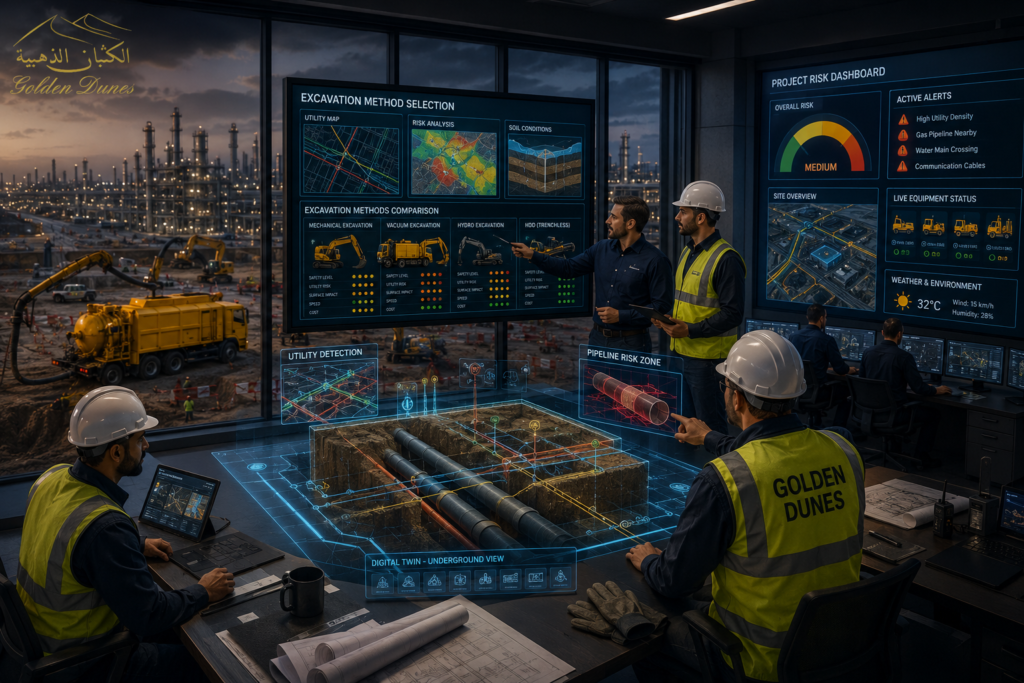
Selecting appropriate excavation methods for high-risk projects requires more than equipment selection. Successful excavation planning begins with understanding the operational environment surrounding the project site. Every underground condition introduces a different level of technical complexity, and ignoring those variables can quickly transform a manageable excavation task into a costly infrastructure problem.
Soil Conditions and Ground Stability
Soil composition remains one of the most influential factors when evaluating excavation strategies. Loose sand, unstable clay, rocky terrain, and water-saturated ground each require different excavation approaches to maintain structural stability and operational safety.
Mechanical digging may perform efficiently in stable open environments, but it can become highly risky in weak or unpredictable soil conditions where trench collapse or ground movement becomes possible. In these situations, contractors often adopt controlled excavation methods designed to reduce vibration, minimize over-excavation, and improve precision around sensitive infrastructure.
Ground instability also affects nearby structures, roads, and underground networks. This is why many infrastructure projects now combine excavation planning with real-time monitoring systems and predictive safety technologies to reduce the possibility of structural displacement during excavation activities.
Underground Utility Density
Urban and industrial areas across Saudi Arabia contain increasingly congested underground utility corridors that include electrical cables, telecommunications lines, water systems, drainage networks, and high-pressure pipelines. Excavation inside these environments requires exceptional accuracy because even minor utility strikes can disrupt critical operations and create major financial liabilities.
Modern project teams frequently rely on utility-safe excavation methods to expose buried assets without causing direct mechanical contact. This approach is especially important during maintenance work, infrastructure upgrades, and emergency repair operations where service continuity must remain uninterrupted.
The importance of underground infrastructure protection has become a growing concern in industrial projects, particularly after repeated incidents involving buried utility damage. Advanced planning strategies discussed in underground utility damage prevention practices continue to highlight the long-term operational impact caused by inaccurate excavation decisions.
Operational Continuity Requirements
In many industrial environments, excavation work takes place near facilities that cannot afford shutdowns or service interruptions. Refineries, logistics hubs, airports, and manufacturing plants often operate continuously, meaning excavation activities must be carefully controlled to avoid affecting production or infrastructure performance.
This operational pressure has increased the adoption of precision-focused excavation methods that allow excavation teams to work safely in restricted or live operational zones. Non-destructive excavation approaches, controlled trenching systems, and advanced site monitoring technologies are now frequently used to maintain operational continuity while excavation proceeds.
Contractors working in sensitive infrastructure environments also benefit from integrating intelligent safety platforms capable of monitoring excavation-related risks in real time. Solutions such as smart site safety management systems help engineering teams identify potential hazards earlier and improve excavation decision-making throughout the project lifecycle.
Environmental and Urban Constraints
Modern cities and industrial expansion projects place increasing pressure on contractors to minimize environmental disruption during excavation operations. Noise restrictions, traffic congestion, groundwater protection requirements, and nearby infrastructure sensitivity all influence excavation planning decisions.
Traditional excavation approaches may create excessive surface disruption in densely populated urban environments. As a result, project managers increasingly favor low-impact excavation methods capable of reducing debris, limiting vibration, and maintaining cleaner work zones.
This shift is particularly visible across large Saudi infrastructure developments where urban mobility, smart utilities, and sustainability objectives are becoming integrated into national construction standards. Excavation planning today is no longer isolated from broader environmental and operational goals; it has become part of a larger infrastructure resilience strategy.
Common Excavation Methods Used in Industrial Projects
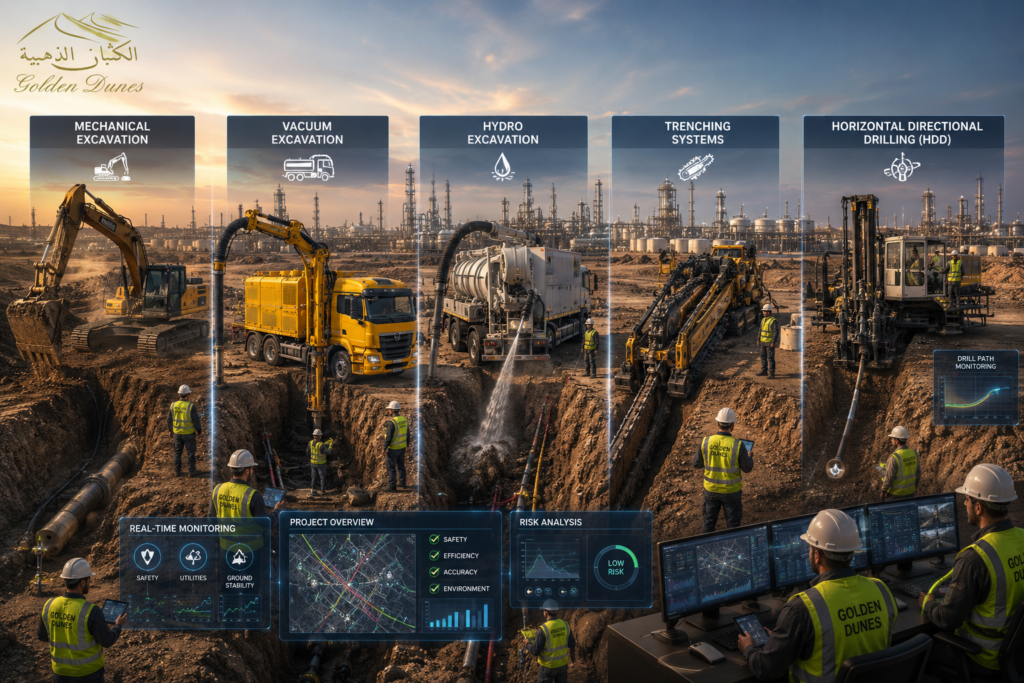
Industrial projects rarely rely on a single excavation approach. Instead, contractors select from multiple excavation methods depending on project risk levels, soil conditions, utility sensitivity, and operational limitations. Each method offers specific advantages, but choosing the wrong one can significantly increase infrastructure exposure and project costs.
Mechanical Excavation
Mechanical excavation remains one of the most widely used approaches in large-scale construction because it provides fast material removal and strong productivity in open environments. Excavators, bulldozers, trenchers, and heavy earthmoving equipment are commonly deployed for road construction, site grading, and deep foundation preparation.
However, despite its efficiency, mechanical digging may introduce substantial risks in areas with buried infrastructure or unstable ground conditions. Heavy machinery can accidentally strike underground utilities, damage pipelines, or create excessive vibration near sensitive facilities.
Because of these limitations, contractors increasingly reserve mechanical excavation for lower-risk zones where underground congestion and infrastructure sensitivity are minimal.
Vacuum Excavation
Vacuum excavation has emerged as one of the safest excavation methods for projects involving buried utilities, sensitive infrastructure, and congested underground environments. The process uses high-powered suction systems to remove soil with greater precision while significantly reducing the risk of direct utility strikes.
Unlike conventional digging, vacuum excavation minimizes physical contact with underground assets. This makes it highly effective for utility exposure, emergency repair work, pipeline maintenance, and excavation inside operational industrial facilities.
Many contractors now consider vacuum excavation a critical component of modern infrastructure risk management because it improves excavation accuracy while supporting safer workflows in high-risk operational environments.
Hydro Excavation
Hydro excavation combines pressurized water with vacuum extraction to safely break apart soil before removing debris through controlled suction systems. This technique has become increasingly valuable in environments where underground infrastructure accuracy is critical and conventional digging introduces unnecessary operational risk.
Compared to aggressive mechanical digging, hydro-based excavation methods provide greater control around buried pipelines, communication networks, and utility corridors. The reduced impact on surrounding infrastructure makes hydro excavation particularly useful during utility daylighting, maintenance operations, and excavation work near aging underground systems.
In regions where underground utility mapping may not always reflect current field conditions, hydro excavation offers contractors a safer alternative capable of minimizing accidental infrastructure exposure. This is especially important for projects operating within dense urban corridors or industrial facilities where excavation errors can quickly escalate into operational shutdowns.
Trenching Methods
Trenching remains one of the most commonly applied excavation methods in utility installation, drainage systems, telecommunications infrastructure, and pipeline projects. However, trenching operations in high-risk environments require careful engineering evaluation because trench instability can create serious safety and structural hazards.
Modern trenching strategies now involve advanced support systems, soil stabilization techniques, and continuous monitoring to reduce collapse risks and maintain excavation integrity. Contractors working in critical infrastructure zones frequently combine trenching with non-destructive utility verification methods before excavation begins.
The increasing complexity of underground infrastructure has also encouraged project teams to adopt more structured excavation planning workflows. Many infrastructure developers now integrate insights from strategic excavation planning frameworks to improve coordination between excavation teams, utility operators, and engineering consultants before site operations begin.
Horizontal Directional Drilling (HDD)
Horizontal Directional Drilling has become one of the most efficient excavation methods for installing underground utilities without extensive surface disruption. HDD allows contractors to place pipelines, conduits, and communication lines beneath roads, railways, waterways, and heavily congested urban zones while minimizing excavation exposure at ground level.
This trenchless approach is widely used in infrastructure expansion projects because it reduces environmental disruption, preserves surface operations, and lowers restoration requirements after installation. HDD is particularly valuable in projects where maintaining traffic movement, operational continuity, or environmental protection is a major priority.
As Saudi Arabia accelerates investment in transportation networks, smart cities, and utility modernization, trenchless excavation technologies are becoming increasingly important for supporting large-scale infrastructure growth without introducing excessive disruption to surrounding environments.
Non-Destructive Excavation Techniques
The growing demand for infrastructure protection has accelerated the adoption of non-invasive excavation methods capable of exposing underground assets while minimizing direct mechanical impact. Non-destructive excavation techniques are now widely viewed as essential tools in modern industrial risk management.
These methods are commonly used in areas containing high-value pipelines, electrical systems, communication networks, and environmentally sensitive infrastructure. Their primary advantage lies in reducing accidental damage while improving excavation visibility and operational control.
Industrial developers increasingly integrate excavation activities with advanced inspection technologies capable of identifying hidden infrastructure vulnerabilities before excavation starts. Combining excavation planning with non-destructive inspection and testing solutions allows project teams to improve infrastructure visibility while reducing uncertainty in complex excavation environments.
When Vacuum Excavation Becomes the Safest Option
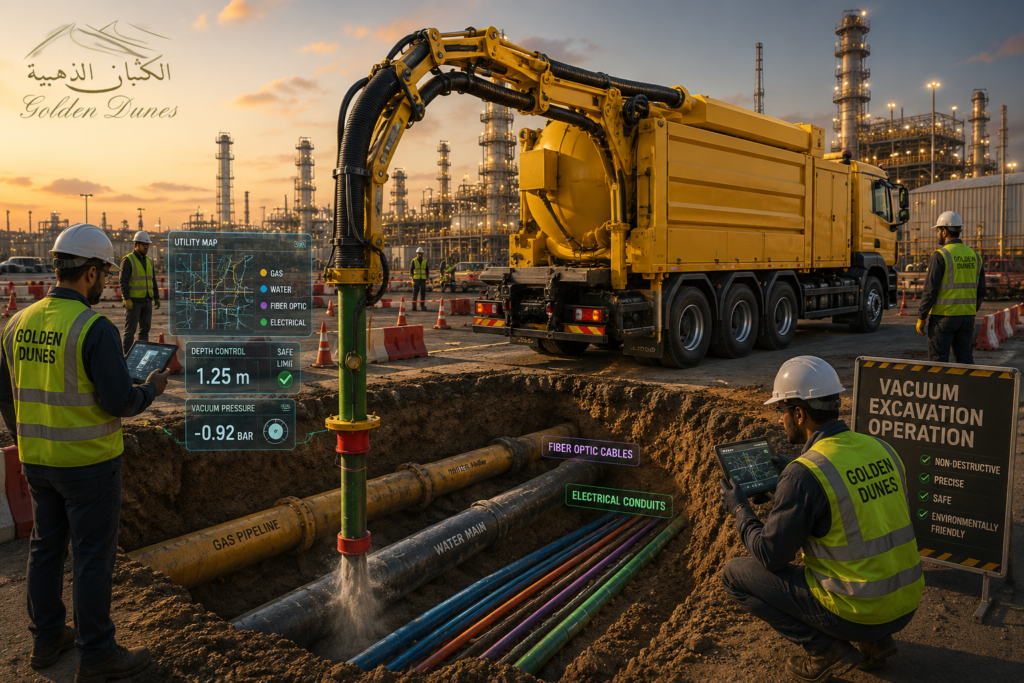
Certain infrastructure environments demand far greater excavation precision than traditional digging methods can safely provide. In these situations, vacuum-based excavation methods become one of the most effective solutions for reducing operational exposure while protecting underground assets.
Vacuum excavation is especially valuable when working near buried electrical systems, gas pipelines, telecommunications networks, fiber optic cables, and aging utility corridors where even minor contact can trigger major service disruptions. Unlike aggressive mechanical excavation, controlled suction systems allow operators to expose utilities gradually without placing excessive stress on surrounding infrastructure.
This precision becomes critically important during emergency maintenance operations, refinery projects, utility upgrades, and excavation inside operational industrial facilities where shutdown risks must remain as low as possible.
Many contractors also favor vacuum-assisted excavation methods in environmentally sensitive areas because they generate less debris, reduce surface disruption, and improve excavation cleanliness compared to conventional digging operations.
Another important advantage involves excavation visibility. Vacuum systems improve operator control during utility exposure, allowing project teams to identify underground assets more accurately before larger excavation activities begin. This significantly lowers the probability of costly infrastructure strikes and unexpected project interruptions.
As industrial infrastructure continues expanding across Saudi Arabia, contractors increasingly recognize that safer excavation decisions are not only about regulatory compliance. They directly affect operational continuity, project timelines, maintenance costs, and long-term infrastructure reliability.
Excavation Methods for Oil and Gas Infrastructure
Oil and gas facilities represent some of the most technically demanding excavation environments in the industrial sector. Pipelines, processing systems, storage infrastructure, and communication networks often operate continuously under high-pressure conditions, leaving very little margin for excavation-related errors.
For this reason, selecting suitable excavation methods in oil and gas projects requires far more than basic construction planning. Contractors must evaluate operational sensitivity, pipeline depth, environmental exposure, soil conditions, and emergency response requirements before excavation activities begin.
Mechanical excavation may still support large-scale site preparation in low-risk zones, but precision excavation techniques become significantly more important near active pipelines and operational facilities. Non-invasive excavation approaches help reduce direct infrastructure contact while supporting safer maintenance and inspection workflows.
Modern energy projects also increasingly combine excavation operations with digital infrastructure analysis and predictive inspection technologies. Integrating excavation activities with advanced MTM pipeline inspection systems helps project teams identify vulnerable infrastructure areas before excavation begins, reducing both operational uncertainty and long-term maintenance risks.
As Saudi Arabia continues expanding industrial megaprojects and energy infrastructure under Vision 2030, excavation planning is evolving into a strategic component of operational resilience rather than a standalone construction activity.
Excavation Methods for Urban Utility Projects

Urban infrastructure projects introduce a completely different level of excavation complexity compared to open industrial environments. Beneath modern cities lies a dense network of electrical systems, fiber optic cables, drainage lines, gas pipelines, transportation infrastructure, and communication networks operating simultaneously within limited underground corridors.
Under these conditions, selecting suitable excavation methods becomes critical for protecting public infrastructure and maintaining uninterrupted city operations. Even small excavation errors inside urban utility zones can create traffic disruption, communication failures, environmental incidents, or expensive service restoration requirements.
Traditional excavation techniques often struggle to provide the level of precision required in highly congested underground environments. As a result, infrastructure developers increasingly prioritize controlled and utility-sensitive excavation approaches that reduce physical impact while improving underground visibility.
Vacuum-assisted and non-destructive excavation methods are particularly effective in urban projects because they allow operators to expose buried infrastructure gradually without generating excessive surface disruption. This becomes especially valuable near transportation corridors, commercial districts, and densely populated development zones where excavation precision directly affects operational continuity.
Saudi Arabia’s rapid urban expansion is also accelerating the integration of smart infrastructure systems into modern city planning. Large-scale development initiatives require excavation operations capable of supporting advanced underground networks while minimizing long-term maintenance risks.
At the same time, project teams are becoming increasingly aware that poor excavation decisions often contribute to avoidable infrastructure incidents. Many contractors now review previous cases involving construction-related operational accidents to improve excavation safety planning and reduce project exposure before field operations begin.
How Smart Technologies Improve Excavation Decisions

The excavation sector is rapidly moving beyond traditional digging operations toward technology-driven decision-making models designed to improve precision, infrastructure visibility, and operational safety. In high-risk environments, excavation success increasingly depends on data quality, predictive monitoring, and real-time risk analysis rather than equipment power alone.
Modern infrastructure developers now integrate digital engineering tools into excavation planning workflows to evaluate underground conditions before excavation activities begin. This shift allows project teams to reduce uncertainty while selecting more accurate excavation methods based on real operational conditions rather than assumptions.
One of the most significant advancements involves the integration of real-time monitoring systems capable of identifying excavation-related risks as work progresses. Smart safety technologies help engineering teams monitor ground movement, structural stress, underground proximity, and operational hazards more efficiently during excavation operations.
Contractors implementing intelligent construction safety systems are often able to improve excavation coordination while reducing emergency response incidents and infrastructure exposure across complex projects.
Digital inspection technologies are also playing a larger role in modern excavation planning. Infrastructure operators increasingly rely on predictive assessment tools to identify hidden pipeline weaknesses, corrosion risks, and structural irregularities before excavation begins.
Combining advanced infrastructure analysis with controlled excavation methods allows contractors to make more informed operational decisions while minimizing the probability of accidental damage in high-density underground environments.
Another major development involves the use of integrated project data systems capable of improving coordination between excavation contractors, utility operators, engineering consultants, and safety teams. These digital workflows reduce communication gaps while helping excavation activities align more effectively with broader infrastructure management strategies.
As Saudi Arabia continues investing heavily in smart cities, industrial zones, transportation infrastructure, and utility modernization, excavation planning is becoming increasingly connected to larger digital transformation initiatives shaping the future of infrastructure delivery in the region.
Common Excavation Selection Mistakes in High-Risk Environments
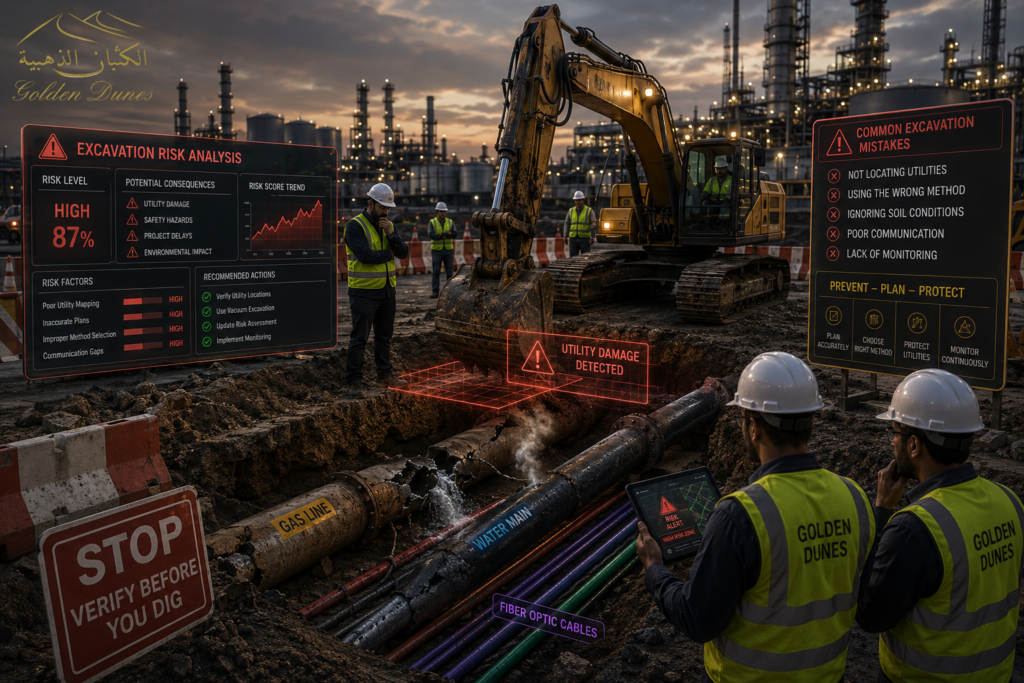
Despite advances in excavation technology, many infrastructure projects continue to experience avoidable operational problems because excavation planning decisions are made too quickly or based on incomplete site analysis. In high-risk environments, even small planning mistakes can produce serious financial and operational consequences.
Relying on Speed Instead of Precision
One of the most common mistakes involves selecting excavation methods based primarily on excavation speed rather than infrastructure sensitivity. While aggressive mechanical excavation may accelerate short-term progress, it often increases the likelihood of utility strikes and costly infrastructure disruption in congested underground environments.
Many project failures linked to underground damage begin with inaccurate assumptions regarding buried utility locations or ground conditions. Without proper infrastructure verification, excavation teams may unintentionally expose critical assets to unnecessary operational risk.
Ignoring Underground Infrastructure Complexity
Another major issue occurs when excavation planning fails to account for the growing density of underground utility networks in modern cities and industrial facilities. Older infrastructure systems frequently contain undocumented modifications, abandoned utility lines, or inaccurate mapping records that complicate excavation operations.
Contractors who underestimate underground complexity often face unexpected delays, emergency repairs, and operational shutdowns during excavation activities. These challenges have increased the importance of pre-excavation risk assessment and controlled excavation planning frameworks.
Using Traditional Excavation in Sensitive Zones
In many high-risk environments, conventional mechanical digging is still applied in areas where more precise excavation methods would significantly reduce infrastructure exposure. This is particularly risky near pipelines, electrical systems, telecommunications infrastructure, and active industrial operations.
Modern excavation planning increasingly favors selective excavation strategies where different methods are combined according to operational conditions rather than relying on a single excavation approach throughout the project.
Many infrastructure developers now examine operational failures linked to common excavation planning mistakes to improve risk management procedures and strengthen excavation decision-making before site execution begins.
Failing to Integrate Smart Risk Monitoring
Excavation operations generate constantly changing site conditions. Projects that fail to integrate real-time monitoring technologies often struggle to identify emerging risks early enough to prevent escalation.
The absence of predictive monitoring can reduce excavation visibility and delay hazard detection during critical operations. This is one reason why advanced infrastructure projects increasingly combine digital inspection technologies, smart monitoring systems, and controlled excavation methods within a unified operational strategy.
The Future of Smart Excavation in Saudi Arabia

Saudi Arabia is entering a new era of infrastructure development where excavation operations are becoming increasingly connected to digital engineering, operational intelligence, and long-term infrastructure resilience. Large-scale national projects now require excavation strategies capable of supporting complex underground systems without compromising safety, sustainability, or operational continuity.
As megaprojects continue expanding across transportation, energy, utilities, logistics, and smart city sectors, contractors are moving toward more advanced excavation methods designed to improve precision while reducing infrastructure exposure. The focus is no longer limited to excavation productivity alone. Modern infrastructure developers are prioritizing excavation quality, underground visibility, and predictive risk management throughout the project lifecycle.
One of the biggest changes shaping the industry involves the growing integration between excavation operations and digital infrastructure technologies. Smart mapping systems, predictive analytics, underground scanning, and real-time monitoring tools are helping engineering teams evaluate excavation risks more accurately before field operations begin.
This transformation is particularly important in projects involving transportation corridors, utility modernization, industrial facilities, and smart urban infrastructure where underground congestion continues increasing year after year.
At the same time, sustainability goals are reshaping how contractors approach excavation planning. Cleaner workflows, reduced material waste, lower environmental disruption, and safer utility exposure are becoming critical operational priorities across modern infrastructure developments.
Contractors implementing controlled and technology-driven excavation methods are increasingly able to support these sustainability objectives while improving infrastructure protection and reducing long-term maintenance costs.
Another major trend involves the expansion of integrated infrastructure safety ecosystems where excavation activities are directly connected to digital inspection systems, intelligent monitoring platforms, and operational risk analysis tools. This approach improves communication between engineering teams while supporting faster and more informed excavation decisions.
As Saudi Arabia accelerates investment in industrial growth and infrastructure modernization, companies capable of combining engineering expertise with advanced excavation technologies will play a critical role in supporting safer and more resilient infrastructure development across the region.
Key Takeaways
Choosing the right excavation methods is no longer a routine construction decision. In modern high-risk projects, excavation strategy directly affects infrastructure protection, operational continuity, environmental impact, and long-term project performance.
Projects operating near underground utilities, pipelines, transportation systems, or active industrial facilities require excavation approaches capable of balancing precision, safety, and operational efficiency simultaneously.
Modern excavation planning increasingly depends on:
- Infrastructure-sensitive excavation strategies
- Non-destructive excavation technologies
- Real-time monitoring systems
- Predictive infrastructure analysis
- Smart operational risk management
- Integrated safety and inspection technologies
Organizations that adopt advanced excavation methods early are often better positioned to reduce operational exposure, protect underground infrastructure, and improve project reliability in increasingly complex construction environments.