
Excavation Safety Strategy: Prevent Risks Before They Start
Introduction: Site Safety Begins Before the First Cut
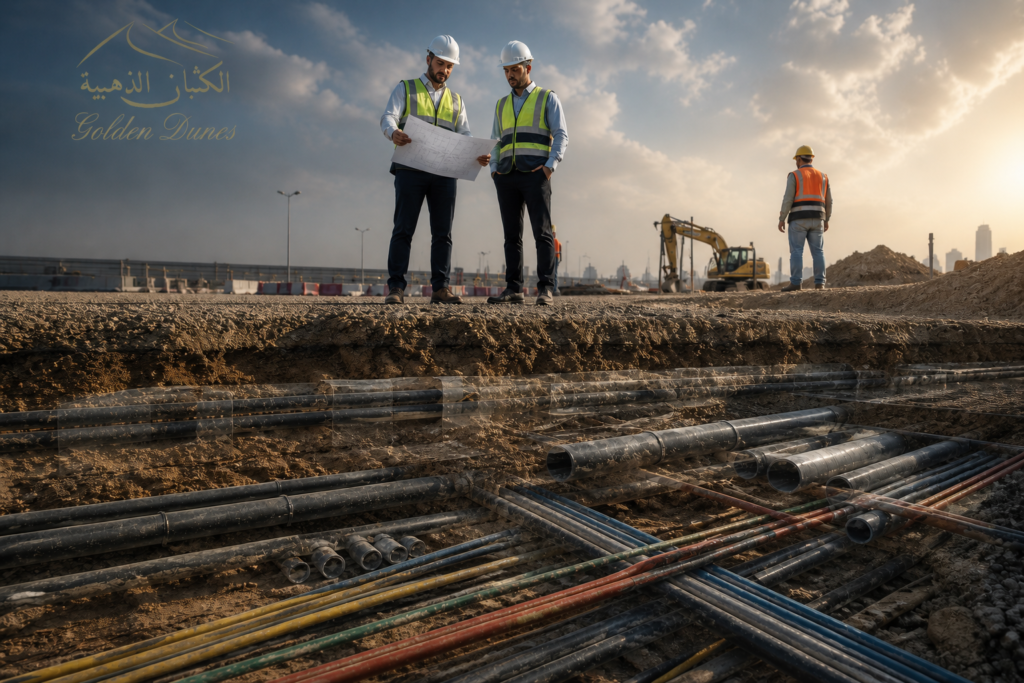
Construction site safety is often judged by what people can see: helmets, warning signs, barriers, safety officers, and monitoring systems. But in real infrastructure projects, some of the most serious risks are hidden below the ground. A damaged utility line, an unstable trench, or an unplanned excavation path can turn a controlled worksite into a costly emergency within minutes.
This is why a strong Excavation Safety Strategy is not just a technical requirement. It is a project control system. It connects planning, risk assessment, underground utility protection, equipment selection, worker safety, and emergency readiness into one clear approach before digging starts.
For modern contractors, safety cannot depend only on reaction. It must be built into the excavation process itself. When the excavation method is poorly planned, even advanced site safety procedures may fail to prevent delays, asset damage, or worker exposure. When the strategy is strong, every stage of the project becomes more predictable, more controlled, and more aligned with long-term infrastructure performance.
Golden Dunes works in a sector where precision matters. Across construction, infrastructure, pipeline inspection, smart safety technologies, and specialized excavation services, the company’s role is not limited to execution. It is about reducing operational uncertainty and helping projects move forward with safer decisions. This is especially important in complex environments where underground utilities, pipelines, confined areas, and active construction zones intersect.
A practical excavation plan must also recognize a simple reality: excavation is never just about removing soil. It is about exposing risk. That risk may come from buried cables, pipelines, unstable ground, nearby structures, poor access, limited visibility, or the wrong equipment choice. Without a clear strategy, the site team may discover these problems only after work has already started.
International safety bodies also emphasize the seriousness of excavation work. The Occupational Safety and Health Administration highlights that trench collapses and cave-ins are among the greatest risks to workers in trenching and excavation operations, and recommends protective methods such as sloping, shoring, and shielding through its trenching and excavation safety guidance. This reinforces an important point: excavation safety is not a minor site procedure. It is a core safety discipline.
For companies operating in Saudi Arabia and the wider GCC, the need for a structured approach is even greater. Large-scale construction, industrial expansion, road development, utility networks, and smart infrastructure projects all depend on careful coordination between safety, engineering, and execution teams. In this environment, a well-designed Excavation Safety Strategy can protect people, assets, schedules, and the reputation of the project itself.
This article explains why site safety depends on proper excavation strategy, how poor excavation decisions create hidden risks, and how advanced methods such as suction excavator services can support safer, more controlled, and more precise project execution.
What Is an Excavation Safety Strategy?

An Excavation Safety Strategy is a structured approach that defines how excavation activities are planned, executed, and controlled to minimize risks before and during site operations. It is not a single procedure or checklist. Instead, it is a combination of engineering decisions, risk assessments, technology integration, and operational planning that ensures safe interaction with the ground and everything beneath it.
At its core, this strategy focuses on understanding what cannot be seen. Underground utilities, pipelines, cables, soil conditions, and structural constraints all represent hidden variables that can impact both safety and project performance. Without proper evaluation, excavation becomes a reactive process rather than a controlled one.
A well-developed Excavation Safety Strategy typically begins long before equipment arrives on site. It starts with data collection, including site surveys, utility mapping, and historical infrastructure analysis. This is followed by selecting the appropriate excavation method based on the environment. In many modern projects, this includes comparing traditional digging methods with more precise approaches such as vacuum excavation versus traditional excavation, where safety and accuracy become the deciding factors.
Planning alone, however, is not enough. Execution must be aligned with safety objectives. This means defining safe digging zones, setting depth controls, monitoring soil stability, and ensuring that workers operate within clearly defined parameters. It also requires coordination between engineers, operators, and safety teams to ensure that every action on site follows a consistent plan.
Another key component of a strong Excavation Safety Strategy is proactive risk detection. Instead of waiting for failures to occur, modern projects rely on technologies that identify potential issues early. For example, advanced inspection systems such as pipeline inspection technologies help detect corrosion, structural weaknesses, or irregularities in underground assets before excavation begins, reducing the likelihood of unexpected damage.
Beyond technical measures, the strategy also defines how teams respond to changing conditions. Excavation environments are dynamic. Soil may shift, unexpected utilities may appear, or weather conditions may affect stability. A proper strategy ensures that teams are prepared to adapt quickly without compromising safety or efficiency.
From a broader perspective, an Excavation Safety Strategy acts as the foundation for all other safety systems on site. Even the most advanced monitoring tools or protective equipment cannot compensate for poor excavation planning. When the strategy is weak, risks multiply. When it is strong, safety becomes a natural outcome of well-informed decisions.
This is why leading contractors and infrastructure companies treat excavation not as a routine task, but as a critical engineering phase. It is the point where planning meets reality, and where the success or failure of the project often begins.
Why Site Safety Depends on Excavation Strategy

Site safety is often approached as a set of visible controls: personal protective equipment, safety signage, training programs, and supervision. While these elements are essential, they only address surface-level risks. The real challenge in many construction projects lies beneath the ground, where unseen hazards can undermine even the most advanced safety systems.
This is where an effective Excavation Safety Strategy becomes critical. It determines how safely the project interacts with underground conditions. When excavation is poorly planned, risks are introduced at the earliest stage of construction, long before they can be controlled through standard safety procedures.
One of the most common issues is the failure to properly identify underground utilities. In high-density environments, pipelines, cables, and service lines often overlap in complex ways. Without a clear strategy, excavation teams may unknowingly damage critical infrastructure, leading to operational disruptions, financial losses, and serious safety incidents. These challenges are explored in detail in underground utility damage risks, where even minor errors can escalate quickly.
Another key factor is excavation method selection. Traditional mechanical excavation methods, while effective in certain conditions, can introduce unnecessary risk when used in sensitive or congested areas. Lack of precision increases the likelihood of over-digging, structural instability, and accidental contact with hidden assets. In contrast, controlled approaches supported by a strong Excavation Safety Strategy significantly reduce these risks by improving accuracy and minimizing disturbance.
Safety also depends on how well risks are anticipated rather than managed after they occur. Many projects still operate reactively, addressing issues only after they arise. However, a strategic approach shifts the focus toward prevention. By integrating risk assessment tools and predictive safety systems, teams can identify potential hazards before they become incidents. Modern solutions such as smart site safety systems support this shift by enabling real-time monitoring and proactive decision-making.
In addition, excavation directly affects the stability of the surrounding environment. Poor trenching practices, inadequate support systems, or incorrect soil assessment can lead to collapses or ground movement. These events not only threaten workers but also impact nearby structures, roads, and ongoing operations. When excavation is guided by a well-defined Excavation Safety Strategy, these risks are significantly reduced through proper planning, reinforcement, and continuous monitoring.
There is also a strong connection between excavation strategy and project efficiency. Safety incidents often lead to delays, cost overruns, and reputational damage. When excavation is executed without a clear plan, projects become unpredictable. On the other hand, a strategic approach improves workflow coordination, reduces interruptions, and ensures that safety and productivity move together rather than in conflict.
Ultimately, site safety does not begin with protective equipment or supervision. It begins with the decisions made before excavation starts. A strong Excavation Safety Strategy ensures that those decisions are based on data, engineering insight, and a clear understanding of risk. Without it, safety becomes reactive. With it, safety becomes a built-in part of the project’s foundation.
Common Excavation Failures That Destroy Safety
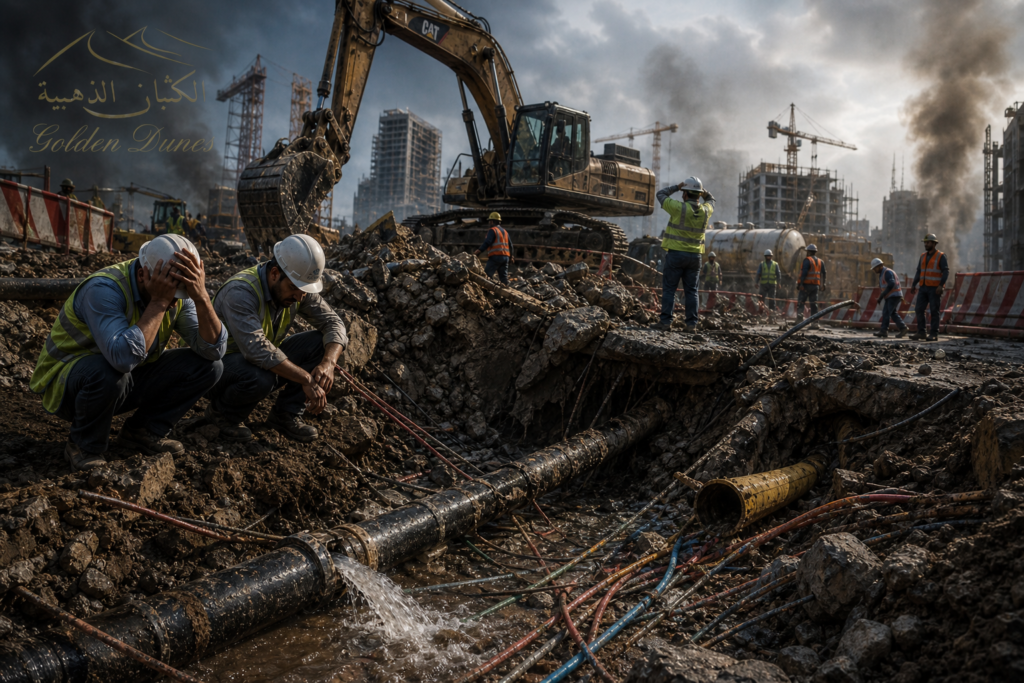
Even with safety protocols in place, many construction projects still face serious incidents during excavation. The reason is simple: safety procedures cannot compensate for poor excavation decisions. Without a well-defined Excavation Safety Strategy, common mistakes can quickly turn into high-impact risks that affect workers, infrastructure, and project timelines.
One of the most critical failures is inadequate planning. When excavation begins without a detailed understanding of underground conditions, teams are forced to react to unexpected challenges. This includes encountering unknown utilities, unstable soil layers, or conflicting infrastructure layouts. These issues are often the result of weak preparation, as explained in excavation planning challenges, where early decisions determine the level of control on site.
Another frequent problem is what can be described as “blind digging.” This occurs when excavation proceeds without accurate mapping or verification of underground assets. In fast-paced projects, there is often pressure to move quickly, leading to shortcuts in verification processes. However, this approach increases the likelihood of damaging pipelines or cables, creating risks that extend far beyond the excavation zone.
Human error also plays a significant role. Poor communication between teams, lack of training, or misinterpretation of site data can result in incorrect execution. Even experienced operators can make mistakes if the strategy guiding their actions is unclear or incomplete. This highlights the importance of aligning all teams under a unified Excavation Safety Strategy that defines responsibilities, procedures, and safety limits.
Equipment selection is another factor that is often overlooked. Using the wrong machinery for the job can increase risk levels significantly. Heavy mechanical equipment may be suitable for open areas, but in sensitive zones with dense underground infrastructure, it can cause unnecessary damage. Choosing more precise methods is not just a technical decision, but a safety requirement.
In addition, many projects fail to properly assess soil conditions and structural stability. Excavation affects the integrity of the surrounding ground, and without appropriate support systems, trenches may collapse or shift unexpectedly. These incidents are among the most dangerous in construction environments and require careful planning, reinforcement, and monitoring.
These failures are not isolated events. They are often interconnected and originate from the same root cause: the absence of a comprehensive Excavation Safety Strategy. When strategy is missing, mistakes multiply. When it is present, risks are identified early, decisions become clearer, and safety becomes part of the process rather than an afterthought.
Understanding these common failures is the first step toward preventing them. By analyzing where projects go wrong, companies can build stronger systems that prioritize safety at every stage of excavation.
Traditional vs Advanced Excavation Approaches
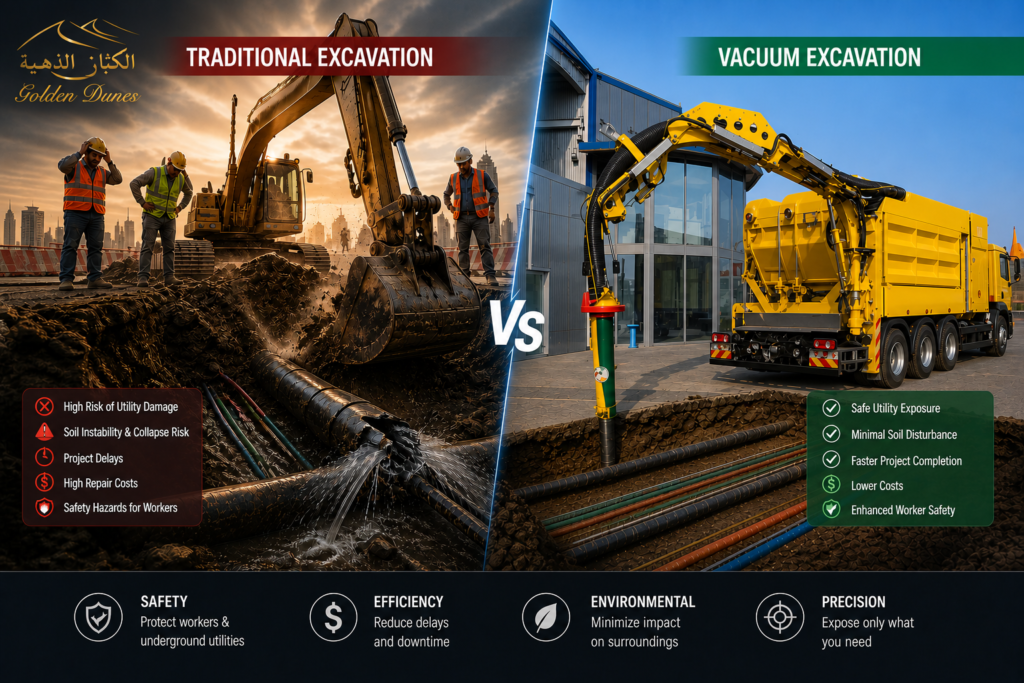
Not all excavation methods deliver the same level of safety. The choice between traditional mechanical excavation and advanced techniques plays a decisive role in determining risk levels on site. This is why any effective Excavation Safety Strategy must carefully evaluate which method is most suitable for the environment, rather than relying on standard practices.
Traditional excavation methods typically involve heavy machinery such as excavators and backhoes. These tools are efficient for large-scale digging in open areas, but they lack precision when working near underground utilities or within congested infrastructure zones. As a result, they increase the likelihood of accidental damage, over-excavation, and soil disturbance.
In contrast, advanced excavation approaches focus on control and accuracy. One of the most effective methods is vacuum-based excavation, which removes soil through suction rather than force. This significantly reduces the risk of damaging underground assets while allowing operators to expose utilities safely and efficiently. A deeper comparison between these methods can be found in vacuum excavation versus traditional excavation, where precision becomes a key safety factor.
From a safety perspective, the difference between these approaches is substantial. Traditional methods rely heavily on operator judgment and visibility, both of which can be limited in complex environments. Advanced methods, on the other hand, are designed to work with minimal disruption, making them more suitable for projects that require careful handling of underground infrastructure.
An effective Excavation Safety Strategy does not reject traditional methods entirely. Instead, it defines when and where each method should be used. Open areas with low risk may still benefit from mechanical excavation, while high-risk zones require more controlled solutions. This balanced approach ensures that safety is maintained without compromising efficiency.
Another advantage of advanced excavation is its ability to support non-destructive practices. In sensitive projects, preserving existing infrastructure is just as important as completing the excavation itself. Techniques such as non-destructive suction excavation allow teams to uncover pipelines, cables, and structural elements without causing damage, which aligns directly with the goals of a strong Excavation Safety Strategy.
In modern construction environments, the shift toward advanced excavation is not just a technological trend. It is a response to increasing project complexity, stricter safety standards, and the need for greater control over risk. Companies that adopt these methods as part of their strategy are better positioned to deliver safe, efficient, and reliable results.
Ultimately, the choice of excavation method reflects the maturity of a project’s safety approach. When strategy drives the decision, safety improves. When convenience dictates the method, risk increases. This is why selecting the right excavation approach is not just an operational detail, but a core element of project success.
The Role of Advanced Technologies in Excavation Safety

As construction environments become more complex, relying on traditional safety practices alone is no longer sufficient. Modern projects require a technology-driven approach that enhances visibility, improves precision, and enables proactive risk management. This is where advanced solutions become a critical part of any effective Excavation Safety Strategy.
Technology plays a key role in transforming excavation from a reactive process into a controlled operation. Instead of waiting for risks to appear, project teams can now detect, monitor, and respond to potential issues in real time. This shift is essential for maintaining safety in environments where underground infrastructure, active operations, and tight project timelines intersect.
Non-Destructive Excavation for Safer Operations
One of the most important advancements in excavation safety is the adoption of non-destructive techniques. Unlike traditional digging methods, these approaches focus on removing soil with minimal impact on surrounding structures. For example, using advanced suction excavator services allows operators to expose underground utilities safely, reducing the risk of accidental damage and improving overall control.
This method is especially valuable in high-risk zones where precision is critical. By integrating such solutions into an Excavation Safety Strategy, companies can significantly lower the chances of utility strikes, soil instability, and costly interruptions.
Pipeline Inspection and Risk Detection
Another essential component of modern excavation safety is early detection of underground risks. Before excavation begins, it is crucial to understand the condition and location of existing pipelines. Advanced inspection systems, such as MTM pipeline inspection technology, provide detailed insights into structural integrity, corrosion, and hidden weaknesses.
These insights allow project teams to plan excavation activities with greater confidence. Instead of reacting to unexpected issues, they can adjust their approach based on accurate data, making the entire Excavation Safety Strategy more reliable and effective.
Smart Safety Systems and Real-Time Monitoring
In addition to excavation and inspection technologies, real-time monitoring systems are transforming how safety is managed on site. Digital solutions such as smart site safety systems provide continuous data on site conditions, equipment performance, and potential hazards.
These systems enable proactive decision-making by alerting teams to risks before they escalate. Whether it is detecting structural movement, monitoring load conditions, or identifying unsafe behavior, real-time insights enhance the effectiveness of an Excavation Safety Strategy by ensuring that safety is continuously maintained throughout the project lifecycle.
Technology also improves communication between teams. Engineers, operators, and safety managers can access the same data, ensuring alignment and faster response times. This reduces the risk of miscommunication and helps maintain consistent safety standards across all project phases.
Ultimately, integrating advanced technologies into excavation processes is no longer optional. It is a requirement for projects that aim to achieve high safety standards, operational efficiency, and long-term reliability. When combined with a well-defined Excavation Safety Strategy, these technologies create a safer, smarter, and more resilient construction environment.
Real Impact of Excavation Safety Strategy on Projects

In modern construction, safety is no longer measured only by the number of incidents, but by a project’s ability to continue without disruption. This is where the real impact of an Excavation Safety Strategy becomes clear. It does not only protect people, but also safeguards timelines, budgets, and the overall reputation of the project.
When a clear and data-driven excavation strategy is implemented, the likelihood of errors is significantly reduced. Projects that rely on proper planning and advanced inspection technologies are better equipped to avoid risks associated with excavation risks in Saudi Arabia, especially in environments with complex underground infrastructure.
Reducing Costly Delays
One of the biggest challenges in infrastructure projects is unexpected downtime caused by accidents or unplanned damage. A single excavation error can halt operations entirely until repairs are completed, leading to significant financial losses. With a strong Excavation Safety Strategy, these disruptions can be minimized through proactive planning and the selection of appropriate excavation methods.
According to safety reports from HSE excavation safety guidance, proper planning and continuous risk assessment are among the most effective ways to reduce incidents and prevent project delays.
Protecting Critical Infrastructure
In modern urban developments, damage to underground utilities can impact thousands of users. Water lines, electrical networks, and communication systems represent the backbone of any functioning area. Protecting these assets is not optional — it is essential.
By implementing an Excavation Safety Strategy supported by precise technologies, the risk of damaging critical infrastructure can be significantly reduced. This directly contributes to service continuity, lower repair costs, and stronger trust from project stakeholders.
Improving Operational Efficiency
Operational efficiency is closely tied to how clearly processes are defined. When a structured excavation strategy is in place, each team understands its role, reducing errors and improving execution speed.
In addition, the use of advanced techniques such as non-destructive excavation helps reduce the time required to complete operations. This results in smoother workflows and fewer unexpected interruptions. Such improvements are only possible when a comprehensive Excavation Safety Strategy is applied.
Enhancing Long-Term Project Reliability
Successful projects are not only measured by how quickly they are completed, but by how well they perform over time. Excavation errors can lead to long-term structural issues or system failures that appear after project completion.
When excavation is carried out under a well-defined strategy, these risks are greatly minimized. This enhances overall project quality and ensures that infrastructure systems operate efficiently without the need for frequent repairs.
Ultimately, an Excavation Safety Strategy is not just a preventive measure. It is a key factor in project success. It connects safety, efficiency, and quality, transforming excavation from a potential risk into a strategic advantage.
Best Practices for a Strong Excavation Safety Strategy
Developing an effective Excavation Safety Strategy requires more than general safety awareness. It demands a structured set of practices that guide every stag

e of excavation, from planning to execution. These best practices are designed to reduce uncertainty, improve control, and ensure that safety is consistently maintained across all project phases.
Conduct Detailed Pre-Excavation Assessments
Every safe excavation begins with a thorough understanding of the site. This includes surveying underground utilities, analyzing soil conditions, and reviewing existing infrastructure layouts. Without this step, excavation becomes a high-risk activity driven by assumptions rather than data. Proper assessment aligns with recommendations from OSHA excavation safety standards, which emphasize hazard identification before any digging begins.
Use Accurate Mapping and Utility Detection
Accurate mapping is essential for preventing accidental damage. Advanced detection tools help identify the exact location of underground assets, allowing teams to plan excavation paths with precision. Integrating these tools into an Excavation Safety Strategy significantly reduces the risk of utility strikes and unexpected interruptions.
Select the Right Excavation Method
Choosing the appropriate excavation method is one of the most critical decisions in any project. In sensitive areas, controlled approaches such as suction excavation techniques provide a safer alternative to traditional methods. These solutions allow for precise soil removal while protecting surrounding infrastructure.
Integrate Safety Systems with Excavation Planning
Safety systems should not operate independently from excavation activities. Instead, they must be fully integrated into the overall strategy. Real-time monitoring, alert systems, and data-driven insights help teams identify risks early and respond effectively. This integration ensures that the Excavation Safety Strategy remains active throughout the project lifecycle.
Ensure Clear Communication Across Teams
Effective communication is essential for maintaining safety on site. Engineers, operators, and safety personnel must work within a unified framework, where roles and responsibilities are clearly defined. Miscommunication can lead to errors, even in well-planned projects. A strong strategy ensures that all teams operate with the same understanding of safety protocols.
Implement Continuous Monitoring and Adaptation
Excavation environments can change rapidly. Soil conditions, weather factors, and unforeseen obstacles may require adjustments during execution. Continuous monitoring allows teams to detect changes early and adapt without compromising safety. This flexibility is a key characteristic of a resilient Excavation Safety Strategy.
Train Teams on Safe Excavation Practices
Even the most advanced strategy depends on the people تنفيذها. Regular training ensures that all team members understand the risks involved and how to manage them effectively. Skilled operators and informed workers are essential for maintaining safety standards on site.
By applying these best practices, companies can transform excavation from a high-risk activity into a controlled and predictable process. A strong Excavation Safety Strategy is not built on a single action, but on a combination of well-coordinated steps that work together to protect people, assets, and project outcomes.